Thursday, May 4, 2023

Wild Kingdom


Maybe there was a theme - albeit unintentional - for our latest road trip. In the last blog, I referenced Randy's childhood fascination with dirt moving as motivation for our visit to Big Brutus in southeast Kansas.

The second day of our expedition took us to Johnny Morris' Wonders of Wildlife National Museum and Aquarium. Another of Randy's childhood favorites was TV's Mutual of Omaha's Wild Kingdom. (He may still watch some of the old episodes if he's in charge of the TV remote and inexplicably flipping between channels.) 


The museum and aquarium is located next to Bass Pro Shops national headquarters in Springfield, Mo. It opened in September 2017.

Johnny Morris is the founder of Bass Pro. While many Bass Pro shops have wildlife taxidermy and displays scattered throughout their stores, this is much larger. The 350,000-square-foot museum includes 1.5 miles of immersive trails to explore through 4D exhibits. In addition, it features an aquarium with 1.5 million gallons of freshwater and saltwater habitats with 35,000 live fish, mammals, reptiles, amphibians and birds representing more than 800 species.

Tucked among the hand-painted dioramas serving as a backdrop for taxidermied creatures, there are messages about conservation and appreciating nature.

In truth, we depend on all of the creatures in this world. For in order to survive, we humans must consume plants and animals - life must be taken so that we may live. It is only with this awareness that we learn humility and find balance. Our lives need to be in a circle, not in a square, not a straight line.
--Black Elk 


Whenever, in the course of the daily hunt, the red hunter comes upon a scene that is strikingly beautiful and sublime - a black thunder cloud with the rainbow's glowing arch above the mountain; a white waterfall in the heart of a green gorge; a vast prairie tinged with the blood-red of sunset - he pauses for an instant in the attitude of worship. He sees no need for setting apart one day in seven as a holy day, since to him, all days are God's.
--Ohiyesa, Wahpeton Dakota

I do not think the measure of a civilization is how tall its buildings of concrete are, but rather how well its people have learned to relate to their environment and fellow man. 
--Sun Bear of the Chippewa Tribe
 

One of the Morris' missions is to share his passion for wildlife with a world that is increasingly disconnected from the great outdoors.  

Throughout the wildlife galleries and aquarium, visitors can see species from all seven continents and five oceans.


My favorite part was the aquarium. I loved watching the penguins ...


 ... and the jellyfish.


There were plenty of other fishes, too.


We could have dived with the sharks, but we declined.  

A team of nearly 50 biologists and professional animal care staff work to provide care to the animals. This includes diet preparation, preventative care, routine health exams, habitat maintenance and enrichment.  

We watched a diver feed and interact with fish.

Wonders of Wildlife partners with more than 40 national conservation organizations on initiatives including advocacy, research, education, habitat restoration and public lands access. 

There will be more from our 2,150-mile road trip in the next several blogs. Randy isn't the only one to explore childhood passions on this trip.


Tuesday, May 2, 2023

Once Upon a Time ...


Once upon a time, there was a little boy named Randy who liked to dig in the dirt in his parents' farmstead yard. 

As little boys are prone to do, the little boy eventually got bigger. So he became a farmer. The equipment he used got bigger. He traded the backyard for farm fields. But he still liked digging in the dirt.

Corn coming up, 2018

And, then, after 50-plus years of farming, he retired.  

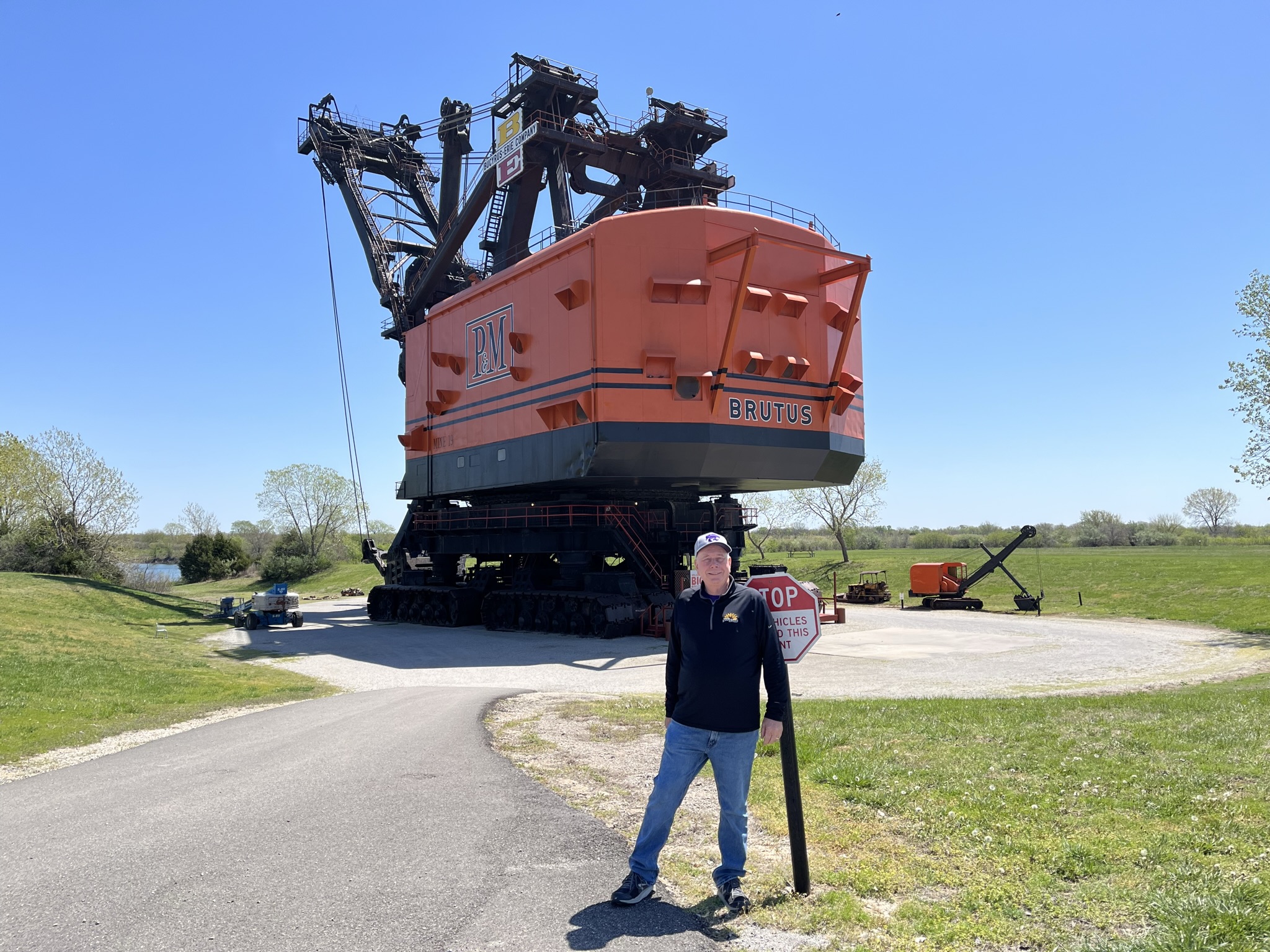
So, for his second road trip after retirement, he visited a big old dirt digger called Big Brutus. He said he'd always wanted to. And so he did. 

We got back last week from a trip that took us from home to southeast Kansas - where we saw Big Brutus - through Missouri, Illinois, Kentucky, Indiana and back home again. We covered  2,150 miles. 

Our first stop was Big Brutus, located in West Mineral, Kansas. It's out in the middle of nowhere, but as we got closer to the site, we could see the massive machine piercing the horizon from miles away, looking kind of like a giant grasshopper. We brought a picnic lunch, since there's no restaurant nearby.

Today, Big Brutus is on the Kansas and National Register of Historic Places. But back in the 1960s, it was a centerpiece of coal mining in southeast Kansas. Coal mining began in the 1850s, and during its heyday, more than 300 million tons of coal was processed.In the late 1800s and early 1900s, millions of immigrants came to America in search of a better life. During that time, underground mining of coal was one of the largest industries in the state, and immigrant laborers were a large part of the work force. The immigrants often needed a place to live, and the coal companies provided houses similar to this house as part of the miners' pay. A typical house was 150-square-feet and was built on skids so it could be moved as needed.

This house was used in a mining camp close to Mineral or West Mineral and was donated to the Big Brutus complex.

Big Brutus was one of the later tools used for mining. It was purchased in 1962 from the Bucyrus-Erie Company of South Milwaukee, Wisconsin, at a  cost of $6.5 million. To ship the shovel to Cherokee County, Kansas, 150 railroad cars were needed. From June 1962 to May 1963, a 52-member crew worked to assemble the shovel. The 1850-B is the only one of its kind ever built and was recognized as an engineering accomplishment at the time.

Newspapers of the time called it a "coal monster." And it was. The enormous power shovel towered more than 15 stories high and weighed 11 million pounds. 

The shovel in the foreground is dwarfed by the enormity of Big Brutus.

When Big Brutus began scooping dirt in June 1963, its 90-cubic yard shovel removed the overburden (dirt and rocks covering the coal seams) and with one scoop could fill three railroad cars. 


The coal shovel ran 24 hours per day, 7 days per week and was operated by a three-man crew.The operator sat in the cabin and ran the controls. An oiler made sure all the moving parts were lubricated. The groundsman worked with the operator to move Big Brutus forward and backward.

After Big Brutus took away the overburden, coal strippers moved in on the coal seams. That coal powered seven electric companies.

This helps give a little perspective. The treads stand taller than Randy, who's a little taller than 6 foot.

However, the minerals had been depleted by the 1970s, and the mines closed in the 1980s. Big Brutus gobbled up its last bucket of coal just a decade after arriving in Kansas. In 1973, the owners said it was too big to move and too expensive to dismantle. So they stripped it of its of its electrical and auxiliary equipment, leaving it to rust, a dinosaur of the technological age.

Eventually, a non-profit corporation dedicated to the mining heritage of southeast Kansas decided to make Big Brutus the centerpiece of a museum. The P & M Coal Company donated the shovel, 16 surrounding acres, and $100,000 to the project. Volunteers restored Big Brutus, and it now operates as a museum featuring the largest existing electric shovel in the world.

A couple of trucks are also exhibited on the museum grounds. Randy is in this photo, though the lighting makes him hard to see.

We were curious how the big machines on Discovery Channel's Gold Rush would look, compared to Big Brutus. In a Google search, an article says that a 750 excavator bought by gold miner Parker Schnabel in 2021 can hold up to 8.5 tons of dirt. Big Brutus' dipper handled 90 cubic yards - or 150 tons - of overburden in one scoop. 

After we left Big Brutus, we traveled on Route 66 for a little bit. Of course, that rated another photo by a mural in Avilla, Kansas. Route 66 through Kansas is the shortest of all the states, only about 13 miles.

Route 66 may not have covered many miles ... but we sure did. More from the trip next time.

Thursday, April 13, 2023

Say Prunes?


Simon & Augusta Fritzemeier - Randy's great grandparents - 1905

Say CHEESE! It's the ubiquitous expression when we're trying to get everyone to smile for a photo.

But say PRUNES? That's a new one for me!

Photographers have relied on the magic of cheese for decades — just mentioning the word is enough to turn up the corners of our mouths into a picture-perfect grin. But the earliest photographers utilized a different food to help purse their subjects’ puckers: prunes. According to Christina Kotchemidova, a communications professor and researcher, British photography studios of the past encouraged people to say "prunes" in an effort to tighten their lips, a look that was more socially preferable than a wide smile.

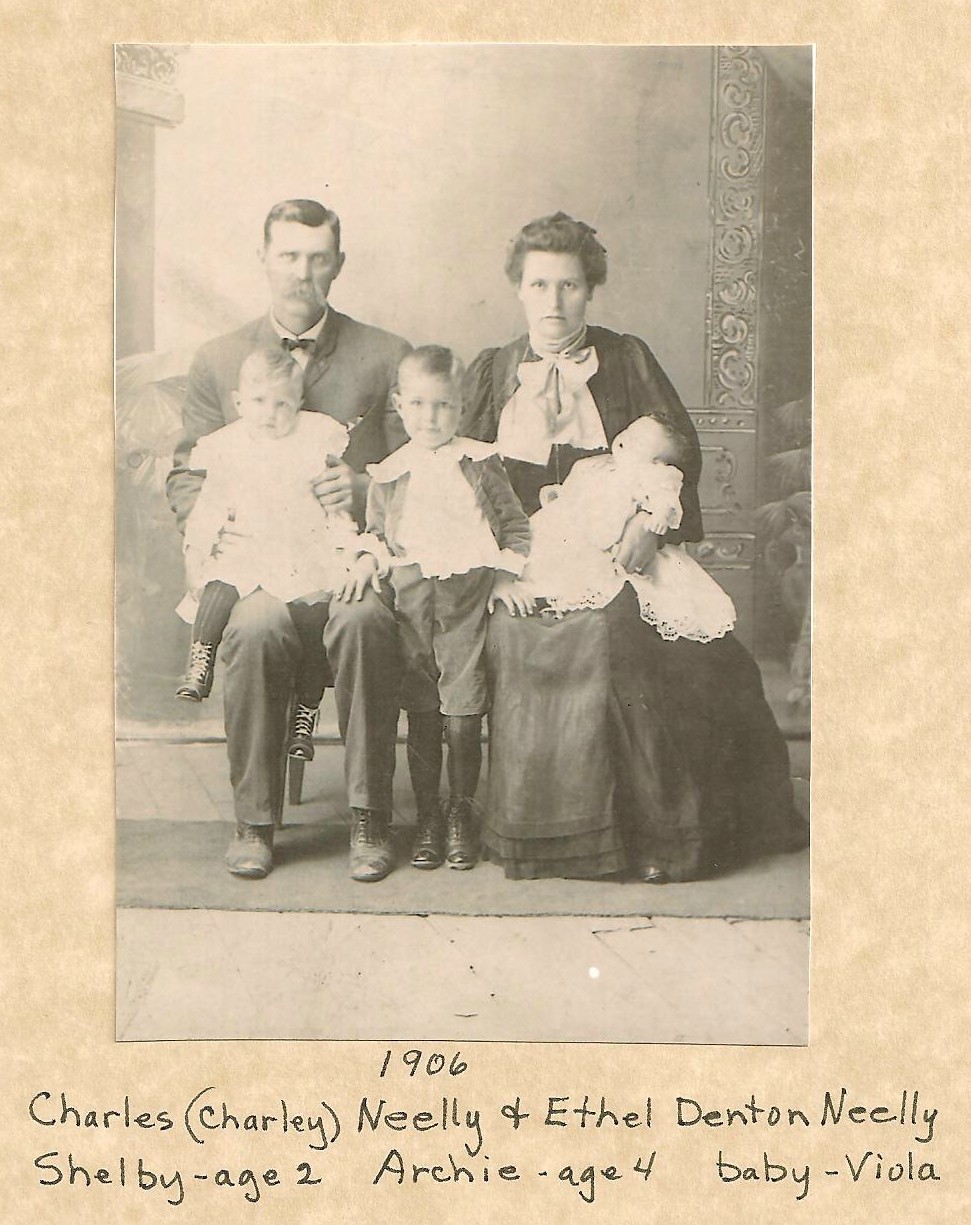
My great-grandparents with their first three children, including my Grandpa Shelby Neelly

I saved the information from Interesting Facts last week. With Easter coming up, I figured there would be photo opportunities. And there were. On Easter, I took several photos at church of my sister and various combinations of their family. 

May be an image of 8 people
My sister, Lisa, and her husband, Kyle with their eight grandchildren.

And I knew I'd be taking plenty of photos of Kinley and Brooke during a post-Easter visit to Topeka. So I suppose the article peaked my interest. 

May be an image of 2 people
Brooke & Kinley during our trip to the Topeka Zoo on Monday.

These days, we are all smiles when it comes to photos. But most 19th- and early 20th-century photos show subjects with a solemn expression, a look that’s often attributed to the long exposure times of early camera. Holding a neutral expression for several minutes was easier than maintaining a smile.

My grandparents on their wedding day

But social norms also played a big role. Stern faces remained popular even after photo technology had improved well enough to easily capture smiles by the late 1800s,. Some historians say that smiling was once considered improper. 

Randy's grandma Laura Russell and her sister Mildred Russell - undated

Beauty standards of the time called for mouths to have a subdued appearance. Kotchemidova’s research suggests people were expected to have "carefully controlled" mouths with small pouts. 

I guess the little boy in this undated photo - Randy's uncle Alvin - didn't get the memo, though his grandparents, Alvin & Laura Ritts did have pleasant expressions. I also noticed that his grandfather gave a small smile in their undated wedding portrait.

Alvin & Laura Ritts - undated

According to one study of nearly 38,000 high school yearbook photos from the 1900s to the 2010s, smiling in photos became more popular by the mid-20th century. That may be true, but here are my Great Grandma and Grandpa Neelly in their 50th anniversary portrait in 1950. They look pleasant, I suppose, but still no big smiles were evident.

1950

Some historians believe the switch was influenced by two factors: dental care and home photography. Without widespread access to dental care, missing or rotten teeth were common a detail many wouldn't wanted to feature in their portrait. Dentistry became a more established field in the early 1900s, the same time period when Kodak was marketing its amateur cameras as a way to capture life's happier, spontaneous moments - smiles included. 

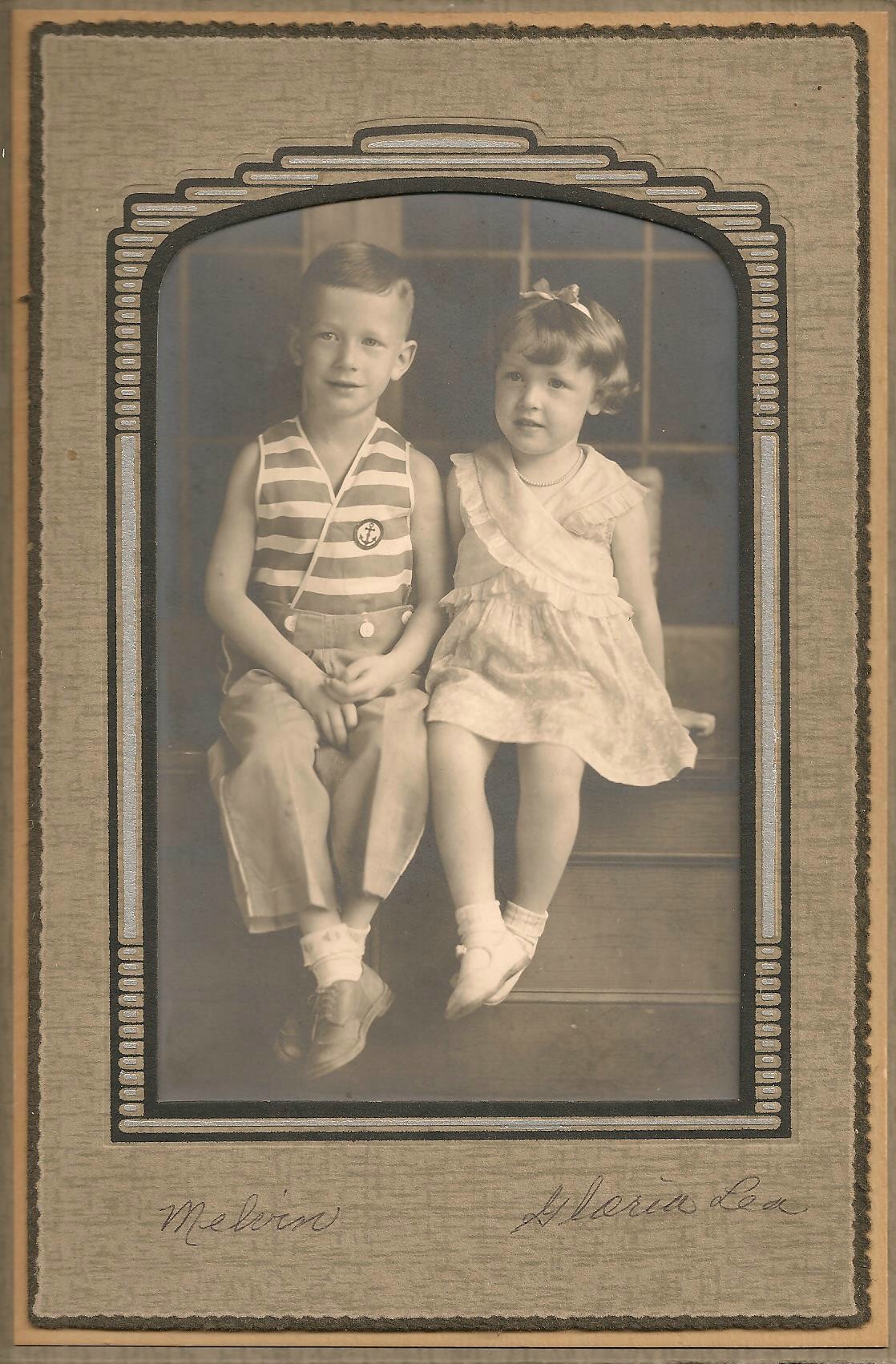
Randy's dad, Melvin, and Melvin's little sister, Gloria, were smiling in this undated photo, so perhaps the tide was shifting for children by the 1930s and '40s. 

 Nowadays, Grandma Kim can be counted upon to document activities with plenty of photos. No saying "PRUNES" on my watch! So far, the girls are still cooperating.

May be an image of 2 people and text that says 'TOPEKa EL. 55.0 CONCESSIONS'

May be an image of 1 person and text that says 'JS W'? ARM SPAN? WHAT'S बाW The arm span fa male orangutan can be feet. HOW DO YOU MEASURE UP?'

 May be an image of 1 person

Kinley, Brooke & Summer the Labradoodle

Does it look like the dog is smiling, too?


Tuesday, April 4, 2023

Let Me Love


syn·chro·nic·i·ty: A meaningful coincidence—an event on the outside that speaks to something on the inside—as opposed to just a random occurrence

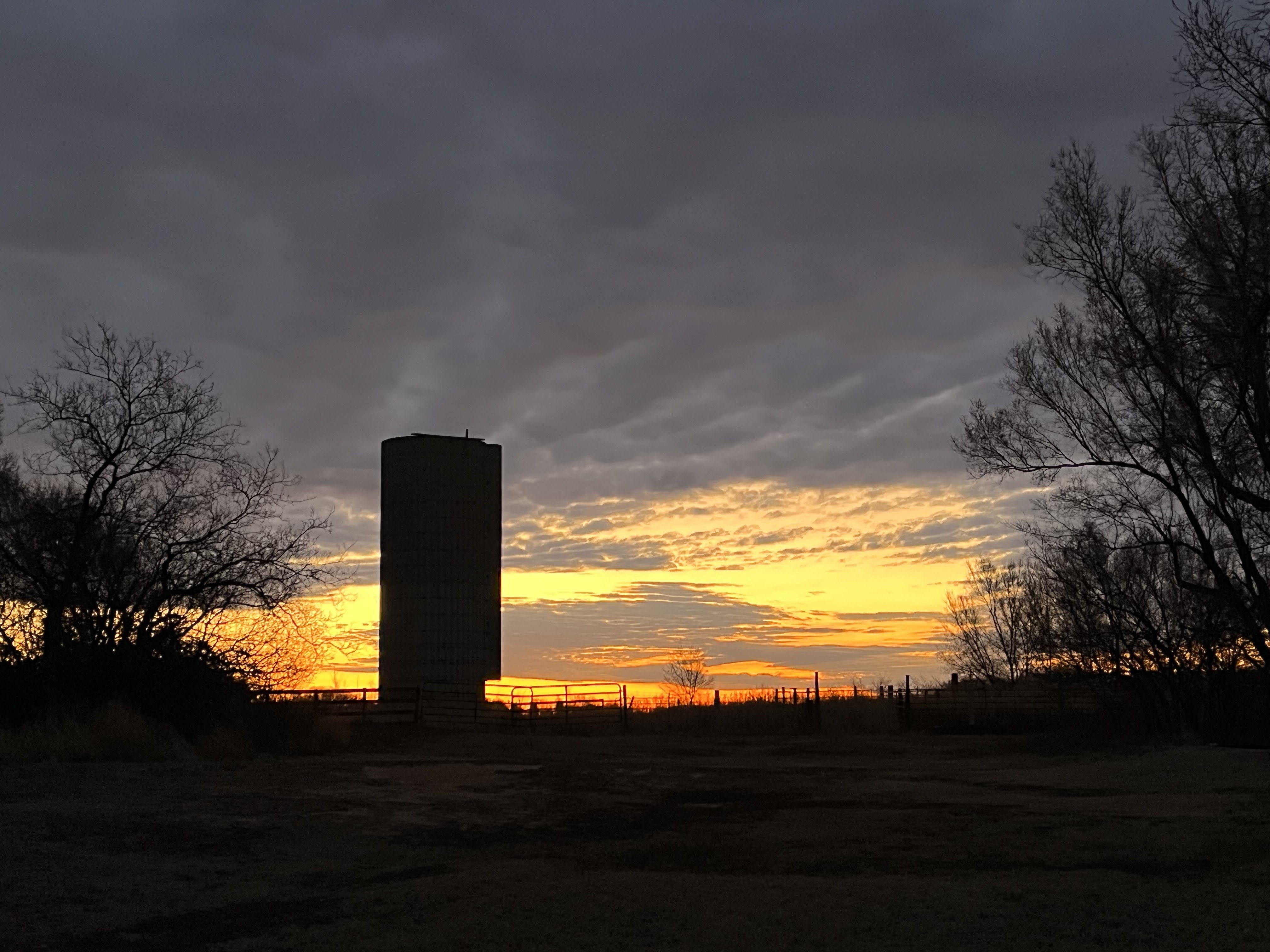
Do you ever feel like messages are coming to you like a flashing movie marquee? Or maybe like light breaking through the darkness of predawn, silhouetting a Kansas silo at sunrise?

During Lent, as we've traversed our way toward Holy Week this week, it has seemed that I'm seeing messages about love and light streaming into my mind. It's come in disparate way - listening to scripture at church, watching NCAA basketball, shivering in the coolness of a Kansas morning as I watch the sun's ascent, searching for music for a community Palm Sunday service or opening a series of unrelated emails. 


It has seemed a little like the planets coming together - kind of like we were supposed to see in our night sky last week. While I may not have had success in the nighttime sky realm, I do find messages - or God winks - scattered throughout the minutes of my days. 
 
After my K-State Wildcats defeated the Michigan State Spartans in overtime in the Sweet 16 of the NCAA Tournament, our head coach - Jerome Tang - talked to a sideline reporter and had this to say:
 
"When you love people, it's amazing what you can accomplish."
Jerome Tang, Kansas State University men's basketball coach
after an overtime win in the NCAA tournament 
 
(Photo by Jamie Schwaberow/NCAA Photos via Getty Images)

I immediately sent the quote to my kids and to several friends. Earlier that week, my friend, Linda, and I had gotten together to practice my solo for the Palm Sunday community service. I had combed through lots of music, but I kept coming back to one song called "Let Me Love." 
 
The words include:
Lord, You came to dwell on earth and share with us our lot.
You became our Sacrifice, our lives on Calv'ry bought.
Take this simple life, dear Lord; Take complete control.
Put the love of Jesus in my soul. ...

The song is certainly not showy. It wouldn't be one of those songs to get "The Voice" coaches on TV to hit their buttons and twirl their red chairs. It doesn't cover huge vocal range or have a huge ebb and flow of dynamics. But while the melody and the tune are simple and straightforward, the message isn't necessarily easy. 
 
After we were done practicing, Linda and I sat to chat for a little bit. Just a few weeks before, Stafford had united behind our boys' basketball team as they made their first appearance in 70 years at the state basketball tournament. A sea of red t-shirts filled the stands as the Trojans took to the court. At the time, people commented on Facebook about it bringing the town together. 
 
And it did ... for a little bit.
 
But it didn't take long for us to forget that comradery, that feeling of united purpose. The contentiousness crept back onto Facebook as neighbors railed against other neighbors - with Facebook posts to prove the point. 
 
 
Ripples inevitably spread out from all of us - both positive and negative.
 
Stafford certainly isn't alone in that. Turn on the evening news or scroll through Facebook or Twitter. Do people like being bent out of shape? It sometimes seems so. 

It could be easy to be discouraged by that. And, I sometimes am.
 
But even in the midst of my discouragement, I kept getting related messages.
 
I'm not sure how I got on an email list for an Inspiring Quotes email, but I did. And I often find inspiration from those posts. One recent one featured the words of poet Shel Silverstein:

How much good inside a day?
Depends how good you live ‘em.
How much love inside a friend?
Depends how much you give ‘em
.

– Shel Silverstein 
 “How Many, How Much" from "A Light in the Attic"
Stafford UMC

Another Inspiring Quotes email featured the words of writer Edith Wharton. 

There are two ways of spreading light: 
To be the candle or the mirror that reflects it.
Poet Edith Wharton
 Christ candle & the cross at Stafford United Methodist Church

In other words, carrying on the “light” of another — be it ideas, joy, love, or inspiration — can be just as valuable as creating it yourself.

I saw another post from Character Counts, titled "Courtesy is Kindness in Action." Here's part of what writer Michael Josephson had to say:

As a society, we have become almost obsessed with identifying and asserting our rights – to think, say, and do what we want. That’s not surprising, given the history of our country and the prominent role the Constitution and Bill of Rights have played in shaping our culture.

We have a right to be unkind, thoughtless, and disrespectful – but it isn’t right.

Ralph Waldo Emerson pointed out, “Life is short but there is always time for courtesy.”

The idea is to act in ways that make the people we are dealing with feel valued. Courtesy is kindness in action....Always be kinder than necessary because you can never be too kind.
Michael Josephson


I get several daily devotional emails. Sometimes I find them more meaningful than other days. I'm sure that has more to do with my attitude - not the devotionals themselves. Some days, it's just another confirmation of the other messages that subtly come into my day. 

The devotional New Each Morning had this to say:

Today's Reflection

Each time we step out of our comfort zones and into the messy and sacred world of caring about others, we risk stepping in the confusion of humanity. We may find ourselves asking questions about God and about this world filled with both beauty and affliction. When we share our journeys and questions with one another, our capacities to love and serve with humility, faithfulness, gratitude and peace grow.
- Rebecca Bruff, Loving the World with God: Fourth Day Living (Upper Room Books, 2014)

Today’s Question

 Reflect on the prayer of St. Francis today:
Lord, make me an instrument of your peace.
Where there is hatred, let me sow love.
Where there is injury, pardon.
Where there is doubt, faith,
Where there is despair, hope.
Where there is darkness, light.
And where there is sadness, joy. 
 

Today’s Scripture

And let us consider how to provoke one another to love and good deeds.
Hebrews 10:24 (NRSV)
 
It sounds like a goal to aspire to during this Holy Week. I hope to still find the light in situations - both physically and spiritually.  


Tuesday, March 28, 2023

1980s Tupperware and Anniversaries


I've been married so long that my Tupperware is considered "vintage." Every so often, someone will post a meme on Facebook, asking who still uses their yellow Tupperware colander. 

Since I try to be a savvy Facebook user and not get sucked into conversations with potential scammers, I just smile and nod to myself. I may even have a conversation with myself, "I just used that for dinner today." (Don't judge: Don't you have conversations with yourself? If not, don't answer that!)

Anyway, that yellow Tupperware colander has been in a kitchen drawer for our entire married life. And that number just went up. Today is our 42nd wedding anniversary. We got married at the Pratt United Methodist Church on March 28, 1981. There was a deluge as we were traveling to the church, but the sun came out as we left for our honeymoon. On March 28, 2009, we woke up to almost 2 feet of snow. I don't think either of us would have gotten to Pratt from our respective farm homes.

I've always said that rain was a good omen for a couple of farm kids. We could sure use some of that rain today. 

Wedding photos by Stan Reimer, Pratt, KS

Anyway, I don't remember specifically, but I'm guessing the colander was a gift at one of several bridal showers where I was guest of honor. 

At one of those bridal showers in 1981. Sue Thole made the aprons. We still have those, too.

The yellow colander joined the other popular Tupperware of the era - all in the shades of avocado green, golden harvest and orange. (Why couldn't blue have been the popular color in the '80s?)

Found at 80sThen80sNow on Twitter

I couldn't find the meme with the yellow colander, but here's one with a similar product. I still have my pitcher in the same harvest yellow as the colander, complete with set-in tea stains that are well beyond ever being bleached out. 

When I Googled vintage Tupperware, I realize I still have some of those items in my Tupperware cabinet. Another popular bridal gift at the time was brown Pyrex. I have multiple 9 X 13 baking pans in brown, along with a pie plate and a round casserole dish, though the casserole's glass lid broke several years ago.

With our anniversary approaching, I thought about that Tupperware colander in another way. Maybe it could be used as a metaphor for marriage. 

I use the colander to strain out extraneous liquid and keep the "good stuff." Marriage is kind of like that, too. Some of the "stuff" needs to get washed away - the misunderstandings, the disagreements, the hurt feelings ... you get the idea.

But, if we wash that extraneous stuff away, we're left with the "good stuff." As I emptied the dishwasher recently, I thought about how those leftovers from the 1980s bridal showers could be a metaphor for marriage itself. They may have a few stains. Some of the pottery may have a few chips and dings. The surfaces aren't pristine any longer.

But isn't that the way we are, too? There are cracks and dings and imperfections in our lives, and, yes, our bodies, too. But we are still of value. 
 
It's kind of like the story of The Velveteen Rabbit, when a stuffed animal becomes real by being loved. I just love the message:
 "Real isn't how you are made," said the Skin Horse to the Velveteen Rabbit. "It's a thing that happens to you. When a child loves you for a long, long time, not just to play with, but REALLY loves you, then you become Real."
From Margery Williams' The Velveteen Rabbit

During several of our anniversaries, we worked baby calves. It was that time of year, so you do what needs to be done. On one anniversary, we had to round up an escaped bull. Randy asked, "Did you expect to be doing this on your anniversary all those years ago?" I just laughed and shook my head because all those years ago, I was more concerned whether the flower girl was going to stand in the right place during the ceremony and whether I'd get down the aisle without tripping in my unfamiliar high heels.


"Well," I told him back then, "I don't know that I would have imagined I'd be moving a bull on my anniversary. But I expected to still be married. I wouldn't have done it otherwise."

Being married isn't always easy. But through all the imperfections, we have definitely become more "real" and more loved ... just like that Velveteen rabbit. And I couldn't ask for more than that.
For an inside family joke, read this blog post from the early days of the blog, A Living Doll. It also talks about the Velveteen rabbit! 
 
 
Happy Anniversary, Randy!