Showing posts with label Kansas wheat farmer. Show all posts

Tuesday, June 11, 2024

Happy Birthday, Turkey Red!

Photo note: This and all the other photos in this post - with the labeled exception - are from the Kim's County Line archive.
 

It may seem an archaic custom in 2024. But, back when I was a teenager in the 1970s, girls often received "hope chests" as gifts. Historically, it was a place to store linens and other household goods and the cedar-lined box kept away moths and pests.  I believe I got my hope chest when I graduated from high school. It still sits in our bedroom and has my kids' outfits they wore when they came home from the hospital, among other "treasures."

But it was a "hope chest" of another kind that continues to impact Kansas today. This chest delivered Turkey Red Wheat seed thousands of miles from the Ukraine to the United States, where Mennonites looking for religious freedom hoped to make a new life. And they did just that, planting the wheat kernels that helped transform Kansas' wheat industry. 

Seed chest exhibited at the Mennonite Heritage and Agricultural Museum, Goessel, KS. Photo from History.com

Bernhard Warkentin, the son of a Mennonite miller who is credited with setting up Ukraine’s prosperous wheat industry, came to the United States in 1871 to scout possible sites to do the same in America. Along with several of his fellow Mennonites, he traveled for two years by both horse and train covering a distance of over 10,000 miles in places like Canada, the Dakotas and Minnesota, looking for the ideal terrain.

In Kansas, he found what he was looking for: “The climate here is similar to that of the steppes in Ukraine,” says Fern Bartel, director of the Mennonite Heritage and Agricultural Museum in Goessel, Kansas. “Long winters. Dry in the summer, rainy in the fall and spring.”
From History Channel's "The Tools that Built a Nation"
 

In 1874, Warkentin settled in Halstead, Kansas, building a grist mill on the banks of the Little Arkansas River and encouraging other Mennonites to join him. Some 12,000 Mennonites moved to Kansas, mainly as a result of Warkentin's efforts. Many of them became wheat farmers. 

Wheat Harvest 2024 got under way in our area on Saturday, before being curtailed by a nice 1.70 inches of rain Saturday night into Sunday morning. (The rain was too late to help this year's wheat, but it certainly helped the spring-planted corn and soybean crops, alfalfa, pasture lands and farm ponds. Nobody around here was complaining about the delay to wheat harvest.)

Maybe the start and stop story of harvest is not so different from that of those immigrating farmers years ago. Certainly, the ultimate goal has not changed - using the land to produce food and fiber for the world while also providing for our own families. 

During Wheat Harvest 2024, we celebrate 150 years of Turkey Red Winter Wheat in Kansas. 


Before the Mennonites came to the region, many farmers who'd moved from the eastern regions of the U.S. were planting spring wheat, which was more acclimated for the Eastern seaboard. However, Kansas’s summers are hot, dry and windy, not ideal for wheat seedlings to thrive and produce a crop. On top of that, grasshopper swarms in the summer would completely devour what wheat did manage to survive.

But the influx of Turkey Red - a hardy winter wheat - was more suited to Kansas' climate. 


The Mennonite farmers arrived less than 10 years after the 34th State of the Union adopted the Homestead Act of 1862. It gave citizens or future citizens up to 160 acres of land if they lived on and improved it for five years. Many of those new immigrants from Ukraine took advantage of the Homestead Act to establish their own farms in Central Kansas. The first field of Turkey Red wheat was planted in Marion County in 1873 and harvested in the summer of 1874. The Mennonite farmers also brought new ideas to the region, Kansas Wheat reports. 
 
 
They also brought game-changing farming practices like leaving fields fallow in between planting cycles, applying fertilizer to fields and using large threshing stones to separate the wheat kernels from the stalks that enveloped them. Turkey Red was revolutionary, but it took time for the milling industry to adjust from milling soft wheat with lower protein and weaker gluten (think soft cookies) to the new hard red winter wheat, which had higher protein and stronger gluten (think of a loaf of bread that holds its shape). Just as the farmers discovered the hardiness of Turkey Red and the millers unlocked its better quality, the variety quickly spread and took over Kansas agriculture.
From a story from Kansas Wheat by Julia Debes, June 2024

At the same time, railroad lines expanded, communities were settled and giant elevators to store grain were built.

Turkey Red Wheat was one of the more popular varieties of wheat in Kansas until the 1940s, when higher–yield crops overtook it. But even today's varieties can trace their pedigrees back to foundations in Turkey Red hard winter wheat or other Crimean varieties. Kansas wheat accounts for nearly 20 percent of all wheat grown in the United States today.

[Turkey Red] genetic material is still the foundation of our varieties today. We’ve shortened them, we’ve given them stronger straw, we’ve improved drought tolerance and we’ve hopefully improved quality. But that’s really still the scaffolding on which everything is built.
Allan Fritz, Kansas State University wheat breeder 
Quote taken from a feature story by Jennifer Latzke in Kansas Farmer
 
Even today, visitors to the USDA Agricultural Research Service Southern Regional Performance Nursery in Lincoln, Neb., will see a check plot of Kharkov, a landrace similar to Turkey Red that is meant to show how the current wheat varieties stack up to the historic record. The world has come a long way from a 13-bushel per acre average in 1919 to the record 57-bushel average set in 2016 (also from the Kansas Farmer article)

Maybe the old farmers in the region looked at skepticism at those new farmers who brought different seeds and a different planting time table to the Kansas plains. However, Turkey Red winter wheat - and, ultimately, its descendants - were here to stay.

Just like the farmers of today, those long-ago farmers who'd carried those "hope chests" of seeds across the ocean didn't know what the planted seeds would yield until harvest time. Today, researchers continue to work on genetics that will improve yield and combat disease and drought. Manhattan, Kansas, is home to the Wheat Innovation Center at Kansas State University. K-State has a long history of sharing wheat germplasm with growers and farmers around the world, Fritz says,  even back to Ukraine, where Turkey Red first originated.
 
 
“There will only ever be one Turkey Red. That was really the foundation that we kind of built this whole industry and this whole region’s wheat production around."
Alan Fritz (quote from Kansas Farmer article)
Harvest 2021

Bernard Warkentin likely never dreamed that the seeds he and his Mennonite brethren were bringing to Kansas could one day lead to the state growing 244.2 million bushels of wheat in 2022, or 18 to 20 percent of the wheat crop of the United States. He may not have imagined that wheat production in the state would account for $4.3 billion of its economy and 15,245 jobs. Or that in 2023, half of every load of wheat that arrives at the local elevator would be destined for foreign buyers.

But, I'm sure glad he included Turkey Red wheat in his own "hope chest" as he left all he knew behind for a new adventure in a new land. 
 

***

For more information: The Goessel Museum is celebrating the 150th anniversary of Turkey Red wheat . Be sure to visit goesselmuseum.com, or stop by at 200 N. Poplar St., Goessel. Among the many exhibits you’ll see is the Wheat Straw Liberty Bell, a giant woven wheat art piece commissioned by the Smithsonian for display for the nation’s bicentennial in 1976.
 

And, to learn more about Turkey Red wheat’s influence in Kansas agriculture, listen to Kansas Wheat’s “Wheat’s on Your Mind: Thresher Nation” podcast episode, Wheat's on Your Mind, with Aaron Harries of Kansas Wheat and Glenn Ediger, author of “Leave No Threshing Stone Unturned,” a book about the Mennonites and Turkey Red wheat.


Thursday, July 13, 2023

Not the Year to be a Wheat Farmer!

2023 was not the year to be a wheat farmer.

The old timers always say that wheat has nine lives. However, this year, the first eight of those lives were spent like a parched and thirsty traveler looking for an oasis in Death Valley. By the time we started getting some rain in late May and June, the crop was already on life support.

I saved a Kansas drought monitor map at the end of April. It showed how much of Kansas was in exceptional or extreme drought. It wasn't the first or last time for that red to "bleed" over much of the state.


Usually, there is great anticipation and excitement as wheat harvest arrives. This year, there was no sense of urgency. People in our area still aren't done, but intermittent showers have made it hard to get over the ground.

Painting filter on photograph

As I mentioned before, Tye and Todd (who farm our ground) hire custom cutters rather than having their own combine. Frederick Harvesting from Alden arrived with four combines on June 28. By late the next day, they had cut the majority of our acres.

Since I began blogging in 2010, I've had a handy record of finish dates for our wheat harvest. They've been all over the board in the past 14 years:

2010: June 25
2011: June 20
2012: June 9 (an anomaly)
2013: July 6
2014: July 7
2015: July 1
2016: July 13
2017: June 28
2018: June 29
2019: July 22
2020: July 7
2021: July 12
2022: June 28
2023: June 29(four custom machines make it go quickly!)
 
The blog also made it easier to keep track of the average bushels per acre over our farm ground. Yield averages in the years since I've been blogging have been:
2010: 37.2 bu/acre
2011: 36.7 bu/acre
2012: 45.5 bu/acre
2013: 52 bu/acre
2014: 24.5 bu/acre
2015: 50 bu/acre
2016: 48.5 bu/acre
2017: 50.84 bu/acre
2018: 39.2 bu/acre
2019: 23.6 bu/acre
2020: 49.5 bu/acre
2021: 58 bu/acre
2022: 34 bu/acre
2023: 17.7 bu/acre

This year, the bushels per acre on our ground ranged from 4 to 32. 

There will be a lot of insurance adjusters in our area in the coming days because the poor crop was universal. Back in June, it was predicted that Kansas farmers would reap their smallest harvest in more than 60 years. For decades, Kansas has led the nation in wheat production. For the last two years, a drought has withered a lot of the crop.

While the final numbers aren't in, this year’s wheat harvest in Kansas is shaping up to be the smallest since 1957. That year, the Eisenhower administration intentionally suppressed wheat production. Last year, Kansas produced 244 million bushels of hard red winter wheat. It remains to be seen what the tally will be this year.

But, this is wheat country. Here's hoping for a better crop next year!


Tuesday, June 28, 2022

This Is Us: An Overhead Glimpse of Harvest 2022

Thanks to our neighbor, Mark Pike, for these drone images and his permission to share them. What a gift!

***


Just like 6.4 million other people, I watched the series finale of a family television drama called "This Is Us" at the end of May. Just by watching my Facebook feed, I know I'm not the only viewer who had a Kleenex box nearby as I watched the finale episode about a family we all got to know and care about during six seasons of Tuesday nights.

I'm not sure how many people then scoured the internet to find quotes from the episode. But there was at least one. (That was easier than starting and stopping the DVR for me to take notes. And since I found a compilation of "This Is Us" quotes, I'm fairly confident that I'm not the only one.)

In it, the mom, Rebecca, is traveling on the metaphorical train toward death after suffering from dementia for several years. And I was struck by the words from her "conductor," William:

"The way I see it, if something makes you sad when it ends, it must have been pretty wonderful when it was happening. Truth be told, I always felt it a bit lazy to just think of the world as sad, because so much of it is. Because everything ends. Everything dies. But if you step back, if you step back and look at the whole picture, if you're brave enough to allow yourself the gift of a really wide perspective, if you do that, you'll see that the end is not sad, Rebecca. It's just the start of the next incredibly beautiful thing." 
William to Rebecca, This Is Us, series finale

I saved the quote (and a few others). And I thought about it again when our neighbor, Mark Pike, sent some drone photos he'd taken of our harvest - our final one as active producers.


Undoubtedly, the drone gives that wide perspective - a little bigger picture than I'm able to see with my normal "boots-on-the-ground" view through my camera lens.


For some reason, the drone pictures - and that different look at harvest - had me pulling out the Kleenex box again.


Through the years, I've tried to document harvest to the best of my ability. Since I began Kim's County Line in 2010, I've made an even more concentrated effort, but the efforts to photographically show and tell the journey of wheat - beginning to end- have been part of my DNA for long before then.

I've taken some spectacular shots - and a whole lot that weren't noteworthy at all. But, for some reason, these photos taken from a bird's eye view were particularly poignant. 


"The way I see it, if something makes you sad when it ends, it must have been pretty wonderful when it was happening."
 
That bears repeating, I suppose. But I also know this process is a little like childbirth. The mom develops a bit of amnesia about the rigors of the birth process itself. Otherwise, the whole world would be single children - or so the joke goes.
 
So, as I look back on 41+ years of farming with Randy (and a lifetime for both of us before that), I have a tendency to remember the good - the rides in the buddy seat on the combine, my book in my hand after the conversation was exhausted. ... The wildlife making a hasty retreat as the mighty machine takes another swath of field ... The vibrant green peeking through brown soil, a yearly miracle. ... The dewy raindrops caught on green wheat. ...The sound of wheat, rustling in the Kansas breeze. God's masterpiece sunsets sinking into the western horizon as the combine rumbles toward it and seems to gobble up the light. And so much more.

You don't wax nostalgic about yet another trip to the parts counter or the third flat tire in a week or your legs sticking to the plastic seat of the truck or the buckets of sweat. You realize that you're not bounding up the steps of the combine like you did when you were that teenaged truck driver. You aren't thrilled with the rash you develop during harvest or the pesky cheat that gets stuck in your socks. You don't fondly remember those phone calls to hire a Caterpillar to come pull both the combine and the tractor out of mud - and the accompanying bill. While Harvest 2022 was pretty smooth sailing the first week, perhaps I needed a reality check - and got one. We had a rain delay, and, when we got up and running again after a day and a half, I got the call that I needed to come help get the truck pulled out. (Plus, since we hadn't used the tractor for awhile, it had to be jumped before it could do its job. Mission accomplished - but it was a circuitous route.)

But those moments of aggravation don't take away from the life and lifestyle that we've lived and loved. It's not for everyone. We didn't do it perfectly. I'd change some things.


But, a bird's eye view helps me remember that it was - and is - a beautiful life. 

Toward the truck, that field finished
 
In another quote from "This Is Us," Dad Jack tells his kids:

“That’s what we’re doing, just collecting these little moments. We don’t recognize them when we’re in them because we’re too busy looking forward. But then we spend the rest of our lives looking back trying to remember them, trying to be back inside them.” 
 

So I find myself doing a bit of that. I think it's natural, as we change directions.

Mark also included a drone photo of Randy's folks' house. It sold on June 4, and a new family will begin building a life and making memories there, beginning in mid-August.


I just hope they'll look back - years from now - and have those moments to collect and remember, too. 

And, as for us, we may get done with wheat harvest today, after getting rained out yesterday again. Then it will be time to get things ready for the farm sale coming August 13. 

And, hopefully, just like William told Rebecca: "It's just the start of the next incredibly beautiful thing." 

***

Mark shot drone footage two harvests ago. He didn't send any video from this harvest, but here are some repeats of 2020 videos


.  


I actually got a pretty awesome still shot from that 2020 harvest night, too. The sky was breathtaking. I enlarged this one to canvas size.

Harvest 2020

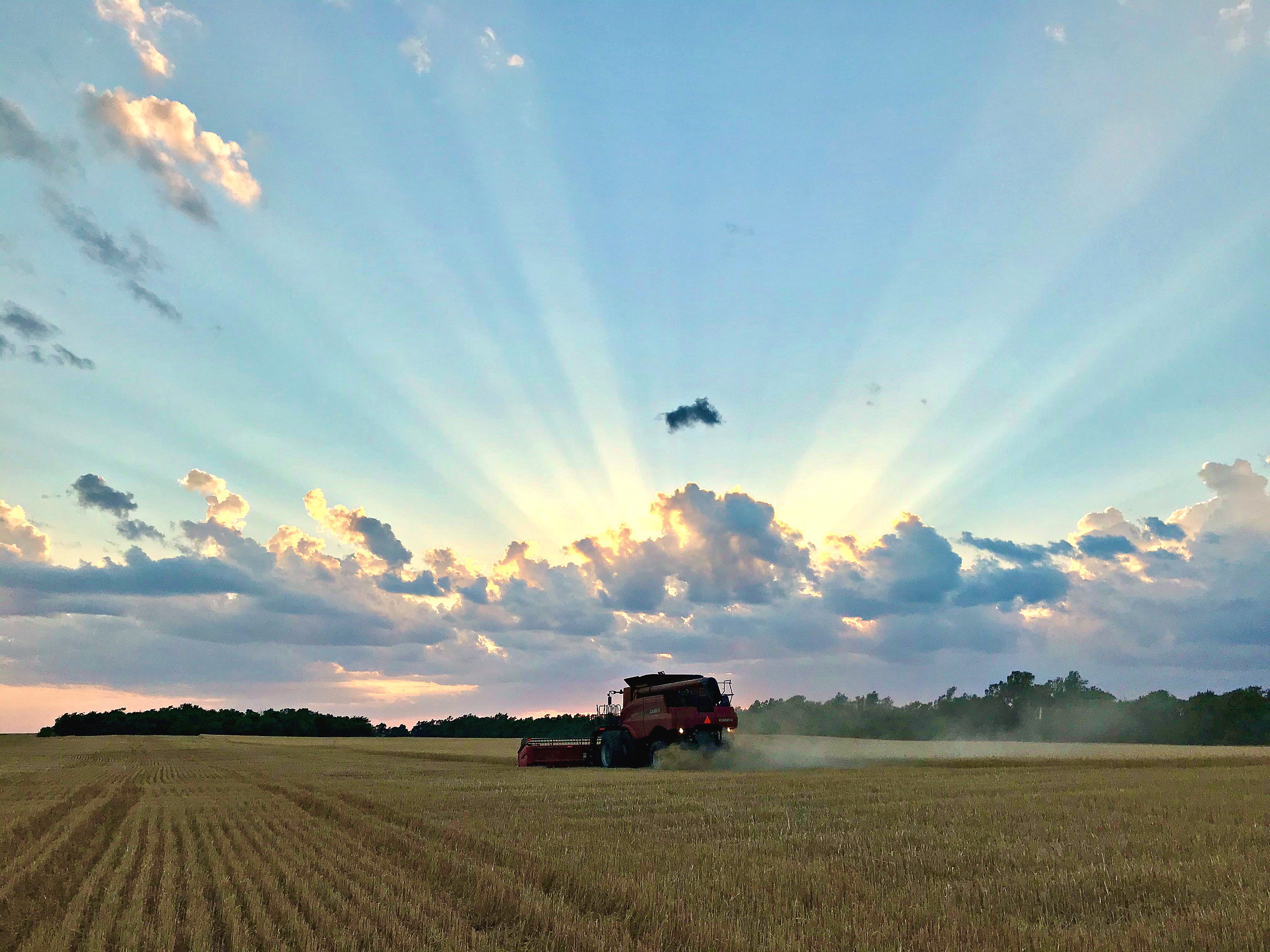
A shot I got Saturday night, June 25, reminded me of that one. 

Harvest 2022

For more from the post about the 2020 harvest, click HERE. And, thanks again to Mark!

Tuesday, June 21, 2022

Giving Up the Co-Pilot's Seat: Wheat Harvest 2022


We almost needed one of those number dispensers that they used to have on the counter at Baskin-Robbins during the summertime rush. Plucking one of those numbers from the spool guaranteed your place in the line to order your scoop of one of 31 flavors.

It may not have been ice cream, but there was still a line to ride in Grandpa's buddy seat this past weekend, when the whole family made a quick trip to the farm. I didn't think it was going to happen. Jill, Eric and the girls had planned to come, but Brent and Susan had just returned from their honeymoon. However, Friday afternoon, they made the decision to get in the car and come, so they were last-minute additions to the harvest "party." 

There was no homemade ice cream - or Baskin-Robbins, for that matter - but there was frozen lemonade dessert for all.  And everyone got a ride or two (or 3) in Grandpa's co-pilot seat.

It made my day - and weekend - to have everyone here together.

The bright sun may have not been particularly conducive to quality photos. But I'm still glad to have them as we celebrated wheat harvest as a family one last time.


I'm sure our kids remember wheat harvest with a mix of emotions. During such a busy time, there's pressure to get a lot done. The hours are long. The time is short. Machinery breaks down. You make trips to the parts counter or the co-op. You think things are fixed ... then they break again. The weather doesn't cooperate. Tempers boil over. By the end, people are exhausted. And after a celebratory dinner at a favorite restaurant (a harvest tradition), then there are always new farm tasks to complete - like the seemingly endless job of working wheat stubble to prepare it for the next crop.

But I also know they learned a lot about working hard ... working together ... doing a job well ... being dependable. Those long hours on the farm working with family helped shape them into the successful adults they are today.


As always, Randy loves combine "hitchhikers." And Kinley and Brooke are definitely favorite riders.


He loves answering their questions and introducing this generation to their agricultural roots. This year, Grandpa got to see them before I did. They spotted Randy on the combine as they drove by, and their parents let them out for their first combine ride of the weekend. It wouldn't be their last!


Randy is glad to tell them about their mom, who was our truck driver back in the day. They always come back to the house with reports of wildlife they've seen. Jill even got to see a bobcat.


This was the second year that Susan was part of our harvest-style family reunion.

We ate "out" with our special dinner guests.


Grandpa was the instigator behind this posed photo.


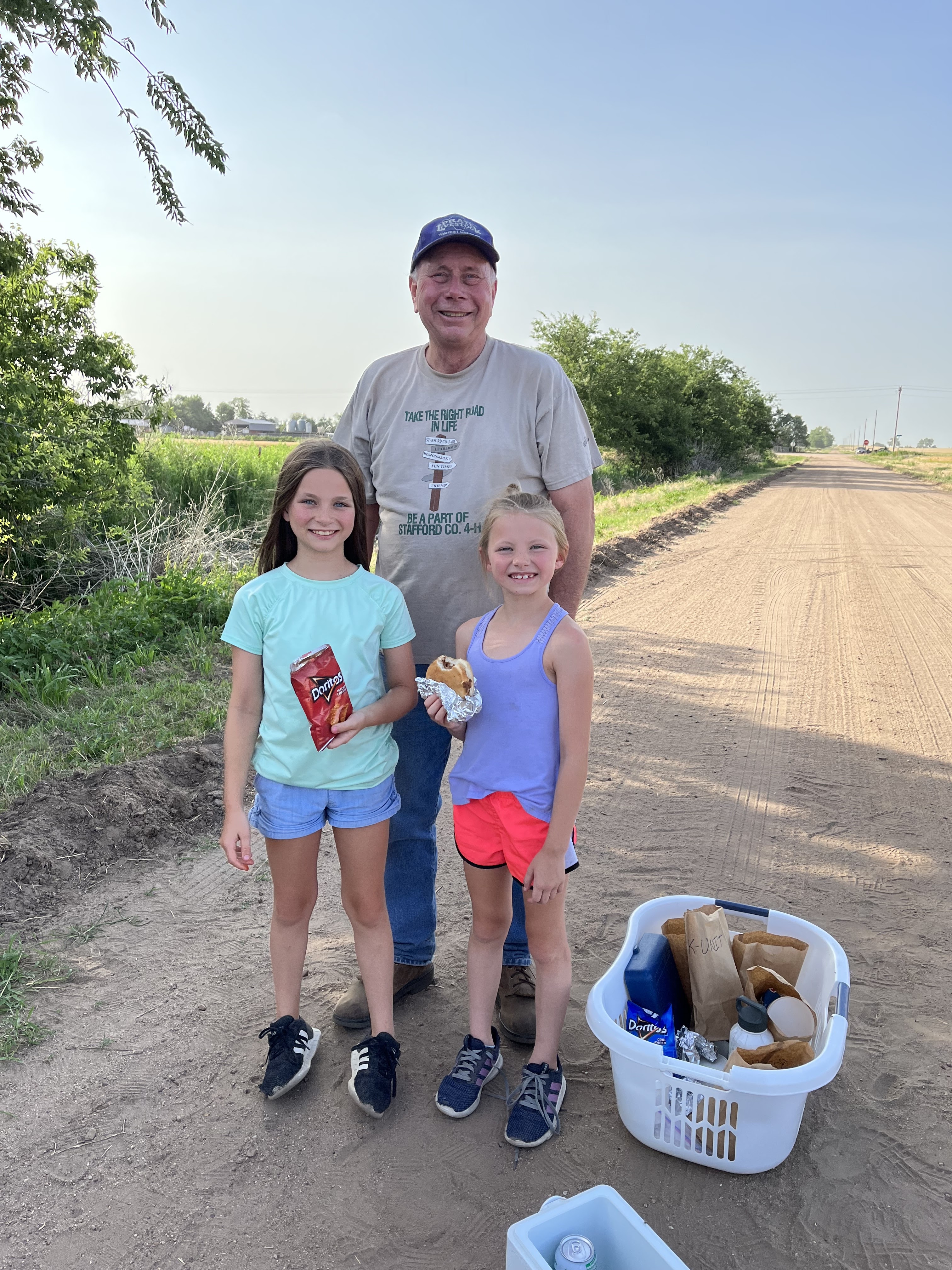
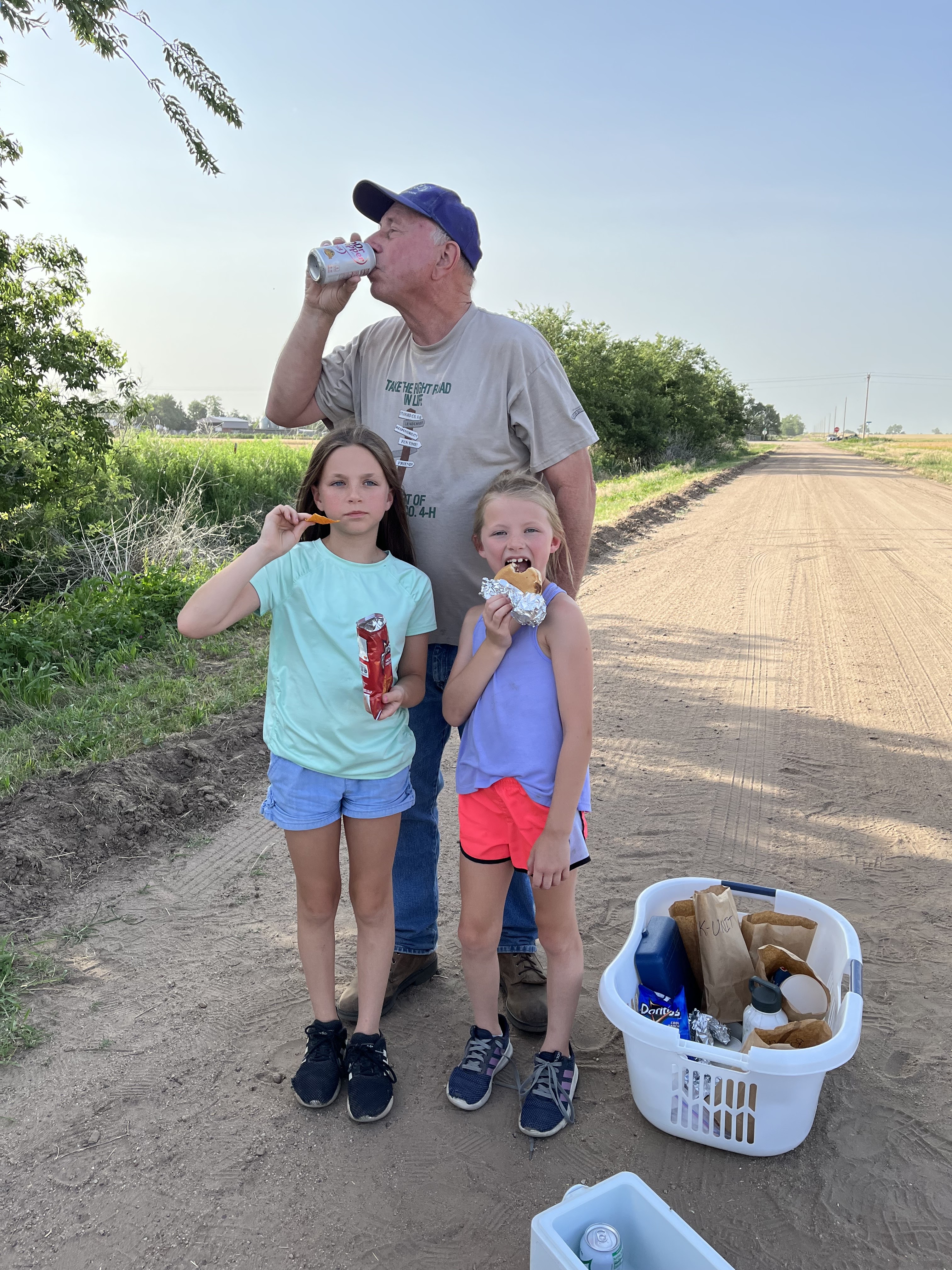
This type of "eating out" may not be the norm when you have dinner guests. Maybe they can't be called "guests" when they are drafted into work.


One afternoon, Brooke illustrated the lunch bags while Kinley rode the combine.


It's a tradition that the girls draw pictures showing each dinner guest's interests and hobbies.


There can be some interesting seating arrangements. Grandpa likes to stand up to eat since he spends hours sitting in the combine cab, so we don't bring a table and chairs, like some farm families do.

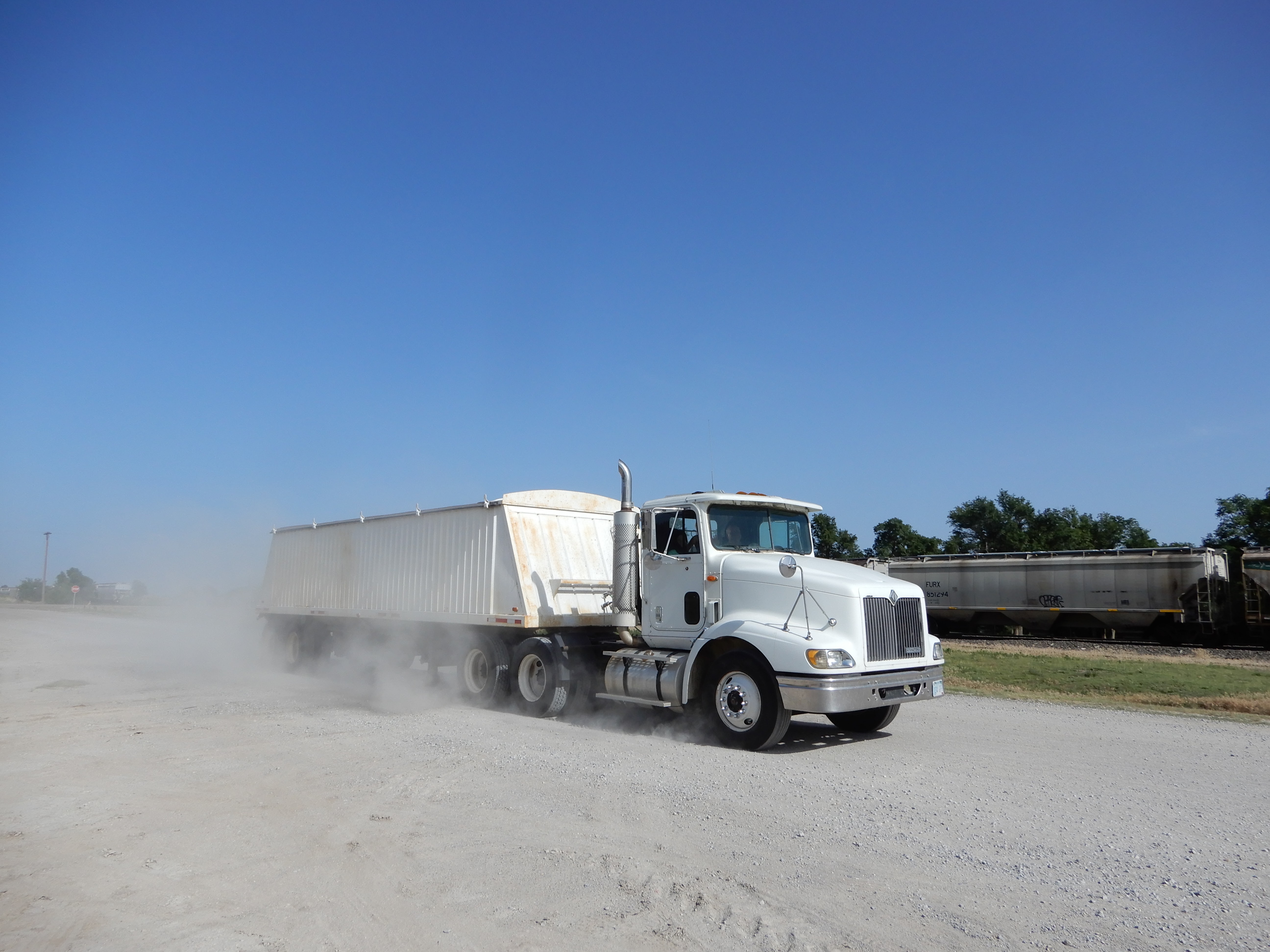
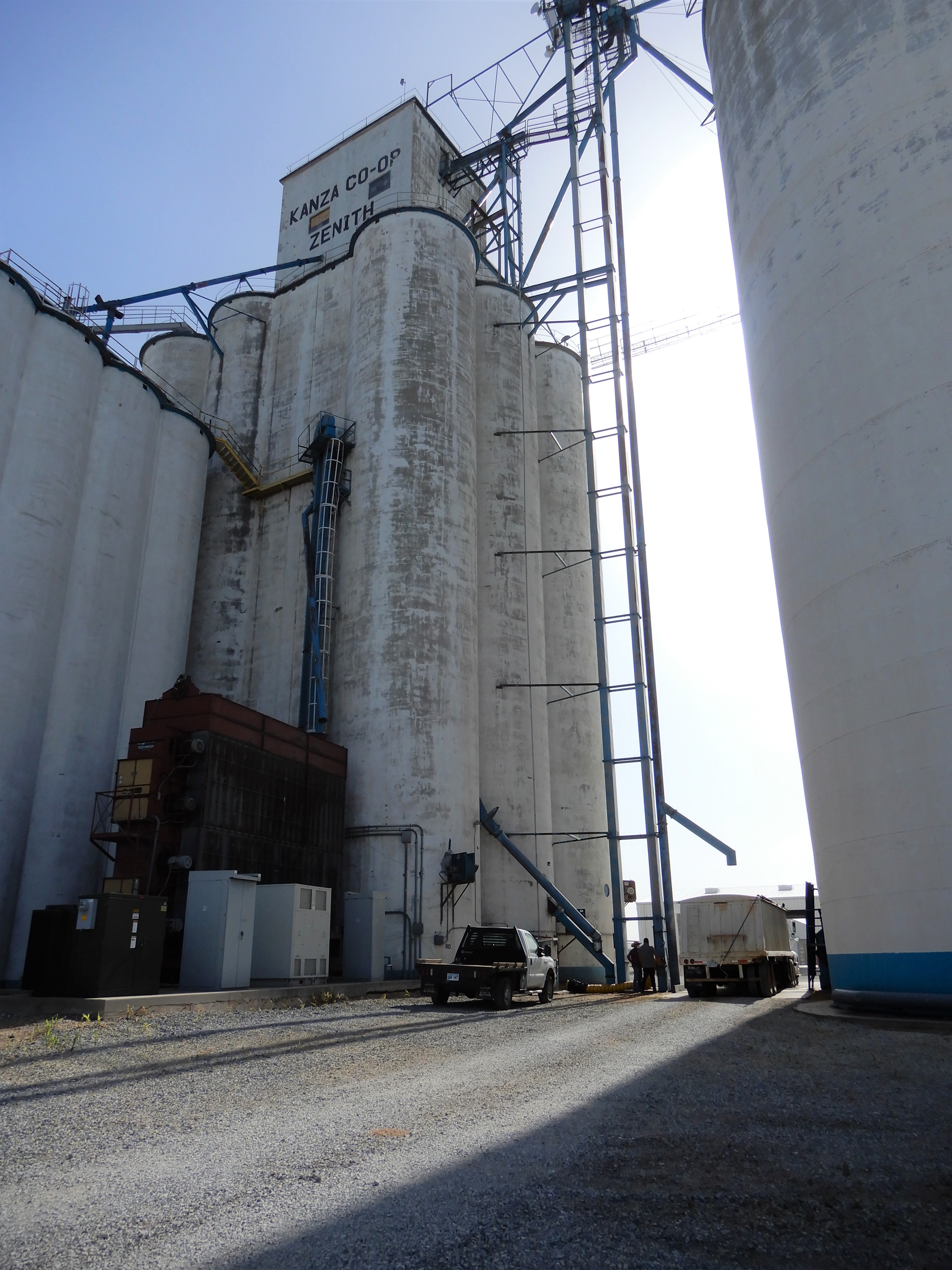
Since our truck driver fell through, Randy has been cutting the wheat, then hauling it to the co-op. But that made for another experience for the girls (and others) who rode along on the trip to Zenith.

There's a lot to learn at the elevator, too.

Cities aren't the only places with tall structures.


After the grain was dumped, they headed back to the scale house for the ticket, which gives the amount of grain delivered, the quality, the moisture and any dockage.


After supper, it was time for Daddy-Daughter time - old style. Jill rode with her dad both Friday and Saturday nights.

Photo by Jill

It was a flashback to her truck-driving days, when she'd catch a ride in the air-conditioning and wait for the truck to get filled before another trip to Zenith.

Everyone left shortly after lunch on Sunday to return to their own lives. But it was the perfect gift for a Father's Day weekend for a Kansas wheat farmer.

Photo by Jill

Then Randy was just left with me as a helper again. It may have been Father's Day, but those clouds - the first of this harvest season - seemed like a gift to amateur photographers like me.


More photos to come in upcoming reports!