Showing posts with label Mesa Verde. Show all posts

Tuesday, November 11, 2025

Plans Off a Cliff? Mesa Verde


Best laid plans: They don't always come to fruition. 

Three years ago, we visited Mesa Verde during our retirement trip. As I wrote then, Randy has a fascination with Mesa Verde, likely fueled by his second grade teacher, Laurabel Simpson. Even though it's been nearly 60 years, Randy still remembers Mrs. Simpson telling his class about her trip to Mesa Verde. 

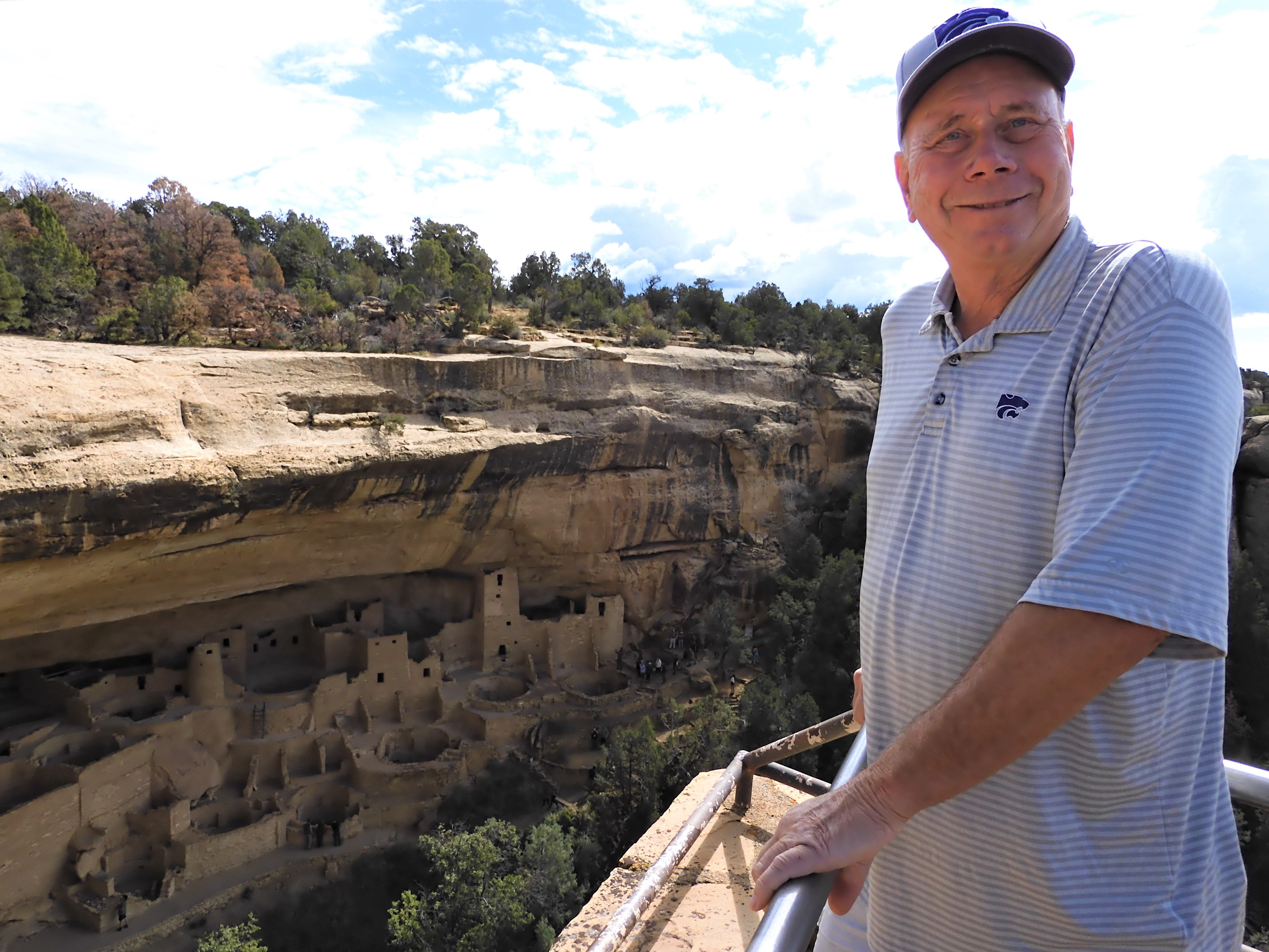
When we were there in 2022, he didn't get a chance to get a closer look at the cliff dwellings. So, for this trip, he had booked a guided tour. However, the government shutdown also shut down his chance. 

Nestled in the heart of Southwest Colorado, Mesa Verde National Park is a UNESCO World Heritage Site known for its ancient cliff dwellings, archaeological treasures and high-desert landscapes. Home to the Ancestral Puebloans for more than 700 years, the park offers a mix of cultural history and scenic beauty.  Established in 1906, Mesa Verde National Park was the first U.S. national park created to preserve cultural heritage. It protects nearly 5,000 archaeological sites, including 600 cliff dwellings built by the Ancestral Puebloan people between 600 and 1300 CE. Unfortunately, those cliff dwellings were off limits during the government shutdown.


Randy was disappointed that he wouldn't get the up close and personal look. But we were thankful we were still able to stay at the Far View Lodge located inside Mesa Verde National Park. It's not run by the government; rather, it's operated by an independent company.  


Their restaurant was also open, though we were nearing the end of the season for both the lodging and the food service. 

The Far View Lodge offered a sunset and sunrise view of Mesa Verde from our balcony. We got there soon enough to enjoy the view.

Far View Lodge is the only lodging within Mesa Verde National Park and sits on a high shoulder offering panoramic views and wildlife watching, according to their publicity materials. However, we didn't see any wildlife. The lodge has 150 rooms.


I read my book and drank coffee on the balcony while we waited for sunset, snuggling up in the blanket during a chilly afternoon. There was no television service at the hotel, but who needs that when you have a view, a book and a balcony?


I probably see more spectacular sunrises and sunsets from my Kansas farm home. But it's not every day that you get to see those two bookends to a day at a National Park. 


This was taken outside the restaurant while we waited for our table.

 Randy had made reservations in advance at the Metate Room. 


We knew it would likely be our most expensive meal on the trip, but it was delicious. 


We had the blue corn tortillas and prickly pear margaritas for our appetizer. 


I chose the Three Sisters Soup, a harvest soup made with corn, squash, and beans, a Native American staple. I wanted something native to the area. 

My entree was the salmon.


Randy chose the trout, which, I admit, was a more authentic Colorado choice. Both were delicious.

Did we need dessert after that? No, but we ordered churros filled with apple filling and accompanied by ice cream anyway.


I set the alarm so that we could witness sunrise the next day. 


As we arrived and as we left, we took time to stop at several of the overlooks. 

A traveler in 1892 described a trail on the ridge as the Crinkly Edge Trail. In 1911, the trail became the Knife Edge Road, a new section of the main park road. Two years later, the park built a bypass through Morefield and Prater Canyons. When the first automobile trip was made in 1914, vehicles used the bypass and the Knife Edge Road was soon closed. 

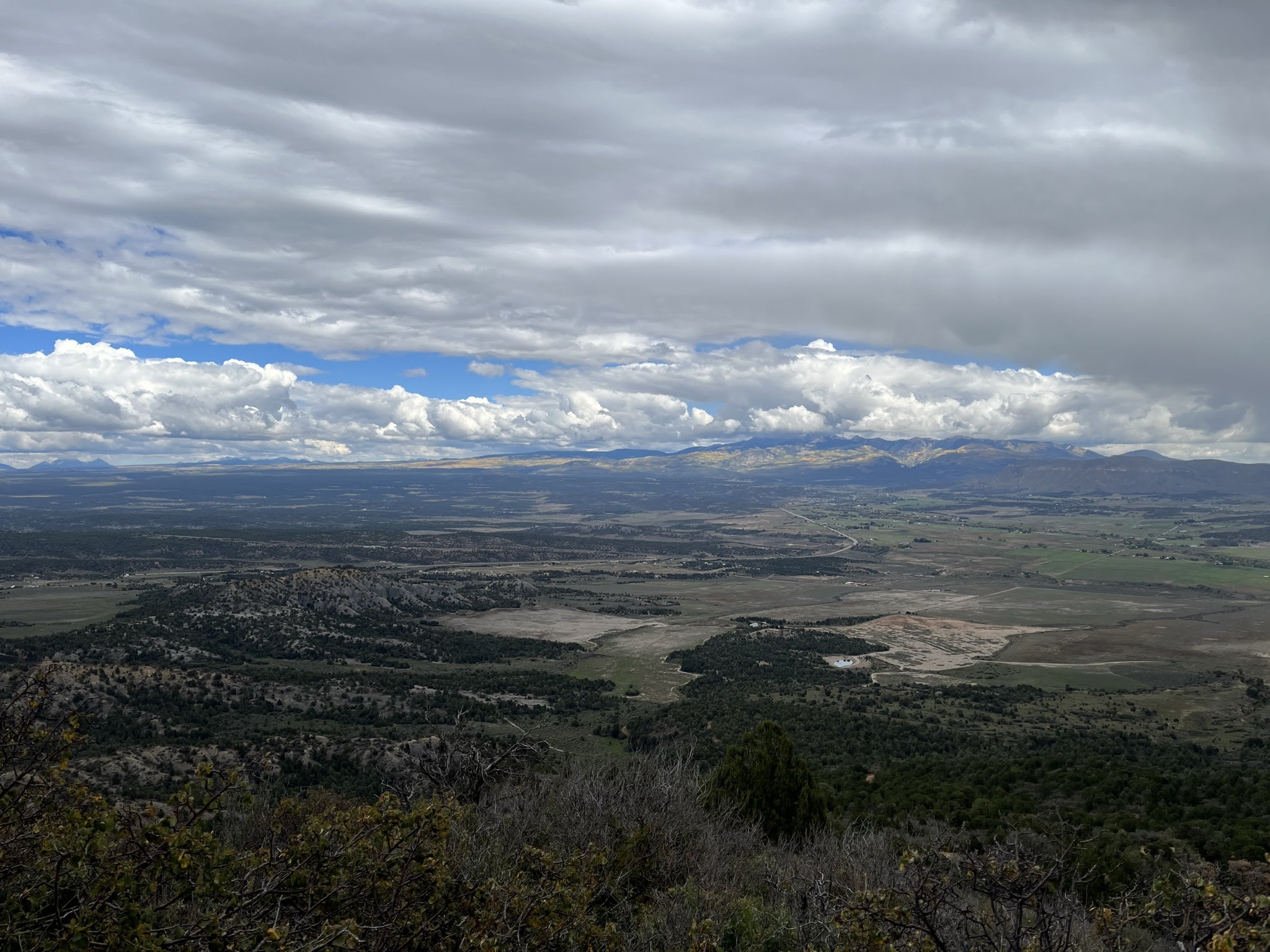
We made the trek on Park Point Trail. The sign said it was a "steep, but short trail." It didn't seem so short. But we made it to Park Point, the highest point in Mesa Verde at 8,572 feet. On a clear day, four states are supposed to be visible from the point - Arizona, Colorado, New Mexico and Utah. There was also a fire tower there, which is usually staffed during the summer season to watch out for fires. 

The broad Mancos Valley separates Mesa Verde from the mountains to the northeast. These ranges, part of the Rocky Mountains, were uplifted beginning approximately 65 million years ago. Time and water removed rock and sediment between the valley and the nearby mountains. This isolated Mesa Verde and created the steep cliffs and the valley. 


Will Randy ever get his cliff dwellings tour? We'll just have to see. Still, we enjoyed our overnight stay in Mesa Verde. 

Tuesday, October 25, 2022

The Power of Teachers


We returned last week from a nearly two-week trip to U.S. National Parks in Colorado, Utah and Arizona. As I tell people, we saw a lot of rocks. And that's true, though it's amazing how different "rocks" can look. It will take awhile to sort through hundreds of photos. Nobody wants the stereotypical slide show from "Aunt Fritz," displaying every photo on "how I spent my summer vacation" - or, in our case, a blow-by-blow account of what we are calling our "retirement trip."


It's hard to choose favorites from our trip. Both Randy and I have several places or experiences that could qualify. But I am convinced that there is an underlying reason for Randy's love of Mesa Verde. It was the first stop of our six National Park visits. However, I think a long-ago second grade teacher is the reason that it was among Randy's favorites.


Granted, it's been a long time since second grade ... for both of us! 

Undated photo of Randy, but likely about 2nd grade

However, Randy's second grade teacher - Laurabel Simpson - loved geography and travel. Even though it's been nearly nearly 60 years, Randy still remembers Mrs. Simpson telling his class about her trip to Mesa Verde. 

It probably hit closer to home for us because our younger granddaughter, Brooke, is currently a second grader. We already knew the importance of teachers in the lives of their students. But maybe comparing that travel enthusiastic second grader from 59 years ago to the 2022 version made it even more poignant.

Mesa Verde National Park was created in 1906 to preserve the archeological heritage of the Ancestral Pueblo people, both atop the mesas and in the cliff dwellings. 


I had been to Mesa Verde with my family when I was in elementary school. I vaguely remembered it, but I must confess that my memory is not my best asset. Randy had never been.

Cliff House

The Cliff Palace is the largest cliff dwelling in North America. It is composed of at least 150 rooms and 21 kivas. It was surrounded by an active community, and it likely served as an important gathering place, perhaps an administrative center for many Ancestral Pueblo villages.  

Two cowboys from nearby Mancos - Richard Wetherill and his brother-in-law Charlie Mason - discovered the ancient dwelling on a snowy day in 1888, while they were herding cattle. The Ute Indians, whose reservation then included Cliff Palace, did know about the site and location, but it was the Wetherill family who made it famous by excavating the site and escorting visitors to it. 

An early visitor to Mesa Verde - Swedish scientist Gustaf Nordenskiold - wrote how "strange and in the mysterious twilight of the cavern, and defying in their sheltered site the ravages of time, it resembles an enchanted castle."

The topography of Mesa Verde offered many advantages to early settlers, including an abundance of natural alcoves in canyon walls. During the late A.D. 1100s, Ancestral Pueblo people began building elaborate multi-room dwellings in the sheltered alcoves. 


 They used the mesas above for growing crops, like corn.


Like modern communities, the dwellings consist of structures intended for different uses: rooms for living, storage or refuse; plazas for public gatherings or work; ceremonial rooms; and towers that offer views of the canyon.

Spruce Tree House

Spruce Tree House is one of the best preserved cliff dwellings at Mesa Verde. Most of the walls, wood and plaster are original. By the late 1270s, up to 19 households, representing 60 to 80 people, lived there. 


Can you imagine climbing up or down out of cliff dwellings? Ancestral Pueblo people reached the mesa tops using hand-and-toe-hold trails carved into the sandstone cliffs. Imagine how treacherous the trails might have been in winter, especially when carrying a child, food, water, firewood or animal carcasses.

The park includes more than 4,500 archeological sites, with some 600 of them cliff dwellings. If you are a hiker, you can get much closer to the dwellings than we did. Today, Mesa Verde protects the cultural heritage of 26 Native American tribes and serves as a sacred place for them, as well as a national park. It's also a World Heritage Site and International Dark Sky Park (though we were there during the day).

Of course, the cliff dwellings were awe-inspiring. But the scenery was pretty spectacular, too.

I'm always amazed at the beauty that grows from rocky soil! Mesa Verde is home to more than 1,000 species of plants and animals..

More to come ... once I get photos downloaded and sorted and blog posts written. (I had indicated that I might post to Facebook while we were gone. I decided not to do that. While I'm sure it would have been fine, I've always read it's best not to advertise the fact that you're gone from home.)