Friday, April 12, 2024

In My Own Backyard: Discover Kansas Stafford County

"Do you have questions?" That's a dangerous thing to ask a group of farmers. 

Let me clarify: It may not be dangerous for the questioner. It may not be dangerous for the presenter. But it definitely is dangerous for an amateur tour guide trying to keep a group on schedule.

On Monday, April 8, Kansas Master Farm Families from across the state came to Stafford County for a Discover Kansas event. Each year, our group travels to different counties in the state to see what each has to offer. This year, I organized a tour of Stafford County.

For a place that many people consider "flyover country," we had plenty to offer. In fact, I couldn't cram all the ideas I had into one day.


But, when I began the planning process back in August of last year, I knew that a tour of Stafford County Flour Mills was my first call. Hudson may not be the biggest town in the county - population 125 - but it's the home of Hudson Cream Flour. Due to regulations and nondisclosure agreements with companies, the mill does fewer tours than it did back in the day when I sponsored a group of Stafford County 4-Hers. Thankfully, they were gracious enough to host our group, and we began our day at the mill - one of the last independent flour mills remaining in the U.S. 
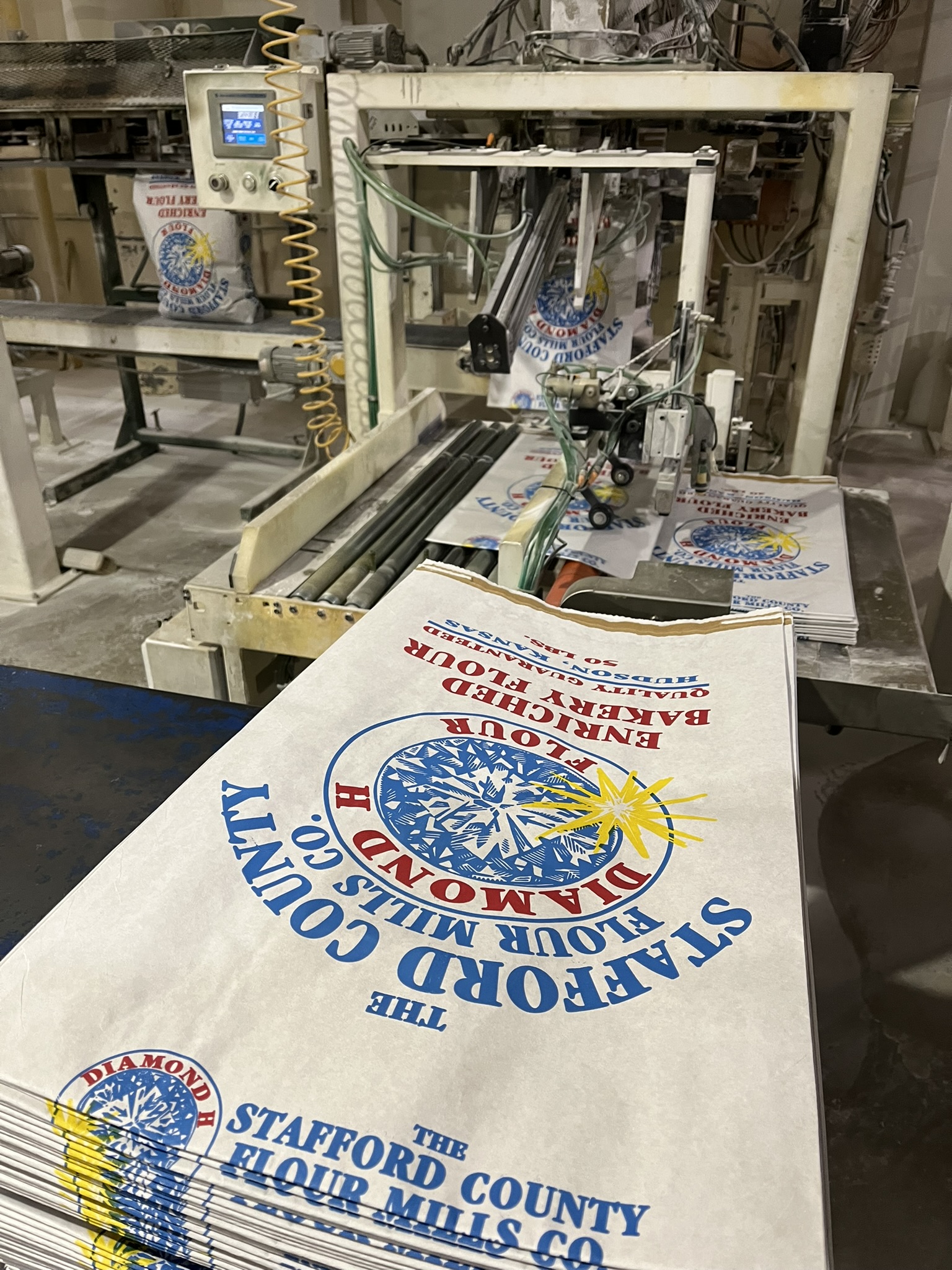
Hudson Cream Flour is made using a "short patent" milling process, a method that was much more common a century ago than today. In short patent milling, the wheat is ground more times and sifted with finer-meshed sieves than in standard milling. Also, the short patent process sifts away more by-product, leaving only the heart of the wheat kernel to make Hudson Cream flour. That Jersey cow on the label (and on the side of the elevator): It's used to symbolize how creamy, rich and smooth the flour is - hence, Hudson Cream Flour.


The mill's story began in 1882, when
Gustav Krug migrated from Saxony, Germany and settled on a farm north of Hudson. His father, Karl, was in the milling business in Germany. Gustav decided he preferred milling over farming, so he formed the Hudson Milling Company with his brother-in-law Otto Sondregger in 1904. 

When production began in 1905, there was a capacity of 75 barrels of flour produced daily. In 1909, financial difficulties forced the brothers-in-law to reorganize with a group of investors as the “Stafford County Flour Mills Company."

After the original wooden mill burned to the ground in 1913,  Krug borrowed $50,000 to build a new mill and erect the first four concrete storage tanks. Krug repaid investors before his death seven years later. In 1914, milling began at the new mill, with a capacity of 300 barrels per day.

In 1986, the Krug family was ready to retire. Without a family member of the next generation to take over, several members of the Hudson community were concerned that selling to a large company would mean a loss of jobs, and perhaps the mill itself. A holding company was formed to pool the resources of many members of the community, and the holding company purchased controlling interest of the mill from the Krug family, keeping Stafford County Flour Mills a locally-owned company. 

Today - after nearly 120 years and mill renovations along the way - the milling capacity has increased to 4,000 hundred weight per day. More than 95 percent of the wheat milled at Stafford County Flour Mills comes from 75 to 80 farm families in Stafford County. When weather conditions mean that local farmers don't produce enough wheat or the quality is below par, the mill will truck in high-protein wheat from western Kansas.

Whole wheat flour being packaged.

***

CAROL LONG POTTERY STUDIO

Our next stop was the Carol Long Pottery Studio. Carol creates internationally-recognized pottery from her farm home just a few miles from Hudson. She grew up on a farm south of St. John. She says she is inspired by the beauty and nature around her.

From her website:

I am inspired by botanical life and hidden aspects of nature. I emulate my inspirations with an elaborate flow of shape, line, and texture. My work begins with shape and form. Depth is added through texture. Intricate slip application and glazing brings organic unity to the finished piece.

Works in progress


My work continues to evolve. Currently I use a white mid temperature clay body fired to cone 5 oxidation. Pieces are made by a variety of methods; such as throwing, slabwork, extrusions, casting, and hand building. Decorating with pulled handles, attached multiple pieces, textured with presses, slip trailing, stains and glazes.
 
 
Her daughter, Ava, works with her in the studio (as does a mischievous cat, Ms. Hiss, intent on stealing sponges during our visit). 


These are a few of the finished pieces in her on-farm gallery.

DUNN SWINE FARM, St. John

As I've looked over photos from a full day in Stafford County, I realized that I missed some photos I wish I'd taken. The first omissions were during our lunch presentation by Leon and Jan Dunn, who are fellow Master Farmers from Stafford County. They were joined by their son-in-law and daughter, Scott and Jennifer Pfortmiller. I didn't get a single photo of them. However, I've linked Leon's presentation the family gave at the 2022 K-State Swine Profitability Conference. It gives a great overview. 

Swine facilities have strict regulations for visitors in an attempt to prevent animal disease. Their video "took" us to their facilities virtually. 


GRAY PHOTO STUDIO, St. John

Originally built in 1898, the building was home to Willam Rossetter (W.R.) Gray and his family. Gray was a well-known photographer throughout Central Kansas and photographed most of the families in the Stafford County area. Gray used wet glass plate photography and more 30,000 of his glass plate negatives were saved and are stored at the Stafford County Museum in Stafford. 

This is a print from one of the glass plate negatives. It features Jessie Gray and friends having a tea party. Dated 1910.

Restored glass negatives images from the Stafford County Historical and Geneaological Society can be seen at the Fort Hays State Scholars Repository's website HERE. They truly are a reflection of that period in time.

For more than 10 years, Carol Long and the Gray Photo Studio Board have had a dream of transforming it into an Art Center. The building is getting a makeover as construction has started to finish the insides of the building. The 100-plus-year-old building will soon once again be a place of inspiration: A place for resident artists to come work on their craft and offer trainings. A place for the community to come together for events and art shows.

Carol Long and Stafford County Economic Development director Ryan Russell talk about plans to restore the studio and make it an art center.

From the Gray Photography Studio Facebook page. Note the large windows that Mr. Gray had installed to let in natural light.

Funding from a Kansas HEAL grant is moving the renovations along. We briefly interrupted carpenters as we walked through the space during our tour.

From Gray Studio Facebook page

SOLAR ECLIPSE


This is another one of those photos that I'm sad I didn't take. In my instructions to participants before the Discover Kansas tour, I encouraged them to bring solar-safe glasses so we could view the partial eclipse on April 8. 

Many of them did, and we included craning our necks up to look at the eclipse's progress as we got on and off the bus in the afternoon. But, alas, I did not take a photo of people in their glasses. I really wish I would have. Evidently, no one in our group thought to do that - at least, among the people I've asked. But it was an added bonus for the day to have the 89 percent eclipse as part of our tour. We aim to deliver memorable experiences in Stafford County!

COMMERCIAL KITCHEN, St. John


Our group also toured the newly-licensed commercial kitchen in Stafford County. It is located in the Stafford County Annex, right off the 21 Central District Extension office. Jennifer Gleason, county agent, and Ryan Russell, spoke about joint efforts to make the kitchen available for people who wish to produce food products for sale. Several small businesses in Stafford County already make value-added food products they can sell themselves. Making those items in a commercially-licensed kitchen could open the door for sales in stores, online, or out-of-state. The new kitchen in Stafford County is one of fewer than two dozen such facilities around the state. It can also be rented for family and community gatherings.


4 STAR HYDROPONICS, St. John

Our next stop took us to 4 Star Hydroponics. It's operated by Alisha Mawhirter, who grew up on a traditional farm in Stafford County but now grows produce hydroponically. In her spare time (ha, ha!), she and her husband are raising five little girls. (Two of them were helpers during our tour.)

The 4 Star greenhouses in St. John are filled with plants growing without soil.

This tour stop was new to me, too. It may have been a little cool outside the greenhouse, but it was toasty inside with the sun streaming through. 


Much of the produce 4 Star grows goes to Whole Foods stores halfway across the state.

Living lettuce

Alisha primarily raises heirloom tomatoes, since that crop provides a higher profit margin. 

SPARE PRODUCE, St. John
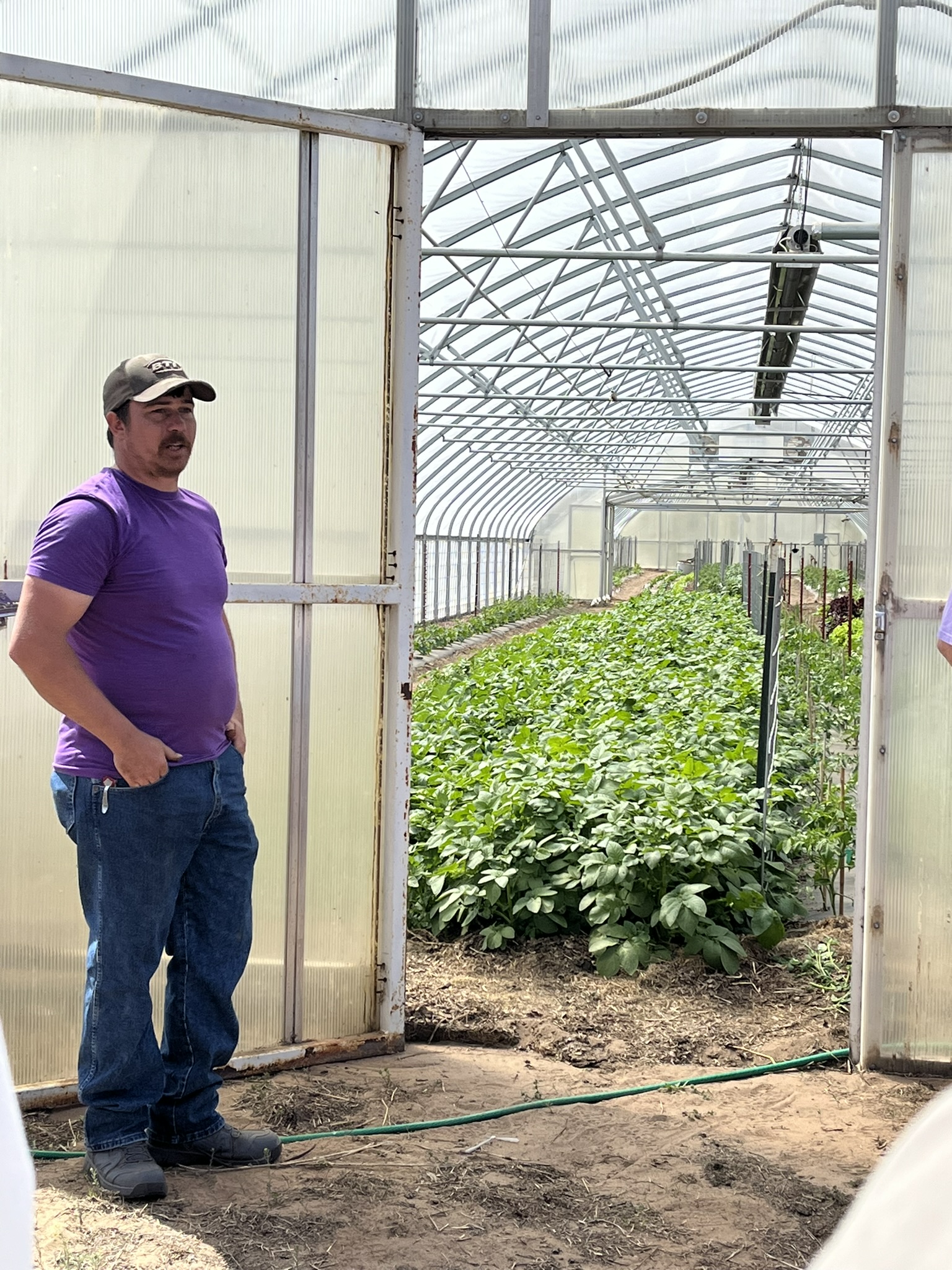
The produce grown at Spare Produce is grown traditionally. It's a business that current operator Timothy Spare comes by naturally. His grandfather, Richard Spare, began the business. Today, Timothy, and his wife, Felicia, with help from his parents Merlyn and Melody Spare, sell their produce through farmers' markets in Hutchinson, Pratt, Great Bend and St. John, along with some on-farm sales. 

High tunnels give the Spares a head start on getting ready for market season. While the potatoes Timothy planted outside are still hidden from view, the ones in the high tunnel are coming along well.

They've already started selling some lettuces and spinach locally this spring.


They also have a produce grower in training at their house.

Felicia has added fresh flower bouquets to their farmer's market sales during the summer. 


Timothy also took the group to their sorting and prep room. They have some plants under grow lights which they'll transplant into gardens as the weather improves.


NORA LARABEE MEMORIAL LIBRARY, Stafford

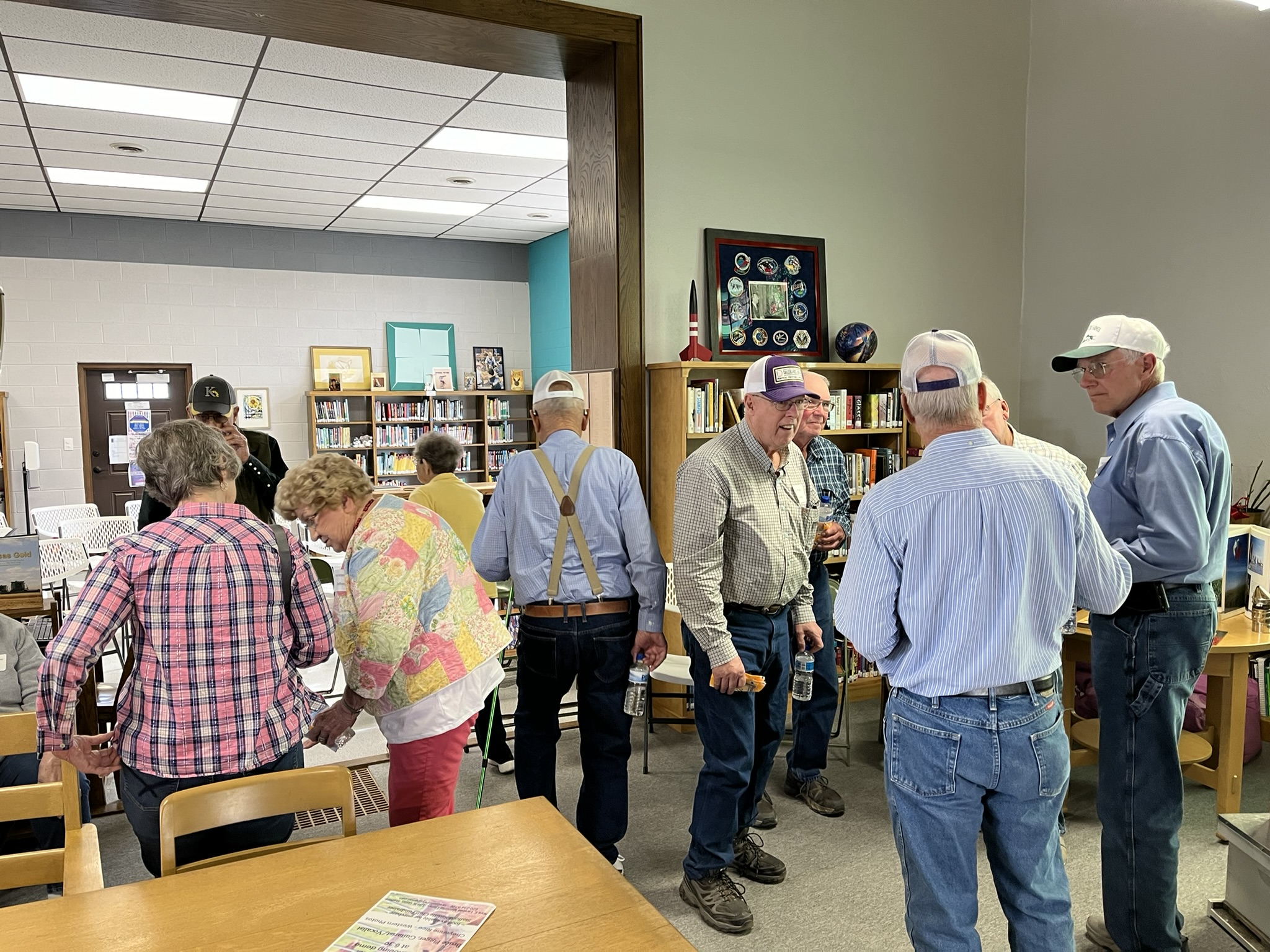
I've written a lot about the Stafford library on Kim's County Line including HERE and HERE. But it was definitely a stop I wanted to include on our Stafford County tour.


Librarian Gerry Ann Hildebrand talked about the history of Stafford and of the library, which was opened in 1905.


In recent years, the library has undergone a renaissance with extensive remodeling and new programming, including First Fridays, an evening of information, music, crafts, food and fellowship. Since the inaugural First Friday of the 2024 season had just happened the past weekend, I asked the presenter to come speak to our group, too. Tom Turner shared information about his Wild At Heart bees. 

He didn't bring his helpers to the Discover Kansas presentation, but they were a lively and fun addition to the Friday night event.  


Local photographer Adrienne Minnis had photos of Kansas flowers compiled for a slide show to tie into the nature and bee theme. They were projected onto computer screens at the library for First Friday and again for our Discover Kansas group.
 QUIVIRA NATIONAL WILDLIFE REFUGE

As with the library, I've posted plenty of photos from Quivira National Wildlife Refuge on my blog. There's still a lot of winter brown at the refuge, but we still took a bus trip through the southern portion of the refuge. 


One added highlight to the day was that our bus driver was a fraternity brother of Randy's. After Don DeWerff retired, he began driving for Village Travel Tours. When Randy arranged for the bus, he requested Don. We weren't sure whether he would be assigned, but he was. Bonus! It was like old home week because Don seemed to know a lot of people on the tour and presenters at our tour stops.

STAFFORD HIGH SCHOOL CULINARY ARTS PROGRAM

Culinary arts teacher Kim Unruh presented information about the Stafford High program. About 11 years ago, SHS’s traditional Home Ec/FACS program got a revamp. SHS applied for and received a Rigorous Program of Study grant from the State of Kansas. It then took a two-year effort by the USD 349 Board of Education and staff to develop curriculum and revamp kitchen space to add a Hospitality, Tourism, Restaurant and Event Management curriculum pathway to the district.

She also brought along three young men from her classes, who demonstrated making arancini balls. 


SHS's Pro Start team - which recently competed in a state contest - made arancini balls for the appetizer of their competition meal. Arancini are Sicilian street food made of risotto that's rolled into a ball, stuffed with cheese, breaded and gently fried. I wish I'd taken a photo of the finished product. I guarantee they tasted wonderful!

The Kansas Restaurant and Hospitality Association holds the ProStart Culinary and Restaurant Management State Competition each year in March. The event brings schools from across the state to Wichita to compete by developing, preparing and presenting a gourmet three-course meal in 60 minutes, using only two butane burners. no electricity, and no running water. SHS is the smallest school to compete in Pro Start.

They also served a delicious honey cake with strawberry topping and fresh vanilla bean whipped cream for our dessert. They used honey from Wild At Heart for the cake. (Ugh! No photo.)

OTHER PHOTO REGRETS

I didn't take any photos of the delicious food prepared by Wheatland Cafe of Hudson - from the cinnamon rolls in the morning to the bierock lunch to the smothered steam and fixings supper. I also missed getting photos of the cookies fellow Master Farm Homemaker Alda Hildebrand and I made for the lunch dessert and afternoon snacks. All the bread products and the cookies were prepared using our homegrown Hudson Cream Flour.

Alda also decorated the space with her handmade quilts and Arnold's woodworking. Again - no photos. Oh well! Those missing photos were the only regrets from a great day.


Tuesday, April 2, 2024

If Old Barns Could Talk

The sun set last month for the final time on what we always called the Palmer barn.

During our days of active farming, we loaded cattle and bulls through the rickety old barn. 


After we retired, Randy's sister sold the property to the Millers, who took over our farm ground and cow-calf herd. 

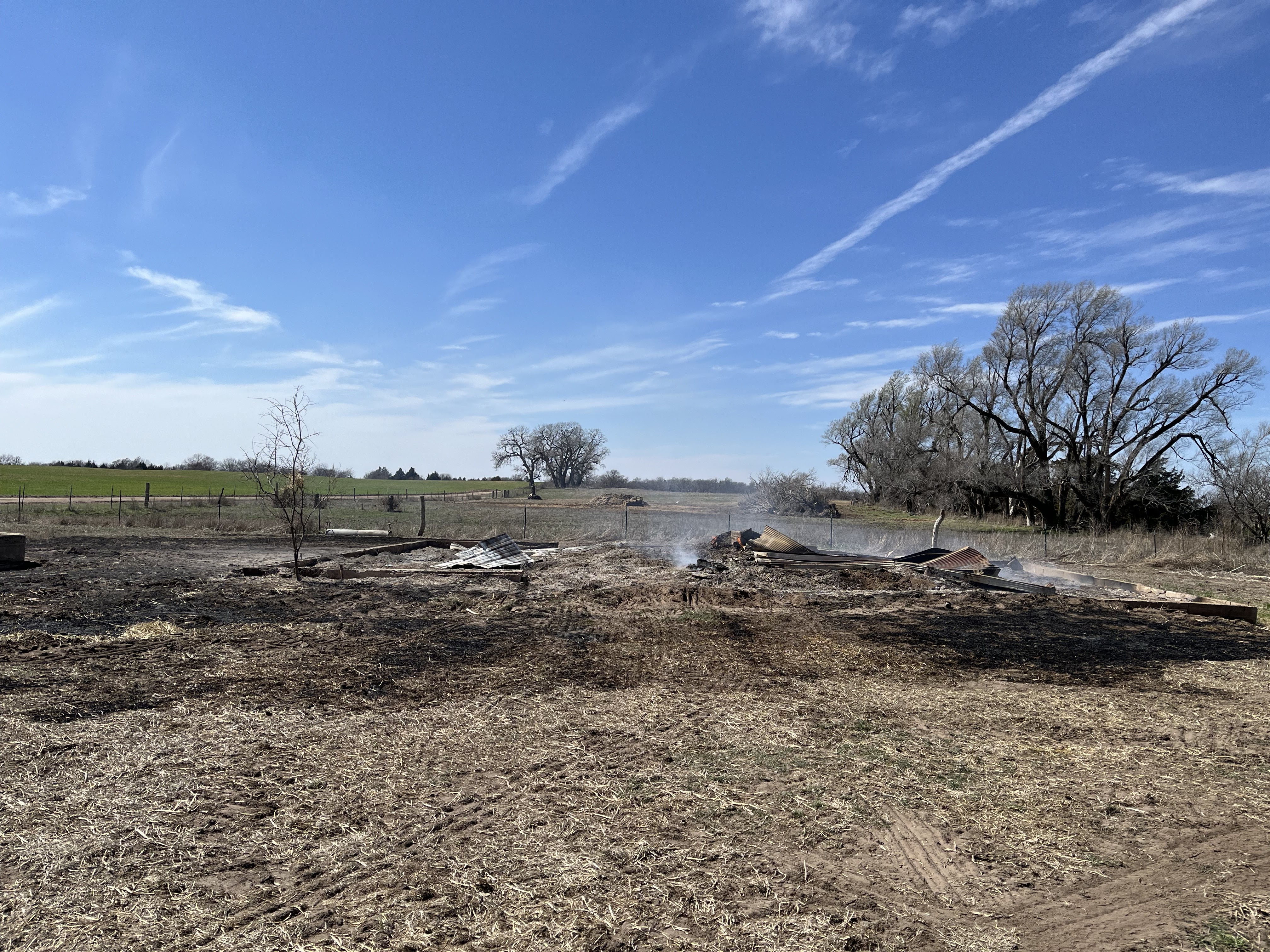
Tye texted Randy the morning they set the barn on fire. But Randy was out of town at a co-op meeting, so we just saw the aftermath later that day.

In truth, we couldn't believe that the Kansas wind hadn't already brought the old gal to her knees. Though the barn hadn't been in good shape for years, she still held on through wind storms that brought other compatriots down, including a landmark barn along the Zenith Road and the barn at our homestead. (Click the links for more on those barns.)

After windstorms, we'd drive by the Palmer barn and were always surprised it had survived yet another blow - literally and figuratively. 

The photos below were taken in 2015, when we ran cattle through the barn to load trailers.

After we got them gathered in the pen, we herded about 10 at a time in the barn ...
... and into the waiting cattle trailer.
In 2013,  we drilled a new well in the pasture and added a solar panel after the water well near the barn gave out.
From a September 2013 blog

So, it was time - probably past time - for the barn to come down.

From the south, looking north


From the east, looking west

I talked to Tye later that day, and he said it was kind of sad to see the old barn come down. I agreed, and I also remarked that we were impressed with how many old barns in Iowa had been reburbished and still stood tall and proud as we traveled through that state.

"But they raise 200-bushel-an-acre-plus-corn up there," he said.

True enough. 

I found an ode to old barns as I searched for quotes. The prose by Pete Mason probably says it best.


Goodbye, old friend.
 

Tuesday, March 19, 2024

Homemade Moose Munch Popcorn

Moose Munch popcorn is a Harry & David trademark. Their signature popcorn is one of their most popular treats for Christmas. They call it "premium popcorn," and it definitely has a "premium" price tag. So when I saw a recipe for a homemade version, I decided to try it. 

As a teenager, I loved to make caramel popcorn. The caramel base for this recipe is similar to the caramel corn recipe I've used for years. This version has nuts and some chocolate drizzled over the completed snack. Chocolate is sure to make anything premium, right? 

I first tried it for our Super Bowl watch party. But it would be a great snack as year-end basketball tournaments begin. Our K-State men's team didn't make the Big Dance, but they play tonight in the NIT vs. Iowa. And the play-in games for the NCAA tournament start tonight, too. Our K-State women's team will take to the Octagon of Doom court on Friday afternoon vs. the Portland Pilots. So there are plenty of snacking opportunities ahead this week. 

Or, dress it up with some Easter M&Ms for your Easter guests and they'll think you spent the big bucks on the Harry & David trademark!

Enjoy! And Go 'Cats!

 
 Moose Munch Popcorn
From Favorite Family Recipes 

20 cups popped popcorn with kernels removed
1/2 cup whole cashews, lightly salted
1/2 cup whole almonds, lightly salted
1/2 cup salted peanuts
3/4 cup butter
1 1/2 cups light brown sugar
1/2 cup light corn syrup
1/2 tsp. baking soda
1/2 tsp. salt
1 cup milk chocolate chips

Preheat oven to 250 degrees. Cover two large cookie sheets with parchment paper. Place popped popcorn and nuts in a large bowl.

In a medium saucepan, combine butter, brown sugar and corn syrup. Bring to a boil over medium heat, stirring constantly 2 minutes. Remove from heat and stir in baking soda and salt. It will foam up. 

Pour caramel mixture over popcorn and fold until well coated. Pour equal amounts on prepared cookie sheets. Spread the popcorn to a single layer. Bake 15 minutes, stir, then bake another 10 minutes. Remove from heat and let cool.

Melt chocolate in microwave-safe bowl, stirring every 30 seconds until smooth. Use a spoon or folk to drizzle melted chocolate over popcorn. Let is sit until chocolate hardens. Break into bite-sized pieces. Stores in airtight container or plastic bag. It will stay fresh for about 2 weeks. 
 
Notes:
  • I had cocoa-covered whole almonds leftover from Christmas baking, so I used those in place of the salted almonds. You can use any combination of nuts totaling 1 1/2 cups. 
  • I also used semi-sweet chocolate rather than milk chocolate because I prefer the slightly more bitter version. 

***

Southwest Ranch Dip

Looking for other snack ideas? I included a round-up of sandwiches, meatball, dips and other snacks in a Super Bowl post. Click HERE for all those recipes, just a couple of which are pictured. 

Tuesday, March 12, 2024

Heartbeat of the Community

We were in the Nora Larabee Memorial Library in Stafford as the sun was setting. As always, the light streaming through the stained glass window cast beautiful, warm color into the library. 

Stained glass window at the Nora Larabee Memorial Library in Stafford 

We were there to celebrate a $100,000 2024 Heritage Trust Fund Grant from the Kansas State Historical Preservation Office. This is on the heels of a $90,000 Heritage Trust Fund grant that was the genesis for a renaissance of refurbishing and restoration at Stafford's library which began in 2022.

Later, as I again looked at the photo of stained glass, I thought about how all those individual pieces of glass are fused together to make the portrait complete. Apart, the pieces of glass would be pretty, but put together by master craftsmen, the result is a complete, beautiful picture.

Perhaps those individual pieces are a fitting description of the efforts behind the renaissance at Nora Larabee Memorial Library, too. It took a whole lot of people - staff, donors and volunteers - to come together to accomplish a thing of beauty - the revitalization of a small-town treasure. 

Ribbon cutting - Oktoberfest 2023


During his presidency George H.W. Bush handed out "Point of Light Awards" to citizens working to aid their communities through volunteer work. In 1990 Bush spearheaded the creation of the Points of Light Foundation, the goal of which was to promote private, non-governmental solutions to social issues. Stafford has its own "Points of Light," too. 

The first "point of light" happened long ago. The impetus for the building of the library nearly 120 years ago was a tragedy. Nora Emily Larabee died in 1904 at the age of 27 from tuberculosis. Her family sought to remember her and have her legacy live on. Her parents, who were prominent Stafford residents - Joseph Delos (J.D.) and Angeline Larabee along with her two brothers - contracted the building of the library, complete with a stained glass portrait of Nora. The family donated the library as a gift to the City of Stafford. It opened its doors in 1905 and has served the Stafford community since.

None of Stafford's current residents remember Nora personally, of course. But her family's influence has impacted Stafford - and the region - since the turn of the 20th century. During the reception, a restored photograph of Nora was unveiled. The original had fallen from the wall, and it was feared that it was ruined because of tears in the canvas. However, master photographer Stan Reimer of Pratt used modern technology and years of experience to restore and reframe the portrait. It came back home to the Larabee Library the night of the reception.

In the grant application, it says: "Nora's portrait in the stained glass window was taken from an oil portrait, based on a photograph donated to the library by the family. The practice of making oil copies of portrait photographs was a common practice in the 19th and early 20th centuries."

To restore the painting, Stan took a photo of the original photograph. He uploaded it to PhotoShop and spent chunks of time for a month working on it - correcting the color, visually "repairing" the tears, etc. Once done, he sent it to a professional photo developer, which processed it and made a 20- X 24-inch custom art print using watercolor texture fine art giclee paper. He reframed it and added museum glass to protect the image. 

Stan added his talents and skills to that of many other volunteers who have come together to make the restoration and renaissance of the Larabee Library a reality.

While the beginning began with one family, it's taken many "prisms of light" for its mission to the community to continue. That includes library staff and also innumerable volunteers, working together to make a difference. 

During the reception to honor the grant award, Library Board President Mary Jo Taylor talked about a television feature she'd seen just that week on KWCH-TV. The reporter talked to the director of the Washington, D.C. public library system, as well as the executive director of the Urban Libraries Council.

And even though those men were talking about huge libraries in urban settings, their observations about libraries are just as true for small libraries in rural Kansas or elsewhere across the nation.

Libraries are central to our communities. 
They are really the beating heart of our cities.
Brian Rainwater, executive director, Urban Libraries Council 
From a news feature, Evolving Libraries, The Good Side, by reporter Debra Alfarone

Taken several years ago in the east room of the library - The Richardson Wing.

It used to be that it was all about books. But people have various ways of accessing information and that fact has liberated us to be more creative. ... Today, libraries serve every age and stage of life. ... It's free. That's central to the mission of libraries - free and open access to information and services. Tell us what you're struggling with and how we can help.
Richard Reyes-Gavilan, executive director of DC Public Libraries (Washington, D.C.)

The reception gathered just a few of the people who have helped revitalize the library. There are so many more. In 2006, the library was accepted for inclusion in the National Register of Historic Places, thanks to the initiative of longtime librarian, Dixie Osborn. As librarian in 2020, Denise Dickson commissioned an architectural and structural engineering site assessment of the failing foundation and front door. Then, in 2021, librarian Jan McKeel wrote an article for The Stafford Courier, asking for donations to fund the foundation restoration project. Additionally, she wrote a successful application for the Heritage Trust Fund Grant, which brought in $90,000 from the Kansas Historical Society.
 
Ribbon cutting during Oktoberfest 2023, celebrating the renovations at the library.
 
The Courier article attracted the attention of two major local donors, who pledged $50,000 and challenged the library and community to raise matching funds. Thus, the Preserving Nora's Legacy Committee was launched. During the fall and winter of 2021, donations from large to small began arriving at the library, thanks to the hard work of volunteers. An additional $98,000 was raised. The library also got grants from Golden Belt Community Foundation, South Central Community Foundation, Kansas Strategic Economic Expansion and Development and Midwest Energy. To date, $310,000 has been raised to help restore and preserve the library.
Donors are recognized for their gifts in this memorial display, created by local woodworker/artisan Robert Owens.

While the library is an historic treasure in Stafford, it is not simply serving as a "museum" to the past. Nora's Place - as it is affectionately called locally - has undergone a renaissance in the past few years. Librarians and volunteer committees are also working hard to make the Nora Larabee Memorial Library a hub of community activity. Since 2021, the library has sponsored Nora's Gatherings. These once-a-month events offer art, music, storytelling, children's activities, food and fellowship. In June 2023, Stafford welcomed Bike Across Kansas participants. The library provided a cool place for weary bikers to rest, to access reliable wi-fi, get a homemade piece of pie and ice cream and visit with fellow bikers and community members. Nora's portrait in stained glass became a backdrop for many photos that bikers shared to provide a memory of that day in Stafford. (Click HERE for more about that event.)

The library also hosts reading programs for all ages, access to computers and wi-fi, Medicare enrollment and other health programs, art classes and much more. 

My friend, Linda, at a Nora's Gathering in July 2022

Libraries are a reflection of their communities. They want to make sure they have available what the community wants and needs. Libraries don't just bring together their communities. They should represent their communities. ...Libraries give people from all walks of life that access to those spaces, those places, where people can come together.
Brian Rainwater, executive director, Urban Libraries Council 

The library board and the Preserving Nora's Legacy committee (among other volunteers) have made that a reality in Stafford. This latest $100,000 grant will "seal the envelope" as library volunteer Nancy Hildebrand says, keeping it "buttoned up" from the elements and further decay (like wood rot). It will repair three basement windows, five stained glass window panels and three beveled-glass window surrounds (totaling 15 panels). 

The light is still shining through - literally and figuratively - as the library continues its mission, just as it has for nearly 120 years. 

(For more information, see Preserving Nora's Legacy and the Nora Larabee Memorial Library on Facebook.)

Tuesday, March 5, 2024

We're All A Little Different


Maybe it's a face only a mother could love. But that face - and, in reality, the whole body - certainly peaked the curiosity of long-time beef cattle producers.

A hairless baby calf was born to a mama in the local maternity ward. Randy and I have been around cattle our entire lives, and it's a first for us. My dad - who will be 90 in April - hasn't ever seen one. Other long-time beef producers were similarly flummoxed. 

However, in some ways, it reminded us of the 6-legged calf we had several years ago. (See that blog post HERE.) 

File photo from our cattle herd in 2018. That calf survived and seemed unaffected by its extra appendages.

Just as there are in human births, there are sometimes anomalies in reproductive genetics.

I didn't find a lot about the condition when I "searched it up," as Brooke would say.  According to Dr. Google, it's called congenital hypotrichosis. Hairlessness occurs in several breeds of beef cattle. It expresses itself as complete or partial loss of hair. Calves are often born with no hair but will grow a short curly coat of hair with age. 

Affected calves are prone to environmental stress (cold, wet, sunburn) and skin infections are more prevalent. A recessive gene causes hairlessness. (Information from the National Library of Science.) The veterinarian that the owners consulted had only seen one hairless calf in his long-time practice, and that had involved a baby dairy calf. 

The first time we visited, the calf was lying near a shelter belt wind break, with its mama nearby. But when we got a little too close to suit them, the baby got up from its nap. Except for its unusual appearance, it moved around like its fellow pasture mates.

However, the next time we visited was during the seasonal temperature swing that swept through Kansas last week. They had put the little calf in a shed to try and keep it a little warmer. 

When we visited, it didn't seem to have a lot of energy.We later learned that the baby didn't make it. From my internet search, the affected calves may have other anomalies that can't readily be seen, so it's hard to say why it didn't make it.

As I've written before, we'd all like the stories on the farm to be like fairytales. Who wouldn't want green pastures, frolicking baby calves, rain when it's needed and sunshine in good measure? But life isn't like that - whether on the farm or in the city. 


A friend who writes a column for Farm Bureau just wrote about that, too. She said:

My heart will always hurt when we lose a calf, but death is an inevitable part of owning livestock. A lifetime experience on the farm helped me build the strength to weather the cycle of life and death that is a truth of this life. Farm life is full of hard thing — hard lessons, hard truths, hard work. Confidence and competence to face challenges in life by doing what is difficult and surviving.
Jackie Mundt from her Kansas Farm Bureau Insight column dated March 4, 2024

Maybe those hard lessons should help us see the miracles all around us ... and make us even more grateful for every one of them.