Showing posts with label family legacy. Show all posts

Thursday, January 26, 2023

The Tapestry of Kansas: Celebrating Kansas Day

Randy and the calving pen in 2010

Earlier this month, we sold the last bit of farming equipment. Though most of our farm equipment and supplies went on the auction block during our sale last August, Randy held onto the calving pen. 

It was at our house, rather than the farm headquarters. He decided to wait to sell it until it was calving season. That time came in mid-January. I put it on Facebook, and we had seven inquiries about it before we went to bed that night. The first one to call was the lucky owner of the new-to-them calving pen.

2020, milking a cow using the breakaway gate, so that we could feed her baby

The calving pen was located in the calving shed we erected in 2016 after the barn we had been using succumbed to gravity. Until I read the old blog post, I had forgotten, but we bought the pen in 2010 from another farmer who was retiring from the cattle business. Originally, it went in the barn. At the time, I wrote that some wives get little blue boxes from Tiffany's for Christmas presents. I got a calving pen.

Here's part of what I wrote:

Maybe you were like me and were initially thinking that the calving pen might have been a gift more suited to Randy. That's OK. I thought it, too. But then I got to thinking: Maybe this big metal box does say love. I remembered last February when Randy was at a meeting, and we had a heifer in trouble. My attempts to get the vet on the phone went unanswered. Jake (our farm employee at the time), a helpful neighbor and I finally got the calf delivered. But a nice calving pen, complete with head gate, would sure have made it easier. A pen with lots of different gates and openings would make it safer for the people and the animals.

That blog post turned out to be prophetic. The calving pen with its breakaway gate helped reluctant mothers and their new babies bond. The head gate helped contain mothers who needed some extra help when Mother Nature wasn't yielding a baby calf in a timely manner. (Click HERE for a photo essay of a birth using the calving pen.) Being able to use it saved several babies. The shed provided shelter for mamas and their new babies on particularly brutal winter nights.


And, I must admit, I was a little misty-eyed, thinking about it leaving the farmyard. 

But, on the other hand, it will serve another farm family in a similar way. Just like we benefited from buying someone else's equipment, they - and their cow-calf herd - will benefit from the purchase they made from us, too.  

We will celebrate Kansas Day on Sunday, January 29. It will be Kansas' 162nd birthday. Kansas became the 34th state of the union in 1861. My Moore ancestors came to Kansas in 1876, 15 years after Kansas became a state. My Neelly ancestors were a little later, in 1898. I'm sure all of them would be amazed at the changes in Kansas, and especially, in farming. 

I'm thankful that both sides of my family saw beauty and opportunity here. (Click on the links to read more about how the Moores and the Neellys came to Kansas.) Randy, who is a fifth-generation farmer in his family, still owns a pasture that's been in his family since 1900.

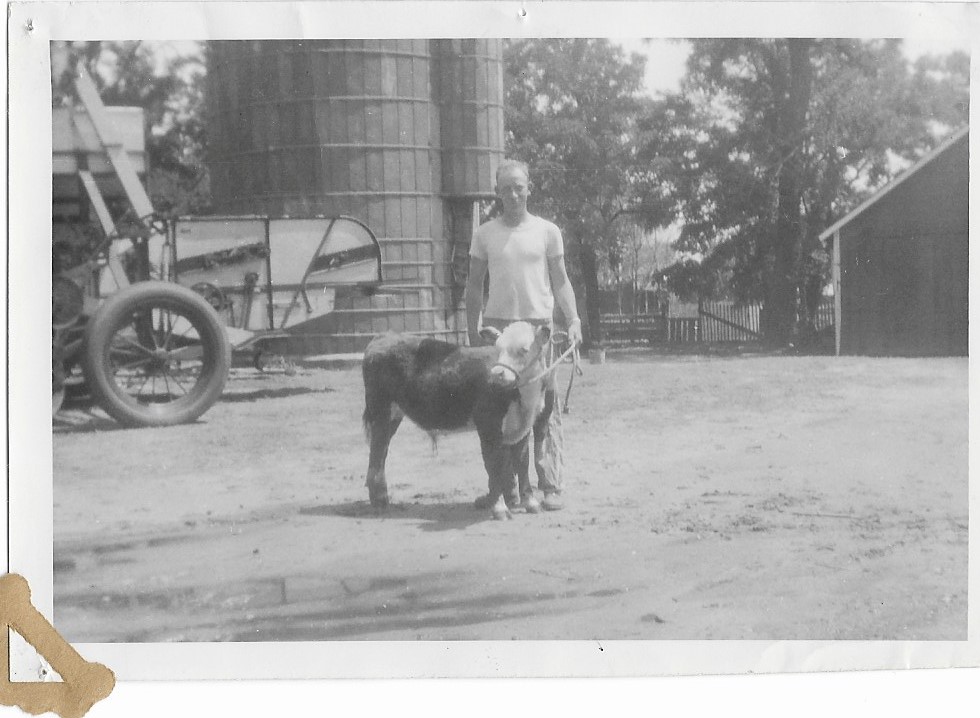
This is an undated photo of Randy's Grandpa, Clarence Fritzemeier, with a bull. The back of the photo has written (in Randy's Grandma Ava's handwriting): "He looks like he knew he was going to be sold."

As we near the Kansas Day celebration, I thought again about that calving pen. It was used by our friend, Joe. Then it came to our farm, and now it will serve another farm family in Central Kansas.

Those threads of connection are woven throughout Kansas history and Kansas agriculture. Even back in 1861, the livestock industry was an important aspect of the state's agricultural economy. The state ranked third in the nation in cattle population by 1890, a position it held for several decades. Mixed farming (grain-livestock) has always been the predominant form of agriculture on Kansas family farms, including both the Fritzemeier and Moore agricultural legacies.

Thousands of head of cattle were shipped on trains from rail heads in Kansas to packing plants in Kansas City, Chicago, and other cities to the east.  

A photo I took in 2011 during the Kansas Cattle Drive to commemorate Kansas' 150th birthday

Between 1867 and 1885, towns like Abilene, Ellsworth, Wichita, Newton, Caldwell, and Dodge City became famous for their place in the cattle industry.

Photo from the Kansas State Historical Society, dated between 1891 and 1912

With the closing of the open range, Kansas cattlemen began to place greater emphasis on the breeding of better stock.  Shorthorns and Herefords were popular in the 1890s, according to the Kansas State Historical Society. Herefords are still part of the genetics on our County Line farm, along with Angus.

Generation to generation - the legacy of Kansas and of Kansas agriculture continues. And Kansas farmers are a strong thread in the tapestry of our state.

Let no one say the past is dead. 
The past is all around us and within.
Oodgeroo Noonucal, Aboriginal poet

Happy Birthday, Kansas!

Kinley, Kansas Day, 2019. I shared my Kansas books and sunflower cookies with her first grade class.

If you want to celebrate with special Kansas Day cookies, here's a LINK to the recipe.


Thursday, August 25, 2022

Sale Day: Leaving a Lifetime of Farming


We hustled around on sale day, Saturday, August 13, for some family photos before the festivities began. Tye, who has taken over the farm ground we continue to own and who cares for our cow-calf herd in a partnership, was elected as photographer for 15 to 20 minutes worth of shots before the craziness of the day.


Originally, I had wanted some photos in the wheat field of our final harvest as active farm operators. I   had a professional photographer lined up. But it was just too hard to coordinate schedules and predict the weather. (I only knew that everyone was going to make it home a few hours before they arrived.) My second idea was having photos among the farm equipment before it started driving away or was hauled down the road.  But since school had started for the girls and for Susan the week before, it wasn't possible for them to all get here by the time golden hour rolled around the night before the sale. I knew that Randy would be addressing any issues with machinery on the day of the sale or answering last-minute phone calls about it before the bidding began. Other people were juggling plenty of other balls that day, too. Tye did a great job, and we'll save the pro shots for a time down the line. 


Jill snapped a few of Randy and me by various farm equipment. I definitely wanted one by the feed truck. I spent a lot of time in it during winters the last few years. Randy was always glad to tell any callers that his wife drove the old Army truck. One of my favorite times of the year was riding the buddy seat of the combine during harvest time. I'll miss that.

Anyway, I'll treasure these last glimpses of farm life as we've known it. We used the backdrops you'd expect - the 4-wheel-drive tractor and the combine. 

But I also wanted some photos gathered around the old 8N Ford Tractor. 

Jill also requested a photo by the relic.

I snapped a few of Grandpa with the girls.

The last time Kinley had been on that tractor was when she was a baby in her mom's arms 10 years ago.

April 2012

Randy grew up operating the Ford tractor. Our kids also got the "privilege" of putt-putt-putting down a road on the way to help build fence. While I never drove it, I certainly was part of the team that helped build miles of electric fence to contain our cattle in the fall. (Click HERE for a blog post about one fence building session.) But it, too, went on the auction block at the farm sale. 

Randy's Dad and Grandpa had purchased the Ford tractor in the 1960s. (And, yes, it started on sale day!)

Clarence (Randy's Grandpa, seated), his Dad Melvin and Randy holding Brent in 1988.

Maybe the winning bidder will restore it for parades. Or maybe they'll use it like we did, who knows?

It's amazing to think how far farm equipment has come in the time since our ancestors began farming in the late 1800s. My mom did an amazing job of photographing new machinery they've used during their 69 years of farming together.

(My dad as a toddler and his Dad)


She compiled them into history books she gave to grandchildren. (I may still have one in my dining room curio cabinet for "safe keeping.")

The evolution of technology has exploded since 1972, when Randy began farming as a high school sophomore.

This was a page from Randy's FFA project - 1972 - when as a high school sophomore, he began putting up hay on his great-uncle's ground for a percentage of the hay crop.

In the late 1990s, I compiled this collage to give to Melvin after his final harvest as an active farmer. It shows several pieces of farm equipment we used at that time.

Farm technology has evolved significantly since our marriage in 1981.
Melvin's final wheat harvest

And we certainly didn't have the ultimate examples of modern machinery, but it served our needs at a price we could afford.

Photo by Brent

The girls had to give the big tractor some equal posing time after their modeling on the 8N Ford tractor.

Randy had some restless nights in the week before sale day. He wasn't sure he'd gotten enough phone calls expressing interest in all the machinery. Would in-person bidders come? Would the people who told him on the phone that they'd be bidding online actually follow-through and do it? Would we get a reasonable value for the equipment? Would this part of our retirement plan pay out? I was not immune from the nighttime thoughts that made for some restless nights. 

But Randy was all smiles the day of the auction.


   (These moments were captured on my camera by Kinley, the budding 4-H photographer.)

Photo by Brent

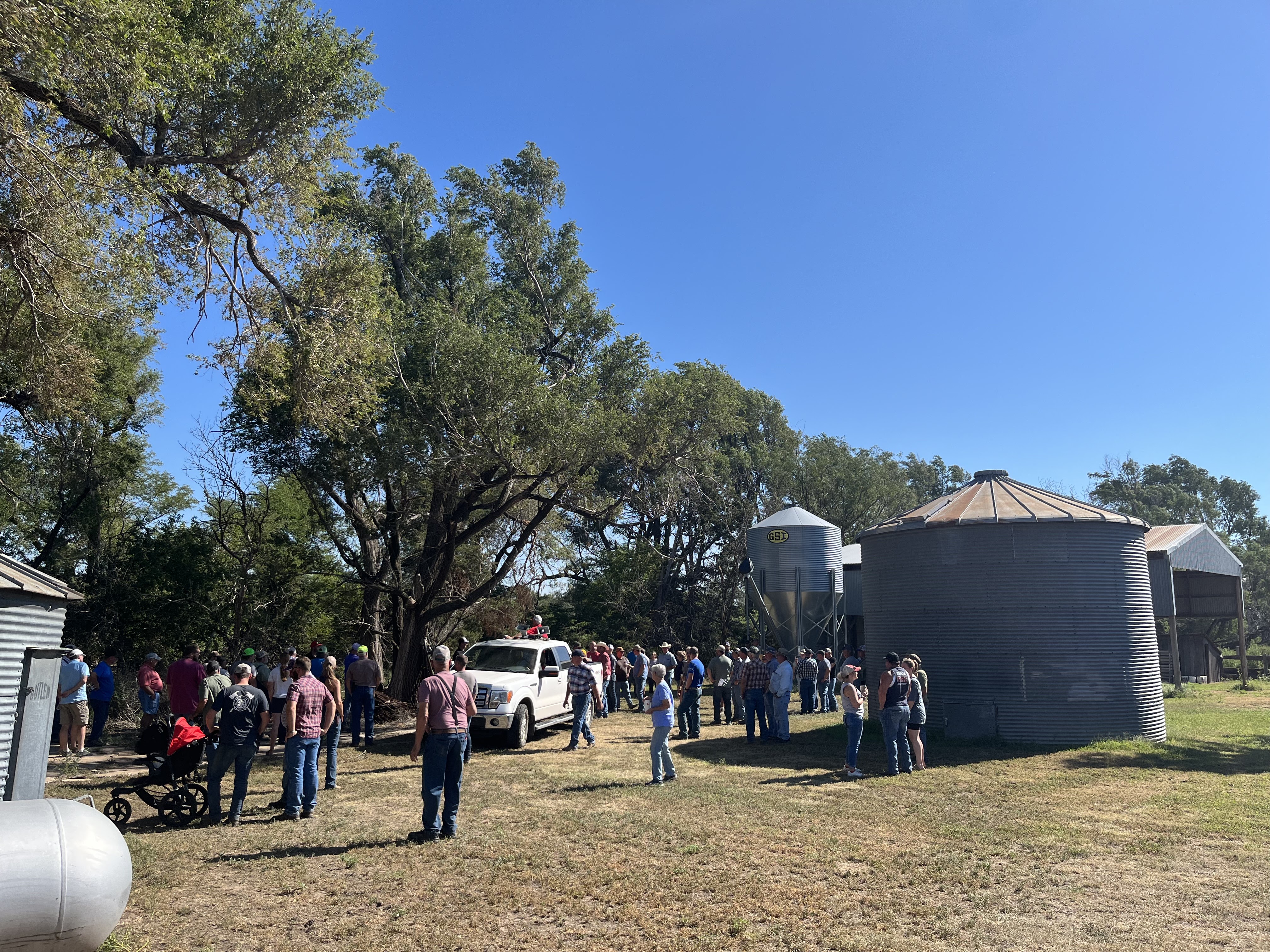
Ultimately, we were thrilled with the large crowd who arrived on sale day.

Some arrived early enough for the small "stuff" on trailers.

Photo by Brent

There was an even larger crowd for the big equipment - both in-person and online.


Photo by Andrew Webb (my brother-in-law)

The day was awfully hot, but the auctioneer with Carr Auction kept the bidding moving along well.
Photo by Andrew Webb

Some of the items began leaving the field before the auction was even over. By Wednesday, August 17, we had only a few things left to be picked up by the new owners. The combine and the drill left that day. The last pickup left last Friday (August 19). We are down to a couple of tractors still awaiting pickup.

Ultimately, this list of farm equipment left our farm to do the job at another farm on down the road. 

We also closed on Randy's folks house on the Monday following the sale, and the young couple who purchased it has already started moving in and making it their own. (Click HERE for the blog post I wrote before that sale.)

It's been a year full of emotion - highs and lows, doubts and dreams. But we feel at peace with the decision. And we're ready for the next chapter. Bring on some K-State football and some trips to National Parks this fall. (We'll add plenty of trips to see the family for good measure.)


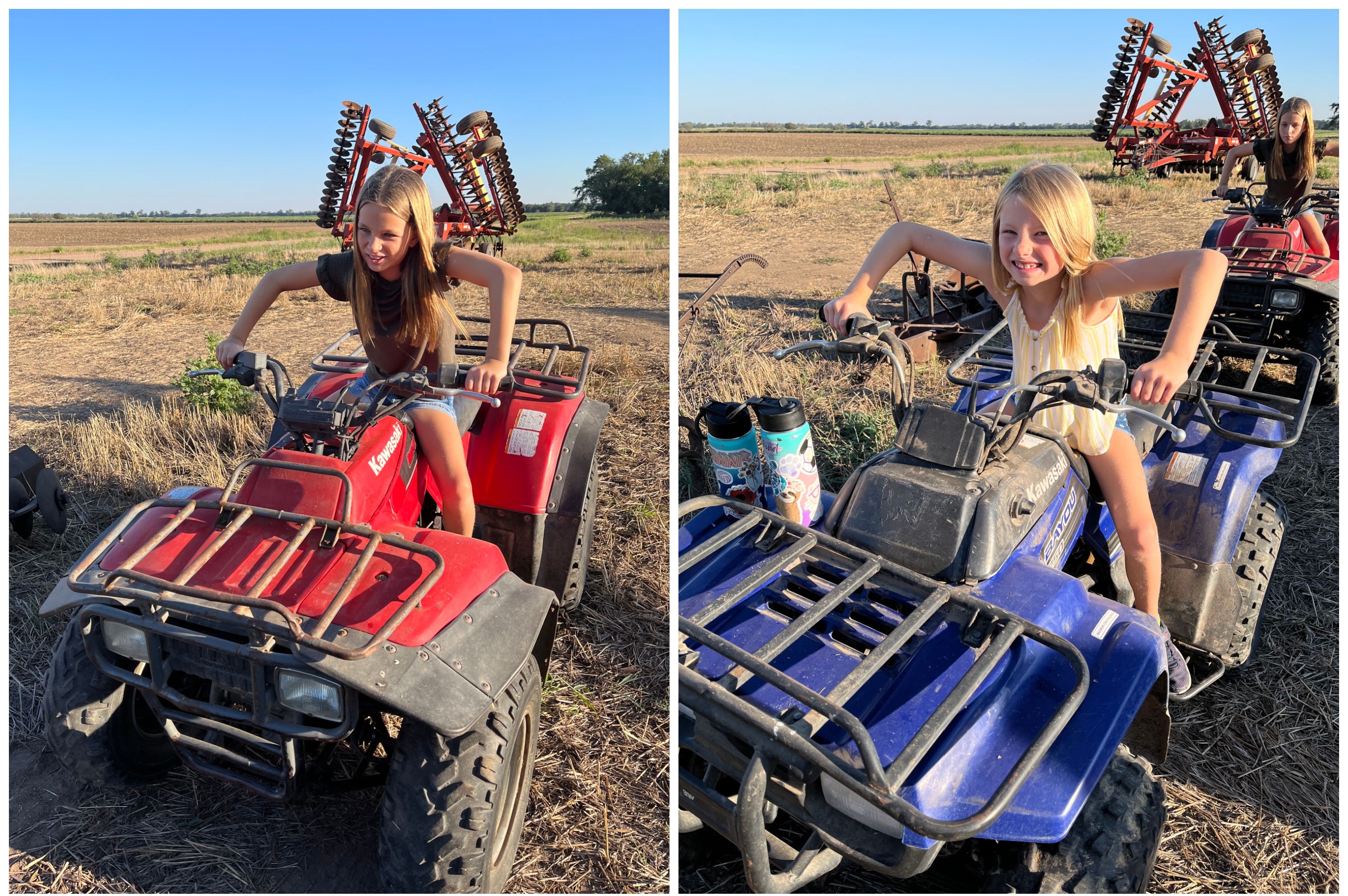
The girls were hoping that they could convince their parents they "needed" the 4-wheelers. They had ridden them for a fishing trip during a stay at The County Line last year. Alas, they'll have to settle for Grandpa's new (to us) Gator. The girls approve of Grandpa's new ride. (Uncle Brent may have given Kinley some unauthorized driving lessons on the Gator.)

Next time: Photos from the retirement party

Thursday, December 2, 2021

Looking Toward the Horizon


The prairie grasses swayed gently in the breeze of a pleasantly cool November morning. As I gazed out across the landscape now dressed for fall, I thought about the past.


This little bit of Kansas prairie probably looked much the same back in 1900. At that time, Albert Brinkman bought acreage along the Rattlesnake Creek in Stafford County, Kansas. Brinkman, who was a great-great-great uncle of Randy's, paid about $4 an acre. Originally in a tract of 1,040 acres, 560 acres remain in the Fritzemeier family.  

Today, Randy owns the pasture, along with his cousin, Don Fritzemeier. Two generations ago, Randy's Grandpa Clarence owned the pasture with his brothers, Ed (Don's father) and Harve.

This is an undated photo of Randy's Grandpa, Clarence Fritzemeier, with a bull. The back of the photo has written (in Randy's Grandma Ava's handwriting): "He looks like he knew he was going to be sold."

The breeds and the characteristics most coveted by cattleman have changed through those 120+ years, just as the landscape shifts from verdant spring green to faded fall hues to the sparse monotone of winter.

But the land itself has been there - silently playing a part in the family's farming legacy. For 121 years, the family has been the steward of the land they call the Big Pasture. And the land has been good to them. Those native grasses have helped sustain cows and their calves, adding diversity to the family's crop farming operations. 

 The meandering Rattlesnake Creek has been a source of life blood for the cattle that graze there.

A summer view - August 2020

Some years, the weather and the markets shone on the family's financial coffers. 


Other years, conditions were less than ideal. But, through it all, the legacy has continued.  

And it will continue. But our role in that legacy is shifting. On November 8, we completed our final cattle roundup at the Big Pasture. We will continue to own the land. But we are leasing our cow herd as part of our transition from active farming to retirement next year.


In truth, I'm not convinced it will be Randy's last cattle roundup. Since we will own the cows and retain a share of the calf crop, he can probably be persuaded to help with the roundup. But we sold our feeder calves this fall, rather than keeping them and feeding them throughout the winter. It will be nice to have the flexibility to go to family events without having to find someone to care for our herd. 

But it may be tough when January and February roll around, and the parade of baby calves is not quite as easily accessible. (For the record, our partner in the cow/calf operation - Tye - has said I can visit and take photos any time.)

As I sat in the pickup, honking the horn to attract the cows and calves to the hay and lead the parade to the corrals, I thought it was fitting that my eyes were focused on the rearview mirror. 


As we eye a new "normal," it's still important to look back at the legacy.

Years ago, the extended family would gather in the spring to take the cattle to pasture and then round them up in the fall. I think this undated photo would have been taken in the 1950s.

L to R: Clarence Fritzemeier (Randy's Grandpa) Milton Giedinghagen, Ben Fritzemeyer, Melvin Fritzemeier (my father-in-law) & Harve Fritzemeier. Yes there are two different spellings on Fritzemeier - it's not a typo! 


While the guys were rounding up and sorting the cattle, the women got together to make a big meal.

My mother-in-law Marie, Jean Newell Fritzemeyer & Marjorie Giedinghagen on a cattle working day back in the 1950s.

I helped with the round-up there for the first time in 2019, though I'd been helping at other locations for years and years. To our knowledge, I was the first woman to help with the actual cattle work at the Big Pasture. (If I want to get technical, the woman still gets the job of making the meal. It's just sandwiches instead of a full-course hot meal.)

Undated photo - Clarence and Melvin

Back when Randy and Don were young, the brothers and families hauled all the cattle back home in small trailers. As they drove through Stafford, Randy remembers his dad telling him to "duck down." School was in session, and Randy was absent for the day. (Knowing Melvin, it was probably more joking around. It wasn't unusual for kids to be excused for a day of work back then.)

Don recalled a cattle moving day when Clarence took more than one unintended dip in the Rattlesnake. They also remembered a run-in Melvin had with a cow who was reluctant to leave the wide open spaces of the Big Pasture. She appeared to be trying out for the Olympics with a vault over Melvin's 4-wheeler. Luckily, both man and beast were unhurt.


Who knows? Maybe this Hereford pictured with Melvin was on the Big Pasture at some point. 

At that time, the Fritzemeiers raised horned Herefords.

Randy and I also had Hereford bulls as well as Angus bulls for our crossbred herd. But we opted for polled Herefords. 

My horn honking finally paid off with some of the herd heading toward the corrals.

It took more than one excursion for the guys on the 4-wheelers to find all the cows and calves scattered through the acreage. 


Once they were gathered, it was time to set up panels, the loading lane and loading chute so we could get the cattle from the pens to Don's semi. Don built the lane and chute one winter. 

The guys have done the set-up so often that it's kind of like watching a choreographed dance.

Just like their ancestors before them, they used plenty of wire to keep everything together. (It's a farmer thing!)

Then it was time for sorting. Our cattle and Don's were intermingled, so we sorted out our cows for the first semi load. The two cousins (along with a couple of other helpers) sorted while I ran the gate. The guys have been doing this a long time, and they seem to know instinctively what the other is going to do.


That done, we separated our calves for the next semi load.


This year, Don opted to load his cows and calves together, so that sped the process.

By now, the guys are used to my insistence on photos. 

Our friend, Mike, has been helping at the Big Pasture long enough that he's learned the "choreography" as well. I had to convince him to be in the photo. But then he insisted it was my turn, too.

It's tempting to look in the rearview mirror and remember only the good parts. But, just like anything, we've had our share of "mud" - the challenges and obstacles inherent in any business operation. It's just that our obstacles were sometimes literally mud ... and other organic matter.

But those challenging times are just part of life and business.

Since our children have chosen other careers, we will partner with a young farmer who has come back home to work with his family. As I wrote earlier this summer, Randy's Uncle Glenn gave him the opportunity 50 years ago as a sophomore in high school to get started with farming. Randy is thankful for the opportunity to "pay it forward," hopefully helping another young farmer - Tye Miller - make this farming and ranching thing work.

The sun was going down as we returned to the farmstead after a long day at the Big Pasture. We unhooked the trailer and headed for home.
As we drove away, I asked Randy to stop for a sunset shot.
And I was thankful for this legacy and this life.