Showing posts with label family tradition. Show all posts

Thursday, May 27, 2021

In Flanders Fields

Jill - Memorial Day cemetery visit - May 1988
 
Most of the year, cemeteries are quiet places. They may provide an off-the-beaten-track place for a solitary evening walk, accompanied only by singing birds and a gentle breeze. 
 
My sister, Lisa, is a cemetery walker. She posted the photo below to Snapchat last Friday:
 
Photo by Lisa Bauer, Clay Center


Ideally, those peonies would be blooming this coming weekend as families make their annual pilgrimages, dotting the rigid pillars of stone with delicate fresh plants, silk arrangements or colorful plastic displays. The cemetery becomes a place to gather around great-grandmother's grave and tell a story or two. Visitors wave at neighbors across the narrow lanes. They may take time to visit for a minute or two before moving on to the next grave. American flags blow in the breeze between tombstones and wave a tribute to fallen heroes. 

Most flowers are toted in by visitors, like in the long-ago photo of Jill, who carried a mum about half as big as she was on our yearly cemetery tour.
 
But a few of the flowers are already in place - like the peonies in Lisa's photo. A few years ago, our  neighbor, Shirley, gave a program to my PEO group about the poem, In Flanders Fields, after she and her family visited the World War I Museum in Kansas City. It's the most famous poem to emerge from World War I. It was penned by Lt. Col. John McCrae, MD, who served at a field hospital in Belgium within sight of poppies blooming across the old battlefields and fresh graves. Since it was written, it's been memorized by schoolchildren in the U.S., Canada and Great Britain. The poem is the impetus behind the little paper poppies long sold by American Legion and VFW posts during the Memorial Day weekend.

In Flanders Fields
by Lt. Col. John McCrae, MD (1972-1918) 
Canadian Army

In Flanders field, the poppies blow
Between the crosses, row on row,
That make our place; and in the sky
The larks, still bravely singing, fly
Scarce heard amid the guns below.

We are the Dead. Short days ago
We lived, felt dawn, saw sunset glow,
Loved and were loved, and now we lie
in Flanders fields.

On the other side of the museum commemorative card, there's a verse by another unidentified wartime poet, who was inspired by the McCrae poem.

We cherish, too, the poppy red
That grows on fields where valor led.
It seems to signal to the skies
That blood of heroes never dies. 

Iuka Cemetery
Though I've not seen poppies blooming during my annual cemetery jaunts, at some cemeteries - like the Clay Center one - the peony bushes offer their pink, red or white blossoms, adding fragrance to the setting as families arrive for Decoration Day. In the cemeteries we annually visit, it does seem that peonies are the perennial flowers in permanent plantings. But, on occasion, I've seen stately irises decorate a family's plot.
 
"My" irises aren't found at a cemetery, though they are at a similarly solitary place. These irises I've claimed are just north of Zenith along a road we travel frequently to get to where we're going.

In late June, the roadway will be littered with wheat kernels that have blown out of rumbling trucks as they make their way to dump their grain at the Zenith branch of the Kanza Co-op. 
 
 
But, in May, both Randy and I look slow down as we reach the grove of cottonwood trees and look for the purple blooms playing hide-and-seek in the light and shadows.

The irises don't mark a grave. Instead, we imagine that they provided a splash of color by a long-ago farmstead. 

No one still living remembers a farmstead at that location. But one lone post from a fence or gate still stands among the blooms. 

These days, the irises are flanked by a CRP field, and the dry, brown grasses of winter offer a sharp contrast to the brilliant colors that form the old-fashioned spring flowers.  

The fragile blossoms are such a contrast to the rough bark of the towering old cottonwoods or the bristly branches of the evergreen tree.


Irises remind me of my Grandma Neelly, who had them in her backyard. You could see them from her kitchen window, where she cleaned up the dishes after poaching eggs for breakfast or serving Sunday's homemade chicken and noodles after church, followed by her light-as-air angel food cake. Seeing irises stirs up those memories as deftly as Grandma stirred up her rhubarb pies each spring.
 

Randy knows my affinity for irises. When our cottonwood was felled by wind last year, Randy planted irises, along with tulips, by our mailbox. 
 
 Whether your Memorial Day weekend includes your first trip to the lake or an annual pilgrimage to cemeteries, remember the message of the irises:
 
 
What in your life is calling you? When all the noise is silenced, the meetings adjourned, the lists laid aside. And the wild iris blooms by itself in the dark forest. What still pulls on your soul?
Rumi 
 

Tuesday, March 30, 2021

My Kind of Date


It's not hard to imagine why Randy's ancestors chose a spot along for Rattlesnake Creek to stake a claim as they pushed westward more than 125 years ago. It's especially true on an evening when the sky was painted like an expansive, texture-filled canvas of light and darkness. The creek gently gurgled as the current ebbed and flowed along the banks after recent rains. 

That particular night, there were few insects to swat away. And a little springtime chill in the air made a sweatshirt the perfect fashion accessory.
 
It's no wonder that this piece of ground has been handed down, generation to generation, better than an antique ring or dusty family china.
 
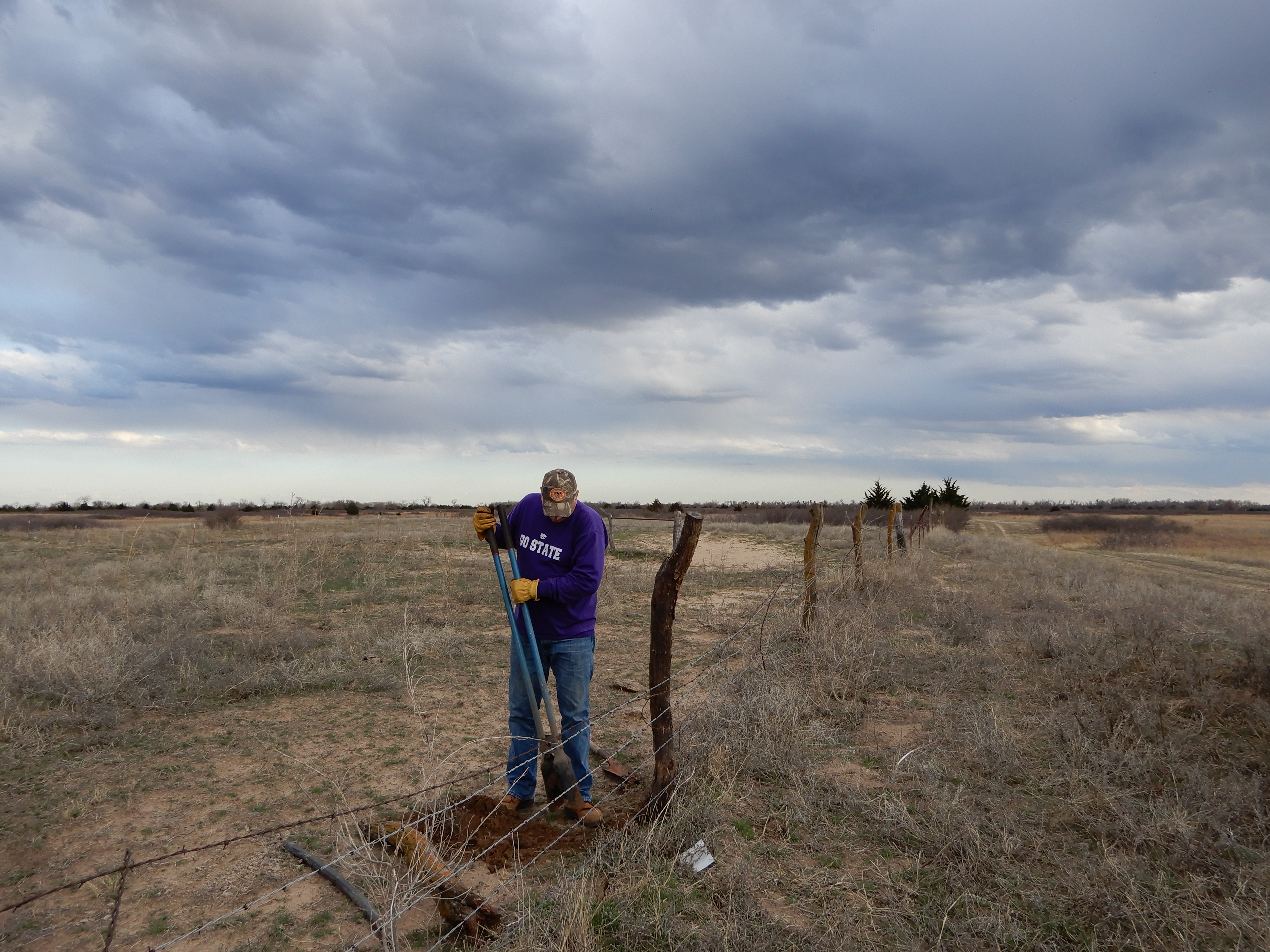
The evening "date" was an excursion to replace a rotted hedge post along the eastern border of the Big Pasture, as Randy's family calls it.  


I rode along - not for my fence-building prowess, but for the company for him and the scenery for me. It was the evening after my second Covid vaccination, but it was before the side effects arrived. The cloudy sky promised the chance for an interesting sunset, an unexpected bonus.
 
It was just a couple of days before our 40th anniversary. This kind of "date night" has become the norm in the past year, with Covid restrictions. But, in truth, it's always been my kind of date. God's creation is an ever-shifting painting here on the Kansas plains. Some may not recognize the beauty, but to me, it seems a gift to savor.
 
On Sunday, I gave Randy a canvas of a photo I took last August at the same pasture. We don't usually give each other gifts for things like birthdays or anniversaries, but I thought the 40th deserved more. I take thousands of photos a year. It was really hard to choose just one to enlarge and present. But I chose the scene from the Big Pasture for several reasons, including the tradition and family ties it represents. We have held that family partnership for 40 years now - significant, of course, but just a fraction of his family's legacy. The creek's twists and turns mimic a marriage's ebbs and flows, and water is a life force on a Kansas farm.
 
It was especially hard to choose the photo when I couldn't ask Randy his opinion, even though he's usually my sounding board when it comes to my decision-challenged selection of photos for contests and such. 
 
It's just as well I already had the canvas ready to go because that evening's scenes were pretty enough to move into contention to take up some real estate on the wall of our farm home. 

 Here was the scene looking west from the border fence as Randy made the fence repairs.


The view to the east looked past the fence into the neighbor's pasture, where the Rattlesnake continued its meandering path through more native grasses.

Once the fencing mission was complete, we worked our way back to the bridge on a dirt road that borders the pasture to the west. 

The "same" scene looked nothing like the canvas that Randy would unwrap on Sunday morning, though it was taken from about the same spot. And that's the beauty of nature, isn't it?


More of the fence line that Randy and his cousin Don maintain provided a foreground for another snapshot facing east.  It's hard to know whether they were the ones to set the posts or their dads or granddads planted them in the Kansas soil. And there's some history and symmetry in that, too.

The view to the west of the road gave a very different perspective. The sunbeams were almost like God reaching fingertips downward to our little piece of heaven on earth. I guess it seemed right on that Friday before Palm Sunday, a message of hope and peace in a world too often fraught with chaos.


The sky continued to shift. Most of the time, ducks soaring high overhead were our only companions. Eventually, a couple of guys in a pickup came by to make sure we weren't broken down on this desolate road with limited cell phone coverage. 

 (They also may have been curious about what we were doing, but I hope they were giving us the benefit of the doubt.)

We moved down the road and climbed onto an oil tank platform for a view of a pond where our cattle will drink this summer.


Some of those ducks who had been soaring overhead found a resting and feeding spot in that small pond.

Randy said it looked like they were making jet streams in the pond to mimic the ones in the sky as they glided over waters unruffled by typical Kansas winds.

I probably gave up on the sunset too soon. As we turned the corner on our road to go home, we saw the vivid pink underneath a blanket of blue as the sun went to bed for the night. We stopped at our wheat field for a quick snapshot.


Afterwards, we got to enjoy Randy's blueberry anniversary pie. Nature's "movie" and a snack. Maybe it's even better than a blockbuster and popcorn. (It's been so long between blockbusters, we wouldn't know.)

The next day, I was really glad I'd made the pie early. Dose No. 2 of the Covid vaccine knocked me for a loop. Thankfully, the reaction was short-lived. And I figure it's just a sign that it's working.

I hope it will help move life back toward "normal." But I'll still love dates with nature as the marquee attraction.


Tuesday, November 17, 2020

All in the Family

Anyone who knows me can tell you that math is not my subject. But these two guys have been gathering cows and calves off the Rattlesnake Pasture since they were junior high age. 

That takes more fingers and toes than I've got. (It's been at least 50 years - whew!)

Randy and his cousin, Don Fritzemeier, are now the owners of the pasture, which has been in their extended family since 1900. They've always called it "the big pasture." The ground was purchased for $4 an acre by a great-great-uncle, August Brinkman. Originally in a tract of 1,040 acres, today 560 acres of it remain in the Fritzemeier family.
It is a Farm Bureau Century Farm. Back when Randy was a child, the pasture located along the Rattlesnake Creek was owned by his grandpa Clarence, Don's dad Ed and their brother, Harve.

The three brothers on the back row owned the pasture. Clarence was Randy's Grandpa; Ed was Don's dad. They are pictured with their two sisters, Minnie & Edna.

 Today, Randy and Don are the remaining owners.

L to R: Clarence Fritzemeier (Randy's Grandpa) Milton Giedinghagen, Ben Fritzemeyer, Melvin Fritzemeier (my father-in-law) & Harve Fritzemeier. Yes there are two different spellings on Fritzemeier - it's not a typo! 

Years ago, the extended family would gather in the spring to take the cattle to pasture and then round them up in the fall. I think this undated photo would have been taken in the 1950s.

While the guys were rounding up and sorting the cattle, the women got together to make a big meal.

My mother-in-law Marie, Jean Newell Fritzemeyer & Marjorie Giedinghagen on a cattle working day back in the 1950s.

I helped with the round-up there for the first time in 2019. To our knowledge, I was the first woman to help with the actual cattle work. I guess I passed: I was invited back for the 2020 round-up.

While we waited on the semi to return from a trip to one of the farms, I listened to Randy and Don share tales from their youth. Back when Randy and Don were young, the brothers and families hauled all the cattle back home in small trailers. As they drove through Stafford, Randy remembers his dad telling him to "duck down." School was in session, and Randy was absent for the day. (Knowing Melvin, it was probably more joking around. It wasn't unusual for kids to be excused for a day of work back then.)

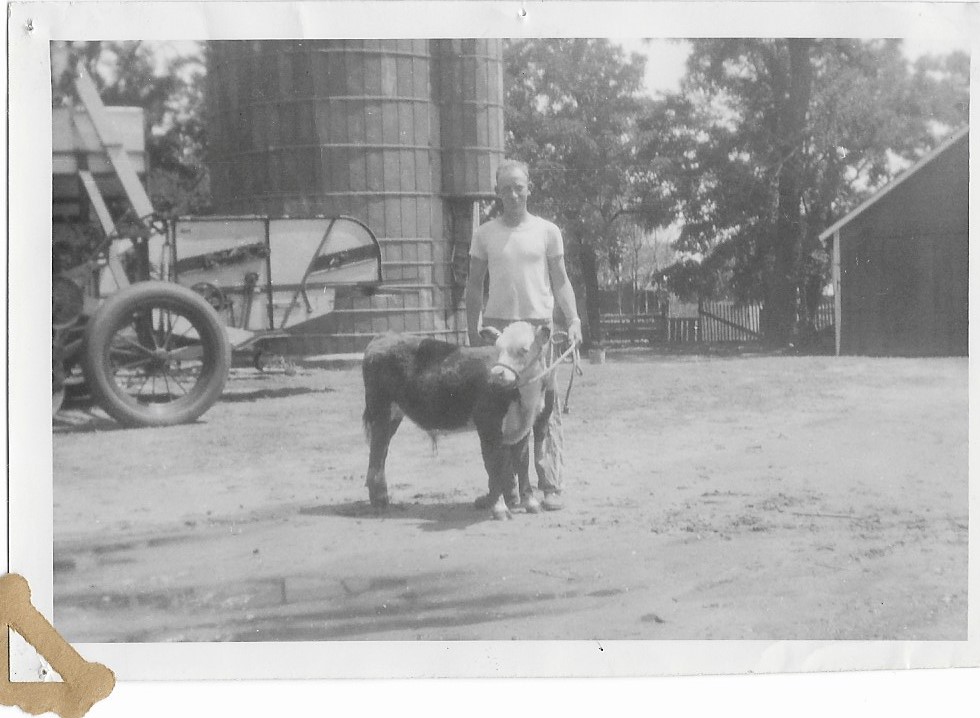
Undated photo - Clarence and Melvin
As we ate our ham sandwiches, I thought about the previous generations who'd done the very same thing. 
Who knows? Maybe this Hereford pictured with Melvin was on the big pasture at some point. At that time, the Fritzemeiers raised horned Herefords.
Now, Randy and I also have Hereford bulls as well as Angus bulls for our crossbred herd. But we have opted for polled Herefords. 
My first cattle-related duty of the day was honking the horn to attract the cattle to the hay in the back of the pickup. (If I want to get technical, I guess my first task was making and packing the lunches to take with us. The woman still gets that job.)
.
I became the Stafford County version of the Pied Piper, but I had a horn - not a flute.

It was a bouncy ride across the pasture toward the corrals.

Four guys on 4-wheelers had to go back to find additional cattle, and I watched the action in my rearview mirror, hoping we didn't lose any of the ones we already had gathered.


Once they were gathered, it was time to set up panels, the loading lane and loading chute so we could get the cattle from the pens to Don's semi. Don built the lane and chute one winter. 


Just like their ancestors before them, they used plenty of wire to keep everything together. (It's a farmer thing!)

The two cousins (along with a couple of other helpers) sorted while I ran the gate. The guys have been doing this a long time, and they seem to know instinctively what the other is going to do. It took four semi trailer loads - two with cows and two with calves - but the job was finally done.

And, of course, there was more time for sharing stories.

But some of that visiting was interrupted with trying to corral a bull who had taken his sweet time to arrive at the sorting corrals, along with a calf who'd escaped.

The semi blew a tire, so Randy and I took a 4-wheeler ride to pick up the electric fence charger and battery.

The Rattlesnake looked a little different dressed for fall, rather than in its summer wardrobe.

August 2020
 

Even though it would have been nice to finish sooner, the colors of sunset were a fitting end to the day. 
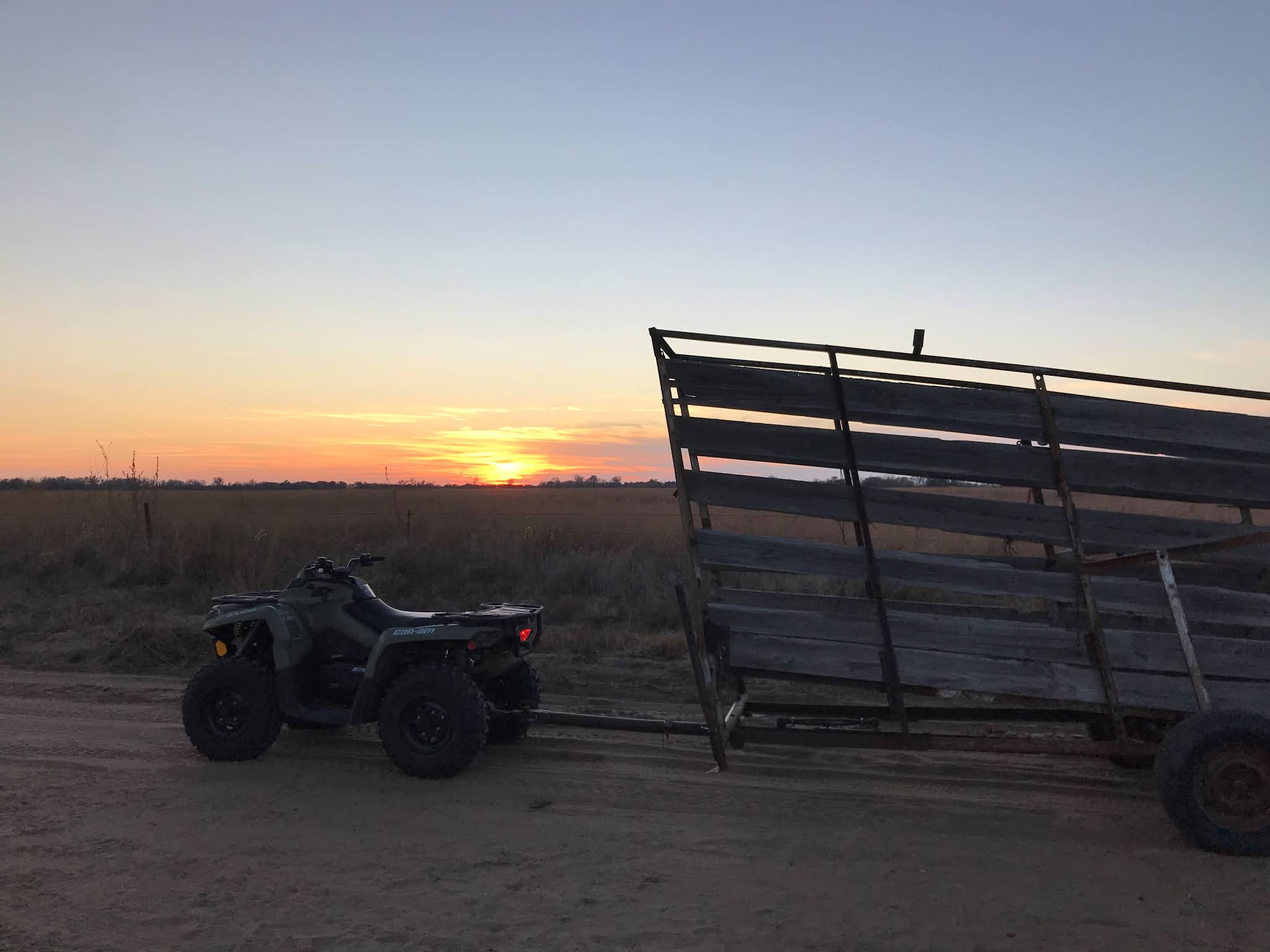
Until next spring, Rattlesnake Pasture ...
Of course, the work wasn't done. We still had a vet visit on the horizon and feeding chores. More to come ...