Showing posts with label whooping cranes. Show all posts

Tuesday, November 29, 2022

Fall Visitors

As the holidays approach, there are the inevitable memes on social media about guests who outstay their welcome.

But we're always glad to have these particular "guests" arrive in our area.

November 12, 2022

Whooping cranes visit our area for short stays during fall and spring migration. In the past several years, their landing sites have been within a couple miles of our house. However, this year, they "booked" a stay a little further west. Our friend, Jim, texted to say that 10 adult cranes and a juvenile were hanging out in our wheat field north of Stafford, so we made a trip to visit. 

A small group of cranes that lives and migrates together is called a cohort.

They were a little later than normal. The delay may have been caused by extreme drought and a delayed arrival of colder temperatures.


Last year's graphic from the International Crane Foundation reported 802 whooping cranes in the world. This year's graphic was upped to 808. I'm curious whether the juvenile in our field was one of those extra six birds.

My little camera can't handle that distance, though I gave it the old college try. With a little creative cropping and enlarging, I got a few mediocre images. (Our sharp-eyed son-in-law noticed other birds in the background of this photo. There was a large grouping of sandhill cranes on our farm ground, too.)

Immature whooping cranes have mottled, brownish-rusty feathers. The adults are bright white birds with accents of red on the head. The legs, bill, and wingtips are black.

The National Wildlife Federation says whooping cranes begin to look for mates and form pair bonds while they are still at their winter feeding grounds. The pair bonding continues as they fly to the breeding habitat in the north (the non-migratory population finds a mate and breeds in the same general location).


At the breeding location, the pair mates and together they build a nest. They lay one to three eggs (usually two), but normally only one baby crane survives. Both parents take care of the egg and the young crane as it develops. The juvenile crane becomes fairly independent early on, but still receives food from its parents. The juvenile stays with its parents throughout the first year, including the flight back to the wintering grounds. They can live above 20 to 25 years in the wild. 


After enlarging the photos on my computer, I noticed that some of the adults were banded.


I reported seeing the banded cranes to the National Crane Foundation.  

We live near Quivira National Wildlife Refuge. Since whooping cranes are migratory visitors to Quivira, there is a display about them there.

I made this collage from photos taken at Quivira's Education Center in 2013. Kinley and Grandpa were my models at the time. Man, Kinley was so little!

Whooping Cranes are regular spring and fall transients through our part of Kansas, generally passing through the marked corridor in March-April and October-November.
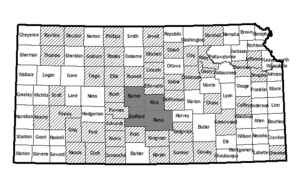
WHOOPING CRANE 

Preferred resting areas are wetlands in level to moderately rolling terrain away from human activity where low, sparse vegetation permits ease of movement and an open view. During migration, cranes feed on grain, frogs, crayfish, grasshoppers, fish, crickets, spiders, and aquatic plants. (From NWS)

Photo from Kim's County Line, 2020

Whether I get the "model worthy" photo or not, it's still a thrill to see them on their migration journey.


Two distinct migratory populations summer in northwestern Canada and central Wisconsin and winter along the Gulf Coast of Texas and the southeastern United States, respectively. Those are the cranes that travel through our area. Small, non-migratory populations live in central Florida and coastal Louisiana.

I took this photo of whooping cranes in the fall of 2019. We had six that stayed in our area for several days.

Thursday, March 31, 2022

Whoop, Whoop! The Whooping Cranes Visited Again

March 25, 2022

Whoop! Whoop!

Whooping cranes stopped by for an impromptu visit March 25. The neighbor's wheat field was the rest stop of choice for two of the cranes. My little camera can't handle that distance, though I gave it the old college try. With a little creative cropping and enlarging, I got a few mediocre images.

March 25, 2022

Randy has become quite compliant with my requests to hold still and smile for yet another photo. Kinley and Brooke have also grown used to Grandma's constant need for them to pose for the camera and flash their smiles. The whooping cranes evidently didn't get the same memo.


Even though I advanced toward them slowly and stayed in the car, they still kept ambling their way a little further away from the road. Still, I got a few recognizable snapshots.

The Whooping Crane is the tallest North American bird at 5 feet tall and has a 7- to 8-foot wing spread. Adults are white with black wing tips and a red face. Young cranes may be whitish gray with rusty wash color on their head and neck and scattered reddish brown feathers over their back and sides, according to the National Wildlife Service.

I took this photo of whooping cranes in the fall of 2019. We had six that stayed in our area for several days. We only saw the two in the recent sighting on March 25.

We live only a couple of miles from Quivira National Wildlife Refuge. Whooping cranes have been spotted there, too. I'm not sure whether these are the same group or a separate one. 

I made this collage from photos taken at Quivira's Education Center in 2013. Kinley and Grandpa were my models at the time.

Whooping Cranes are regular spring and fall transients through our part of Kansas, generally passing through the marked corridor in March-April and October-November.

WHOOPING CRANE 

Preferred resting areas are wetlands in level to moderately rolling terrain away from human activity where low, sparse vegetation permits ease of movement and an open view. During migration, cranes feed on grain, frogs, crayfish, grasshoppers, fish, crickets, spiders, and aquatic plants. (From NWS)


Photos from 2020, Kim's County Line

 For the past several years, we had the visitors on some of our farm ground or nearby. Whether I get the "model worthy" photo or not, it's still a thrill to see them on their migration journey.

Two distinct migratory populations summer in northwestern Canada and central Wisconsin and winter along the Gulf Coast of Texas and the southeastern United States, respectively. Those are the cranes that travel through our area. 

Small, non-migratory populations live in central Florida and coastal Louisiana.

Tuesday, November 9, 2021

Whoop! Whoop! for These Visitors

Whoop! Whoop!

Whooping cranes have been visiting in our area for the past week or so. A group of six has stayed about half a mile from the road on farm ground most of the time. My little camera can't handle that distance, though I've given it the old college try several times.

It's blurry, but if you know what you're looking at, you can tell they are whooping cranes.

But as fate would have it, they were just a bit closer to the road as we drove by one day last week.

Randy has become quite compliant with my requests to hold still and smile for yet another photo. Kinley and Brooke have also grown used to Grandma's constant need for them to pose for the camera and flash their smiles.


The whooping cranes evidently didn't get the memo about being "pose ready" at all times. They didn't take time to smile for the camera before launching into the sky. But it was still a spectacular sight.

The Whooping Crane is the tallest North American bird at 5 feet tall and has a 7- to 8-foot wing spread. Adults are white with black wing tips and a red face. Young may be whitish gray with rusty wash color on their head and neck and scattered reddish brown feathers over their back and sides, according to the National Wildlife Service.

We are only a couple of miles from Quivira National Wildlife Refuge. Whooping cranes have been spotted there, too. I'm not sure whether these are the same group or a separate one. 

I made this collage from photos taken at Quivira's Education Center in 2013. Kinley and Grandpa were my models at the time.

Last year, we had the visitors on some of our farm ground, and they were closer to the road a couple of times.

 
Photos from 2020

Whooping Cranes are regular spring and fall transients through our part of Kansas, generally passing through the marked corridor in March-April and October-November. (For a link on where they've been seen this fall, click here.)

WHOOPING CRANE 

Preferred resting areas are wetlands in level to moderately rolling terrain away from human activity where low, sparse vegetation permits ease of movement and an open view. During migration, cranes feed on grain, frogs, crayfish, grasshoppers, fish, crickets, spiders, and aquatic plants. (From NWS)

I found this YouTube video on the cranes.

*** 

NOTE: This may be the only thing I get posted this week. We have been doing cattle tasks since last Saturday. More on that to come! And maybe, if I get lucky, I'll have more whooping crane photos to share later, too.

Tuesday, November 24, 2020

Mud and the Blue Iris: Thanksgiving Ponderings


This image on a friend's Facebook page was one of the first things I saw when I unplugged my phone from the charger Monday morning. Irises are a favorite, so even though it's a flower more associated with May than November, it caught my eye. 

And then there was the poem:

It doesn't have to be
the blue iris,
it could be weeds in a vacant lot,
or a few small stones;
just pay attention
then patch a few words together
and don't try to make them elaborate,
this isn't a contest but the doorway into thanks,
and a silence in which another voice may speak.
From Mary Oliver's book of poems, Thirst

It was a dreary, overcast, chilly morning to begin this week of Thanksgiving. And for many of us, Thanksgiving will look much different this year. 

November 2018
From two years ago

Instead of gathering with family, I'll be making turkey and dressing for two. We canceled a trip to Topeka and Kansas City. The last few years, we've celebrated Thanksgiving on Friday at Jill's and then have done a little Black Friday shopping in the afternoon - long after the die-hard early bird fans were back home for an afternoon nap after being up at dark o'thirty.

The extended family Christmas Eve get-together at my parents has already been canceled for this year. And while it was definitely the thing to do, I am already dreading its absence. In my 63 years on earth, this will be my first time to miss this traditional family gathering that also celebrates my mom's birthday. 

I've been furiously looking for silver linings.

"Well, I guess I'll get to go to my church's Christmas Eve service," I originally told myself in a pep talk. (For 40 years, it's been a challenge to gracefully decline participation in this special event - especially when Randy and I say "yes" to pretty much any church task.)

But then came the letter from the Great Plains UMC Bishop, recommending a move back to online worship services. Reading between the lines, it seemed the Bishop was recommending we celebrate Advent and Christmas at home - just like we did Lent and Easter eight months ago. 

Last weekend, as worship chair, I canceled our annual Hanging of the Greens to decorate the church for the holidays.

I texted another faithful family to make sure they saw the email cancellation notice. And the "little girl" I used to direct in the Joyful Noise Choir who is now a mom with children of her own texted, "I understand, but it makes me sad."

I texted back an emphatic, "Me too!!" complete with too many exclamation points.

So for Thanksgiving Sunday, I wrapped Christmas presents and listened to the fabulous organist at Wichita's First UMC play "Now Thank We All Our God" and "We Gather Together" instead of playing them on piano myself. Now that I'm the regular pianist at our church, I'd ordered a seasonal book and was practicing solo arrangements for our Stafford UMC service. 

Oh well, I sighed.

The Mary Oliver poem was just another "nudge" in my quest for silver linings. The night before, I'd finished the book Everything Beautiful in Its Time: Seasons of Love and Loss by Jenna Bush Hager. I told both Jill and my sister that it was the right read for this week of Thanksgiving. 

I must admit I'm a little jealous of celebrities who seem to have a Willy-Wonka-like "golden ticket" to publishing books. I'm sure her celebrity got her foot in the door of William Morrow Publishing, but if I'm honest, she writes well, and I enjoyed the book. In fact, I'd recommend it.

The impetus for the book was losing three grandparents in just a year's span. That grief is different from what most of us are feeling right now. But the loss of these hallmarks of our family life - like Thanksgivings around a family table or Christmas in a farm shed - are grief, too. 

In the book, Jenna Bush Hager detailed some of her grandparents' "rules for living." These are just a few from her grandpa, former President George H.W. Bush:

  • Don't get down when your life takes a bad turn.
  • Don't blame others for your setbacks.
  • When things go well, always give credit to others.
  • Don't be afraid to shed a tear when your heart is broken or because a friend is hurting.

And from her non-famous grandparents - her mom's parents Jenna and Harold Welch - this one stood out to me:

  • Get out of bed to go look at the stars - and always, always wish upon the first star you see.

So the poem about the blue iris - and most especially the weeds and the small stones - seemed to just continue to reiterate the message. It was a "God wink," as another friend calls it.


Even though I'd consciously thought about the words I was reading, it sometimes seems my perspective is as hazy as the view on an overcast day, with the drab days of fall reflected through a dirty feed truck window and fractured by a broken rearview mirror.

The way out of the pessimistic point of view can be as helter-skelter as a country road after a rainy weekend.
 
But it's all about perspective. That rainy, overcast sky dropped nearly 3/4-inch of rain over the weekend. 

It gave the young wheat crop a small shot in the arm even if it made for a few mud puddles while feeding. 

 
It's a lot easier to find the silver lining in migrating whooping cranes  ...
 

... who "breakfasted" for a couple of weeks in a field not far from our house ...
... or in sunset skies 
But in this week of Thanksgiving, I hope to notice them all - blue irises, mud and all. 

 Happy Thanksgiving to you and yours. 
Handiwork by my late mother-in-law, Marie
For another look at how cloudy skies produce the best silver linings and sunrise skies, check out this Thanksgiving post from 2013.