Thursday, November 18, 2021

Appreciate the Moment

Our home, dressed in its fall finery

There's a lesson in this time of year: 

Appreciate the moment. It could be gone as quickly as the autumn leaves. 

Without an early hard freeze, autumn's vibrant colors painted the landscape far longer than usual on the Kansas plains. While we don't have "leaf peepers" arrive by the busload in Kansas, they could have gotten a show to rival eastern landscapes this year. 

I intended to stop and take photos - even though what I see on the camera lens never quite matches the beauty seen by the naked eye.

But, as usual, I had my "to-do" agenda in place and cattle duties to help navigate - places to be - things to do. So I didn't stop as often as I should have. 

The tree outside my kitchen window provided lots of good scenery while cleaning up after meals. But even a tree right outside my window didn't get as much attention as it should have. It wasn't that the tree wasn't ready for its closeup. It was me. And now the tree is bare.


However, I did take a few photos of our house clad in its fall finery. The vines don't often retain the fall colors for so long.


The tree near the south driveway provided a "window frame" for the house. But the "frame" is no more. It only lasted a snippet of time.

Every moment in your life is unique. You will never have two alike. Never. This is the science of living: Appreciate every moment. Have a heart so open, an understanding so beautiful, and a yearning for appreciation so complete that when that moment comes, you see exactly what it is.
Prem Rawat

Sunrises and sunsets are those fleeting moments in time, too. But I was glad I ventured out one morning this week to begin the day.
At sunrise, the blue sky paints herself with gold colors and joyfully dances to the music of a morning breeze.
― Debasish Mridha
My sunrise tree

I had written the rough draft of this post earlier in the week, and I decided to listen to my own advice ... at least partially. I had an afternoon meeting in Stafford, and I noticed the fall colors on the prairie grasses and the autumn leaves framing the Zenith elevator. I drove on by. But before I got to the railroad tracks, I backed up and snapped a few photos of the scene.

I had just driven past "Exhibit A" in my reminder to pause to appreciate the beauty. A massive old cottonwood along the Zenith Road was resplendent in yellow last week. But I didn't stop at the time. Places to go, timetables to meet ... all the usual excuses. 

The old cottonwood has played a starring role in my blog before. It shades the irises that grow along the Zenith Road at an old farmstead nobody even remembers any longer. 

And then we had a hard freeze and the colors faded like fabric left out in the sunshine. 

Later, I was glad I'd taken the time to put the car - and my schedule - in reverse. It was dark by the time I was driving home, thanks to the time change. 

Enjoy every moment you have. Because in life, there are no rewinds, only flashbacks. Make sure it’s all worth it. – Anonymous © Source: https://www.quotespedia.org/authors/a/anonymous/enjoy-every-moment-you-have-because-in-life-there-are-no-rewinds-only-flashbacks-make-sure-its-all-worth-it-anonymous/
Enjoy every moment you have. In life, there are no rewinds, only flashbacks. Make sure it's all worth it. 
Anonymous
Enjoy every moment you have. Because in life, there are no rewinds, only flashbacks. Make sure it’s all worth it. – Anonymous © Source: https://www.quotespedia.org/authors/a/anonymous/enjoy-every-moment-you-have-because-in-life-there-are-no-rewinds-only-flashbacks-make-sure-its-all-worth-it-anonymous/

Tuesday, November 16, 2021

Apple(?) of My Eye

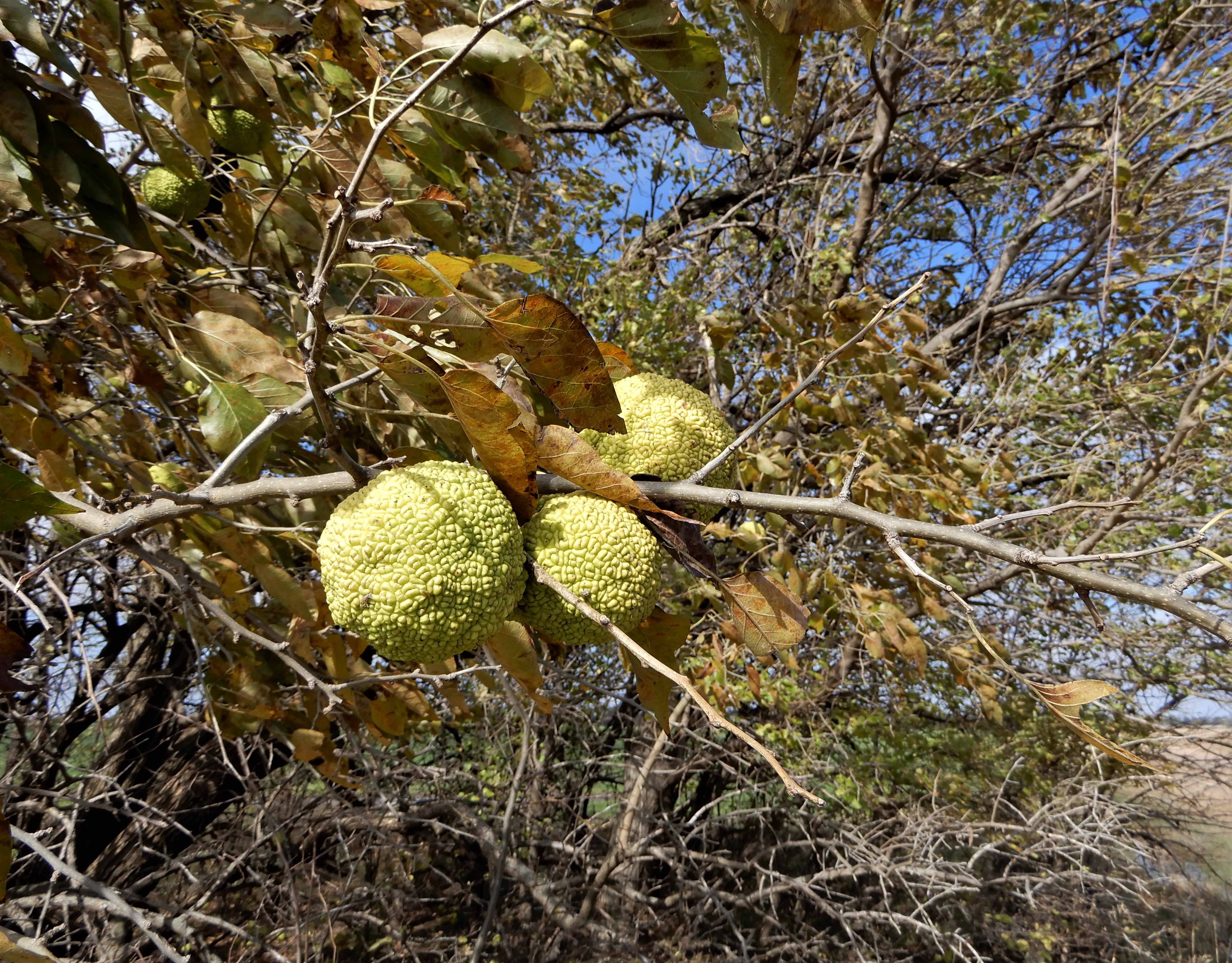
Hedge posts and hedge apples - a farm still life

They look a little like brains - maybe a leftover from Halloween celebrations.

But my brain does not compute the price some people are willing to pay for these "treasures" found scattered for free along our country roads.

"Six Fresh Picked Homegrown Organic Hedge Apples, Osage Orange, 6 count." Only $17.95.  


 Oh, well, they are ORGANIC. It must make them extra valuable.  

I found a "bargain basement" price at another site:

Fresh Picked Homegrown Organic Hedge Apples, Osage Orange, Approximately 12-15, only $21.00. 
Hedge apples strategically placed on a pile of hedge posts.

Move over wheat crop! I think I have discovered a new cash crop. Agriculture today is always looking for that market to expand beyond producing wheat, corn and soybeans. Hedge apples just may be my niche market.  I'm seeing a cash crop lying along the ditches on country roads these days. Others still hang from the branches of the osage orange trees where they grow.

Hedge apples remind me of my Grandpa Leonard, who believed they repelled boxelder bugs. He would gather them in the fall and place them outside the house to keep the "Byers bugs" away. (People in my neck of the woods called boxelder bugs "Byers bugs" because they were the orange and black of the Byers Hornets, where I went to school through 4th grade.)
So, do Grandpa's claims have scientific validity? Of course, I turned to Google, the ultimate source for every modern researcher, right?

And that's when I discovered that I could have my own get-rich scheme. I was driving by a cash crop and didn't even know it. There are actually people selling these little yellow-green balls that remind me of brains.
From another website:


Each Hedgeapple comes with its own individual container to prevent damage to carpet and wood surfaces. Hedgeapple with container is shown at left. It is recommended to place a hedgeapple in each room or adjacent closet.
Average weight 1 LB. / Hedgeapple
Average repellant life in an air-condition environment is 3 months. Hedgeapples can be sliced in half to expedite their effects, although life is greatly reduced.

Now all that's left is finding those handy dandy containers, and I am set. 

Or maybe not.

 Here's what I learned in a Iowa State University Extension brochure:

The use of the hedge apples for insect control is one of the most enduring pest management home remedies. Placement of hedge apples around the foundation or inside the basement is claimed to provide relief from cockroaches, spiders, boxelder bugs, crickets and other pests.

The use of hedge apples as a pest solution is communicated as a folk tale complete with testimonials about apparent success. However, there is an absence of scientific research and therefore no valid evidence to confirm the claims of effectiveness. Although insect deterrent compounds have been extracted from hedge apples in laboratory studies, these do not provide a logical explanation about why hedge apples would work as claimed. At this time, there is nothing to recommend the use of hedge apples for pest control.

The Salina Journal had a Kids Page devoted to hedge apples earlier this month. It was written by Mike Szydlowski, a science coordinator for Columbia (OH) Public Schools, for the USA Today Network. 

The article said hedge apples' history goes back tens of thousands of years. Even though they aren't eaten by animals today, the hedge apples used to be delicious food for the giant mastodons and wooly mammoths that once roamed North America. 

Native Americans found the tree extremely useful. While they did not eat the fruit, the wood was prized for making high-quality bows. The Osage people would travel great distances to find this wood, and they gave the tree the name Osage orange.

Later on, the trees were planted one foot apart, creating hedges to keep livestock in place. The branches had small thorns on them and, when planted close, it made a good barrier. This is where the name “hedge apple” came from. This practice lasted a long time until barbed wire was invented in the 1870s. 


The Osage orange trees themselves do provide a valuable resource on the County Line and elsewhere on the Plains. They make great fence posts.

Whether the hedge apples work as boxelder repellents or not, seeing them scattered along the roadside was a great reminder of my Grandpa Leonard. And that's priceless.

So what do you think? Do hedge apples repel bugs?

Whether they do or not, my friend, Okema, found a new use for them. She decorated tables at a recent luncheon with hedge apples and Pyracantha branches.

May be an image of flower
Photo & arrangement by Okema Shaw

Who knew they could look so good!?


Thursday, November 11, 2021

The Land of the Free & the Home of the Brave


This is a post from my Kim's County Line archives (with a new photo created after the bald eagle visited in October.) It comes with my heartfelt thanks for veterans, active duty military and their families on this Veteran's Day.

***

C. Melvin Fritzemeier, 10th Infantry Division, U.S. Army

My late father-in-law, C. Melvin Fritzemeier, served in the U.S. Army following the Korean War. He didn't talk about his service with me. But on this Veteran's Day, I wanted to pay tribute to him and others who have faithfully served our country during wartime and times of peace.

Maybe I just needed to take him on a road trip by Fort Riley. As a kid, Randy remembers hearing "war stories" in the back seat as his Dad drove by the fort, where he had trained before being shipped out to Korea. 

C. Melvin Fritzemeier in uniform; upper right, Camp Casey, Korea, 11-Sept.-54, Saturday night was on the back of this photo; lower left photo was not captioned; lower right, caption says, "Ready to ship out to Korea from Fort Lewis, Washington."

Not long ago, I was digging for photos and came across several from Melvin's military service. After Randy's folks died, we cleaned out their farmhouse. By the end, we were all tired of sorting, so we ended up putting family photos in plastic tubs. We got elected to be the repository for all the tubs. 


Also in the box was this Indianhead insignia, the symbol for the Army's Second Division since October 1917 at Bourmont, Haute-Marne, France, from troops in World War II. The color markings (red, white, and blue) used to identify the division and their equipment in France were chosen  by the commander of the division as the colors for this insignia.  The star and Indian head signify the American origin of the division.

 Melvin was drafted three months after the Korean War officially ended. He served as a truck driver. Randy says he talked about sleeping outside in tents.

Melvin often told a story about Army food. He would never eat dried beef gravy after serving in the Army. He also never touched fruit cocktail. Randy says that he and a buddy each ate a gallon of fruit cocktail that they'd cooled in a nearby stream. He ate so much of it that he never wanted it again. 

As is the case today, servicemen and women leave behind their families as they go to serve their country. I found several little yellow books of photos, which Marie must have sent to Melvin overseas. Marie stayed with her mother in Stafford while Melvin served, and she worked at the Farmers National Bank until he returned and they moved to the farm.

Melvin served two years. By the time he returned to Stafford, he had traded his Private 2nd Class stripes for a Corporal designation.

On this Veterans' Day, I'd like to thank all the veterans for their service. Our little community of Stafford has a number of young men and women who have served in the Armed Forces. I thank them for keeping America strong, and I thank their families for the sacrifice of being apart from their loved ones, often in dangerous places. 

This nation will remain the land of the free 
only so long as it is the home of the brave.
  ~Elmer Davis


Tuesday, November 9, 2021

Whoop! Whoop! for These Visitors

Whoop! Whoop!

Whooping cranes have been visiting in our area for the past week or so. A group of six has stayed about half a mile from the road on farm ground most of the time. My little camera can't handle that distance, though I've given it the old college try several times.

It's blurry, but if you know what you're looking at, you can tell they are whooping cranes.

But as fate would have it, they were just a bit closer to the road as we drove by one day last week.

Randy has become quite compliant with my requests to hold still and smile for yet another photo. Kinley and Brooke have also grown used to Grandma's constant need for them to pose for the camera and flash their smiles.


The whooping cranes evidently didn't get the memo about being "pose ready" at all times. They didn't take time to smile for the camera before launching into the sky. But it was still a spectacular sight.

The Whooping Crane is the tallest North American bird at 5 feet tall and has a 7- to 8-foot wing spread. Adults are white with black wing tips and a red face. Young may be whitish gray with rusty wash color on their head and neck and scattered reddish brown feathers over their back and sides, according to the National Wildlife Service.

We are only a couple of miles from Quivira National Wildlife Refuge. Whooping cranes have been spotted there, too. I'm not sure whether these are the same group or a separate one. 

I made this collage from photos taken at Quivira's Education Center in 2013. Kinley and Grandpa were my models at the time.

Last year, we had the visitors on some of our farm ground, and they were closer to the road a couple of times.

 
Photos from 2020

Whooping Cranes are regular spring and fall transients through our part of Kansas, generally passing through the marked corridor in March-April and October-November. (For a link on where they've been seen this fall, click here.)

WHOOPING CRANE 

Preferred resting areas are wetlands in level to moderately rolling terrain away from human activity where low, sparse vegetation permits ease of movement and an open view. During migration, cranes feed on grain, frogs, crayfish, grasshoppers, fish, crickets, spiders, and aquatic plants. (From NWS)

I found this YouTube video on the cranes.

*** 

NOTE: This may be the only thing I get posted this week. We have been doing cattle tasks since last Saturday. More on that to come! And maybe, if I get lucky, I'll have more whooping crane photos to share later, too.

Thursday, November 4, 2021

Caramel Pecan Snapper Cookies


Remember the old-fashioned candy called Turtles? Now that the Christmas displays are arriving in stores, there will likely be some "Turtles" hiding among the boxes of chocolate-covered cherries in the grab-a-gift aisle at grocery and discount stores.

But with a little more effort, you can make homemade cookies for your Thanksgiving snack table or for the gift-giving season. These Caramel Pecan Snapper Cookies were a hit at a summer bridal shower and on a cookie tray for the South Central Community Foundation grants awards night this week. 

Turtles candies were developed in 1918 by Johnson’s Candy Company, which became DeMet’s Candy Company in 1923. A salesman came into the commissary’s dipping room and showed a candy to one of the dippers, who pointed out that the candy looked like a turtle. Soon after, Johnson’s Candy Company was making the same kind of candy and selling it under the name "Turtles."

Today, Turtles candies come in all sizes, shapes and recipes, some even shaped like a turtle, with modern mold-making techniques. The originals were produced by candy dippers on a rectangular marble 'board', similar in size to a contemporary kitchen cutting board. The original recipe, as executed on marble, was pecans, caramel and various chocolates. 

Caramel Pecan Snappers have the elements of the classic Turtle on a pecan-studded cookie. They may be a little messy to eat ... but they are worth the sticky fingers. If you give them a try, let me know how you liked them!

Caramel-Pecan Snappers 
Adapted from Betty Crocker's Cookies, Brownies and Bars
3/4 cup sugar
1/4 cup shortening
1/4 cup butter, softened
1 tsp. vanilla
1 egg
1 3/4 cups all-purpose flour
3/4 tsp. cream of tartar
3/4 tsp. baking soda
1/4 tsp. salt
3/4 cup chopped pecans
1/4 cup sugar
36 caramels, unwrapped
2 tbsp. milk
1 cup semi-sweet chocolate chips
Additional pecans for decoration
 
Heat oven to 350 degrees. Mix 3/4 cup sugar, shortening and butter in large mixer bowl; cream until smooth. Add egg and vanilla, mixing well. Combine flour, cream of tartar, baking soda and salt. Add to creamed mixture. 

Shape dough into 1-inch balls. Combine chopped pecans and 1/4 cup sugar. Roll cookie balls in pecan mixture. Flatten slightly with greased bottom of glass dipped into sugar. Bake 9 to 10 minutes or until set, but not brown. Cool slightly; remove from cookie sheet to cool.

Place caramels and milk in small microwavable bowl. Microwave uncovered on High 2 to 3 minutes, stirring every minute, until smooth. Spoon dollop of melted caramel in the center of each cookie. 

Place chocolate chips in small microwavable bowl. Microwave uncovered on High for 1minute. If necessary, microwave in 10 to 20 second intervals until mixture can be stirred smooth. Place dollop of chocolate on top of caramel. Place pecan piece on top of chocolate. Cool completely. Makes 3 dozen cookies.
 
To store, put parchment paper or waxed paper between stacked cookies to prevent sticking. 


Tuesday, November 2, 2021

Beauty Shot: In the Eye of the Beholder

Dried up grass isn't the first thing you think of when you think "beauty shot."

But not long ago, my friend, Debbie, asked if I had any photos of prairie grasses in the fall. I'd mailed her one of my photo cards for a special occasion, and she was curious. She said she loves driving in the countryside at this time of year, seeing the subtle beauty and colors of prairie grasses in autumn.

I take a lot of photos, but nothing immediately came to mind. I did find a few photos scattered through 10-plus years of blog posts. Some of my favorites were taken several years ago at Quivira National Wildlife Refuge, just a few miles from our house.

But having her mention this "favorite thing" had me looking at my surroundings a little more closely. On one of my many trips as "go-fer" to the field as we cut fall crops and planted our 2022 wheat crop, I noticed a bright blue sky punctuated with puffy clouds. It was nearing "golden hour" and the scene really was "golden" with the prairie grasses reaching toward the sky.


After my appointed duties at the field, I took time to try to capture the scene with my camera lens. 

A Time to Think

The miracle of gratitude is that it shifts your perception to such an extent that it changes the world you see.  
—Robert Holden, Ph.D
It seems society today is entranced by the shiny and new. But there's beauty at every age and stage, and this time of year gives us visual cues all around.


Those prairie grasses may be old and dried up, but they are beautiful, especially when kissed by a setting sun.
 
 
It's kind of like that shiny new penny compared to the one that's been circulated repeatedly - in a toddler's pocket, giving exact change at the drive-through or pushed into a gumball machine. And, in actuality, the old penny may be worth more than the new one - think Indian head penny, Lincoln wheat head penny, etc. (There's probably another analogy about the value of older people in society, but now that I'm on the downhill slide myself, that probably seems self-serving.)
 

There is intrinsic beauty in the mundane. The message was reinforced with an email devotional:


The trees are about to show you just how beautiful letting go can be.

 "Letting go ..." It's good for more than just leaves on trees. I am struggling with a situation in my own life, and it's hard to just let it go. I've lost more sleep over it than I should have. It happens more than I want to admit. It appears to be a lesson I need to keep learning.

Recently, an Omaha pastor posted something to his Facebook page about "letting go." As I mentioned in last Tuesday's blog post, it sometimes seems that a "theme" develops for my week. This week appears to be no exception. 

Rev. Craig Finnestad serves The Water's Edge UMChurch in Omaha. (It's the church where Jill & Eric belonged when they lived there.) Here was his list:
 
Photo & thoughts by the Rev. Craig Finnestad, The Water's Edge UMC, Omaha, NE
 
My Guideposts devotional had these words:

O God, give me the wisdom to know 
when to hold on and when to let go.
Kim's County Line file photo - Dillon Nature Center, Hutchinson, KS


A Time to Pray (From Guideposts)

Dear Lord, when I am focused on my problems, 


and most likely making mountains out of molehills, 

guide me to go outside, look upwards 

and have faith in Your omnipotence.

Amen.

Now ... just to live that.