Tuesday, September 13, 2022

Magic Exists Among Wildflowers

"If all flowers wanted to be roses, nature would lose her beauty
and the fields would no longer be decked out with little wildflowers."
- Therese of Lisieux (Society of the Little Flower - a Saint of Missions)

It's been a hot, dry summer. Crops have struggled. Depleted pasture grasses have led to early trips to cattle sales, all throughout the Plains, including with our own herd. But, miraculously, the wildflowers still bloom.

On a cool day after our machinery sale, Randy took me on an excursion to the Big Pasture. We used the new-to-us Gator for the trip, giving us a way to traverse some of the rougher terrain of the pasture. 

Even as grasses crunched underfoot, there were wildflowers in bloom.
 
Magic exists. 
Who can doubt it, when there are rainbows and wildflowers,
 the music of the wind and the silence of the stars?
- Author Nora Roberts
 
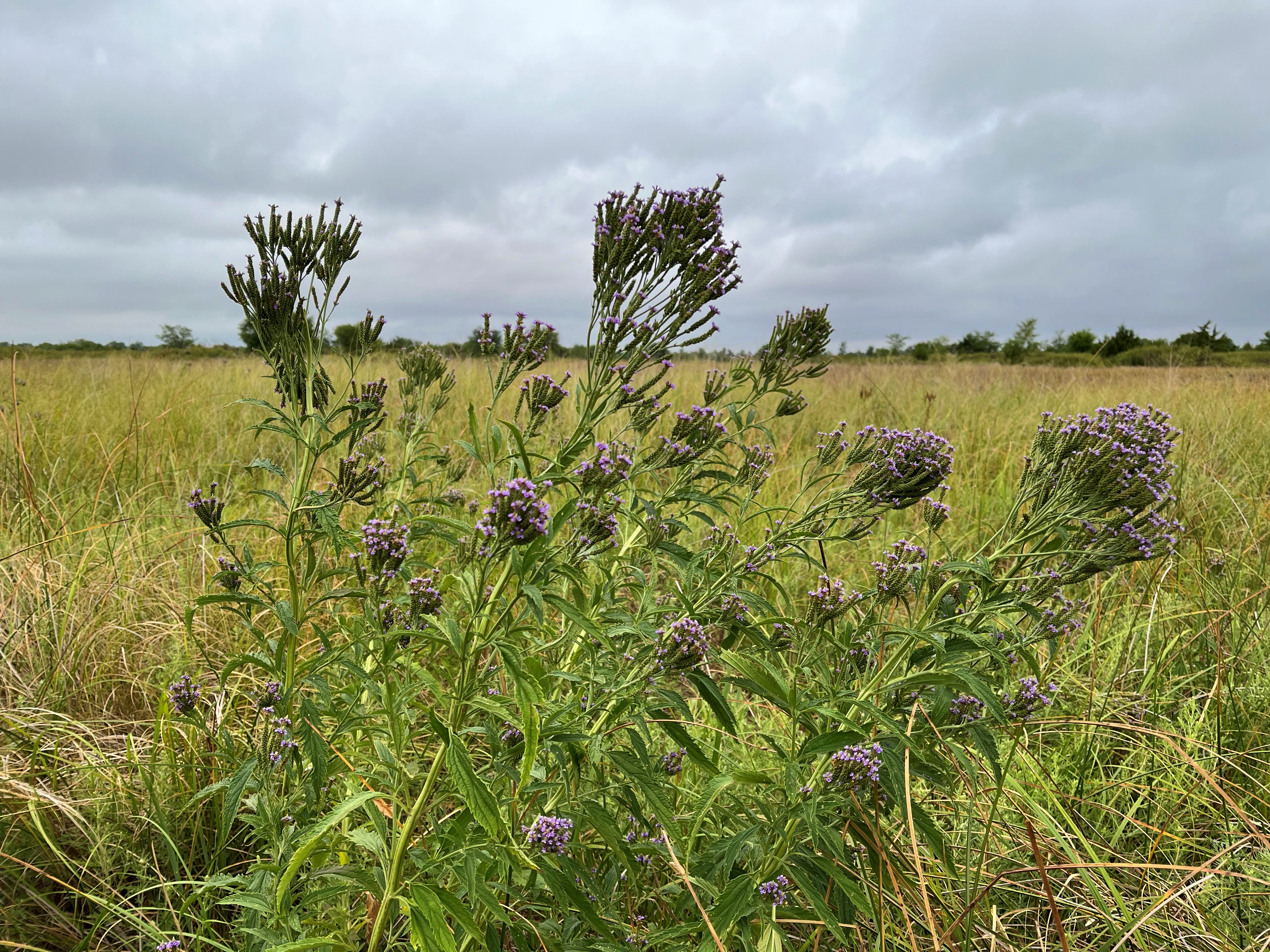
As a loyal K-State fan - and lover of all things purple - one of my favorites was the wooly verbena in bloom.

Some were the more familiar purple-crowned green stalks. But other plants seem to have congregated together, creating more like a purple-topped bush.
 
 
If you examine the individual blooms, the blossoms are tiny and intricate.

There was also an abundance of Snow on the Mountain.

The variegated leaves are almost as pretty as the blooms themselves. 

 
"Wildflowers are the loveliest of all 
because they grow in uncultivated soil, 
in those hard, rugged places 
where no one expects them to flourish."
-Micheline Ryckman
 
I'm not sure what these little pinkish-white wildflowers are.
 

I found them in the shadow of a bridge. (If you know, please let me know. I tried to find them on Kansas Wildflowers and wasn't sure.)

Are these yellow blooms Thread-leaf Sundrops (aka narrow-leaved evening primrose)? Again, I'm not sure.

Mr. Turtle in the creek didn't know either. Or, at least, he wasn't talking.

I don't need any help identifying our Kansas state flower - the sunflower. Even before we entered the pasture, the Kansas sunflowers waved a greeting as we motored past. Roads that get a minimum of maintenance often have a corridor of yellow lining the dirt path. The road to the pasture was no exception.

 
Iowans call our beautiful state flower a noxious weed. Well, to each his own, I guess.


 "One person's weed is another person's wildflower."
- Susan Wittig Albert
 

To be thrilled by the stars at night;
to be elated over a bird's nest or a wildflower 
 — these are some of the rewards of the simple life."

-John Burroughs

On a trip to the pasture 10 days later or so, the Rocky Mountain beeplant, or peritoma serrulata, was blooming.


So was the annual eriogonum, the little "baby's breath" looking white blooms.

The tiny yellow camphor weed was abundant along the ditches. 


They formed a "carpet" of yellow along the roadways. It was pretty ... but also somewhat smelly.

I think I like wildflowers best. 
They just grow wherever they want. 
 No one has to plant them. 
And then their seeds blow in the wind 
and they find a new place to grow.
-Rebecca Donovan

Thursday, September 8, 2022

Man vs. Beaver and Other Varmints

Beaver dam under a bridge on the Rattlesnake Creek

Operation Beaver Dam Destruction is underway.


Randy's efforts to thwart the four-legged construction engineers have been admirable. However, those beavers are persistent!


When we were on a Gator ride to the Rattlesnake pasture in mid-August, we made our customary stop on the bridge. It's my normal spot for taking photos toward the east. It provides an unobstructed view easily reached by a regular vehicle to check the creek level and flow.

But we noticed the water level on the west side of the bridge (the neighbor's pasture) was appreciably higher than on our side. Randy went underneath the bridge to try and learn why. And he found a large beaver dam.

He's taken multiple trips to the bridge to try and dissuade the four-legged Master Builders. 


Jill is not impressed with her dad's idea of retirement.


"I thought you were supposed to be leaving the heavy work to the young guys!" she texted back after seeing the photos of her dad bent over, chucking cement blocks away from the beaver dam.

On the other hand, our son-in-law is ready to make business cards with a catchy title like Randy's Rascals. 

Neither Randy or I could believe the size of the cement blocks the beavers were able to move into their dam. How do these creatures without the advantage of opposable thumbs move the heavy pieces? Some of them were too big for Randy to move by himself. (All I'm good for is taking photos of his battle - not lifting heavy objects.)
Randy's efforts helped release some of the backlog of water. 

But, two days later, they had already moved in fresh reeds and grass. That has been repeated multiple times since.

So far, I think the beavers are winning. 

He hopes he has better luck with some other pesky rascals. Randy's golf cart wouldn't run, so he took it to the repair shop. The guys there found out that a packrat had chewed several wires in two. They'd also left behind a pretzel bag and other assorted "treasures." (Randy doesn't keep food in his golf cart, so they found them elsewhere and graciously "shared.") When he was at golf league on Tuesday night, he learned two other carts in the same shed were also incapacitated by the busy packrats.

We've had similar infestations in the old shop and the shed where we currently store the Gator. Packrats were always a problem in farm machinery, too, despite our best efforts to control them.

Millennials aren't the only ones who watch YouTube. Randy found a video that claims rats can't digest baking soda. The YouTuber suggested putting a combination of cornbread mix and soda in a container with a hole cut into it. The rats are supposed to smell the cornmeal, partake of the special recipe, "swell up" and eventually succumb. 


On our way to an appointment in Pratt, Operation Packrat began.

Randy mixed together the corn muffin mix and the baking soda in a disposable container.
Then, he moved the bait into the golf cart shed. You'll notice that he's standing in the empty space where his golf cart usually "lives." Our cart is still in the shop.
 

He left similar bait traps in both our sheds at home. He's noticed that our cats have recently dined on two rats that they've "graciously" dragged into the yard.

Hopefully, by the time the golf cart returns to the Stafford golf course he will have had more luck discouraging the packrats than he's had with the beaver dam.

Tuesday, September 6, 2022

Lessons from the Farmyard

The farm has been an ever evolving classroom for me. It's where I learned to drive. It's where I learned to work until the job was done. It was where I learned teamwork. It was where I learned the value of family. It taught lessons in legacy. It revealed God's masterpiece of His world over and over again.

It's helped me overcome fears. For example, I was pretty nervous the first time I got into the Army truck turned feed truck as the principal driver. But I did it anyway. And then I got pretty good at it.

But our farm was a classroom of another sort for some Farm Service Agency employees. The week before the sale, four new FSA employees traveled from  across the state and wandered among our machinery with two veteran employees. The new FSA employees were evaluating several pieces of equipment and were then to assign a value on them.


This process is something they have to do at work as they evaluate loans for their agricultural customers. What are their customers' current assets worth? How much debt can they service? 

They clicked snapshots and made notes and were then supposed to compile a value. And, based on their evaluation, they either passed or failed the test. Randy asked: Yes, some of them fail. (We don't know the end result from the FSA employees who traveled to our farm for their boots-on-the-ground test.)

Kim, a veteran employee from the Washington (KS) FSA office, said many of the ag lenders in the FSA offices have agricultural backgrounds. However, farming varies across the state. In addition, some of them may have come from family crop operations. Others may be more versed in livestock operations. Going to different farms across different parts of the state is designed to expose them to the wide variety of equipment and situations they may face as FSA employees.

We got a loan from FSA early in our marriage/farm partnership. It's when commercial loans were running at approximately 18 percent. FSA loans were at 4 or 5 percent. We appreciated that opportunity. It's kind of gratifying to know that farmers and ranchers who may need similar loans may get the funds they need through the FSA employees/agencies that came to our farm for hands-on training. 

Randy was hoping to hear how the student appraisers valued our machinery. However, the students were basically collecting data and then went back to their home counties to make their assessments. 

Bonus! They sent us these insulated mugs and a nice thank you note!

Thursday, September 1, 2022

Drought Has Calves "Moo-ving" Down the Road


 There are plenty of jokes about the hot weather:
  • It’s so hot the cows are producing evaporated milk.
  • It’s so hot chickens are laying hard-boiled eggs.
  • It’s so hot you can wash and dry your clothes at the same time.
  • It’s so hot I bought a loaf of bread, and by the time I got home, it was toast.

But, the heat and the deficit of rain are really no laughing matter. 

Kansas Drought Monitor, August 25, 2022

August continued the dry trend for 2022 in Kansas. The lack of moisture that began last winter took a toll on pasture lands this summer. Tye and Todd, who are managing and caring for our cow/calf pairs, made the difficult decision to sell calves born last winter earlier than usual. 

August 17, 2022

Typically, we don't sell calves until the following winter or spring. However, this isn't the first time that we've had to sell early because of drought.

August 17, 2022 - This was an overcast day, but we didn't get rain.

The shortage of grass in pastures had them sorting the calves from the mothers and arranging for their transport to the Farmers & Ranchers Livestock Commission Co. in Salina for the August 25 sale. This will help conserve the grass for the mama cows, who are currently carrying babies who'll be born in early 2023.

Tye and Todd have marketed their cattle through the Salina sale barn before. However, it was the first time for Randy and me. (Randy had bought some cows at the Salina sale years ago, so he'd been there. It was my first experience.)


Randy and I have always marketed the majority of our cattle through the Pratt Livestock sale barn. We took a day trip to check out the unfamiliar action and watch our calves sell last Thursday in Salina.


We got there with plenty of time to spare, so after watching the action awhile and getting the lay of the land, I turned to a familiar past-time - reading my book until it was our turn.

This was a first for Randy. He didn't help gather or sort the calves from the cows. He volunteered, but they accomplished the task without him. (As hot as it was, he ended up being OK with that.)

The calves averaged 454 pounds apiece. The steers averaged 476 pounds and the heifers averaged 443 pounds each. Randy was pleased enough with the price.

2022 is shaping up to be a historically severe year for dry, hot weather in Kansas. But, it still falls far short of the worst droughts in the state’s history. Roughly one-third of Kansas is now in extreme or exceptional drought. But nearly three-fourths of Kansas has some degree of drought.

In Dodge City, this year ranks as the 4th hottest and 12th driest on record going back to the 1870s. But Jeff Hutton, meteorologist with the National Weather Service in Dodge City, says 2022 still won’t come close to becoming the driest, hottest year in recorded history. Hutton says 2012, 1980 and 1936, still stand up as the driest and hottest years for most parts of Kansas. Hutton expects the state to get enough precipitation this fall to keep 2022 from breaking those records.

Rattlesnake Creek pasture (Big Pasture) - August 17, 2022

In an interview with the Kansas News Service, Kansas State University meteorologist Chip Redmond said frequent breaks in the heat and timely bits of moisture have kept 2022 from surpassing the records set by the most extreme years in Kansas history. That illustrates the complexity of trying to compare one bad year with another. 

“We can look at basic statistics, such as average monthly precipitation and temperature and their departure from normal,” said Redmond, who manages K-State’s Kansas Mesonet climate monitoring system. “(But) that doesn’t tell the whole story.” Based on historical data, he said, the years that top the charts for drought and heat in Kansas history came during the Dust Bowl of the 1930s — particularly 1934 and 1936 — and then in 1956, 1974, 1976, 1980, 1983, 2000 and 2011-2012."
 from Kansas News Service

Rainfall totals this year are several inches below normal across Kansas. Hays has received around 9.5 inches of precipitation so far in 2022. That’s roughly half of the 18 inches it can usually expect to bank by this time of year. Hutchinson has seen fewer than 14 inches of precipitation when it’s supposed to have more than 22 inches. Only 6.5 inches have fallen on Scott City — way less than its usual 15 inches. 

Here’s another way to look at it: How many inches of rain would a town need today in order to get back in line with its historical year-to-date average? For places like Hays, Hutchinson and Scott City, it would take more than eight inches of rain to climb out of their current deficits. Some pockets of northwest, central and southeast Kansas would need more than 10 inches of rain just to get back to average. But even with how dry it’s been this year, 2022 doesn’t come close to being the driest in Kansas history. “This year has quite a bit of work needed,” Redmond said, “if it wants to rank high.” Out of 358 Kansas weather stations measuring precipitation, none have recorded their driest-ever 40-day period in 2022. That’s compared to 46 stations that set records for their driest 40-day period in 2000, 39 that set records in 1983 and 10 that still have records standing from the Dust Bowl in 1936.

This chart from The Kansas News Service shows that we are more than 11 inches behind "normal" in Stafford County. A lack of moisture can directly fuel hotter temperatures, too. The drier soil gets, Hutton said, the faster it heats up. 

Another way to assess this year’s heat is to compare the number of days that reached 100 degrees. In Wichita, 23 days have hit that mark so far this year. Wichita’s total puts 2022 in the top 10 percent of its recorded history. But it’s still not close to breaking records. “I’ve already heard people say, ‘Oh, it’s the hottest year ever,’” Hutton said. “No, it’s not. We only have to go back 11 years to 2011.” Dodge City set a record with 50 days of 100-degree weather that year. So far in 2022, it has seen 31 days that hot.

While that doesn’t come close to touching 2011’s record, it still means that 2022 already has the sixth most 100-degree days ever recorded in Dodge City. 

I have photos from the 2012 drought and its effects on our Rattlesnake Creek pasture.

August 2012 - no water in the Rattlesnake - at the bridge
At the eastern border of our pasture - August 2012

In comparison, there was some water remaining in the creek in mid-August, though it was definitely low. 

August 17, 2022 - at the eastern border of our pasture

We did get some help with our totals on August 27. The Rattlesnake pasture got 2.4" of rain. At home, we had about 1.25". However, people who lived south of us, even as little as 10 miles, got nothing. My brother, who farms in northern Pratt County, got very little rain.

So we know how fortunate we were to get last Saturday's rain. But we'd still love to be able to order up several rainy, cool days.

August 17, 2022 - at the bridge