Thursday, July 18, 2019

To Infinity and Beyond: The Moon, 50 Years Later

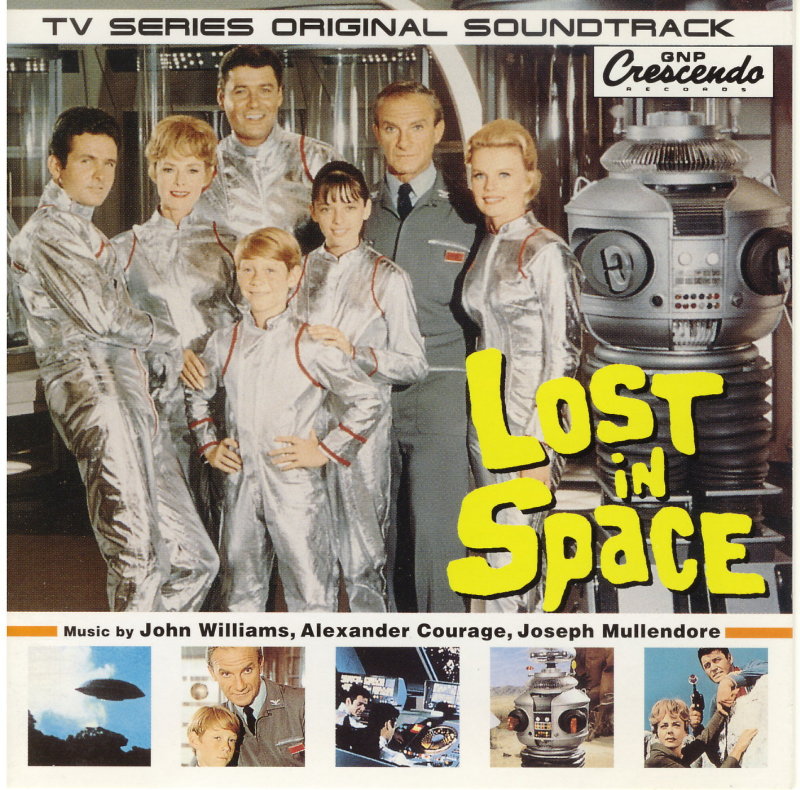
I was a Lost in Space addict as a kid. When I was 9, I tried to convince my parents we should name my new baby brother Don. They opted for Kent instead.

At the time, I just couldn't figure it out. Why wouldn't they want to name this newest member of our family after the dreamy Major Don West on my favorite TV show?
Well, I couldn't figure it out until I was in college and saw reruns of Lost in Space. Somehow this cherished TV series got a little cheesier in the ensuing years. It was definitely "B" movie material.

For those of you too young to remember, Lost in Space was a 60-minute, sci-fi series broadcast on CBS every Wednesday night. It was about the Robinson Family, Major Don West and their faithful robot who left Earth on the Jupiter II spacecraft. They were on a five-year mission to explore a planet in the Alpha Centauri star system. Unfortunately, Dr. Zachary Smith sabotaged the ship, throwing it off course and leaving the entire crew Lost in Space. Gasp! Each week, they traveled from planet to planet, searching for a way back to Earth.

They found plenty of aliens and danger along the way. You would have thought the object of my preadolescent crush would have been Will Robinson, the precocious 9-year-old in the series.
He and his friend the robot were always in the thick of the action, hence the often repeated phrase: "Warning! Warning! Danger, Will Robinson!"

I had just turned 12 when the real-life astronauts landed on the moon on July 20, 1969. I remember sitting on the floor in front of the bulky television console and watching as Neil Armstrong left the lunar module and walked on the moon, with Walter Cronkite narrating his every step. For one, it was after my bedtime, so that was a big deal. But even as a young tween, I felt the significance of America's achievement of being the first on the moon.

Evidently, it made a big impression on my late mother-in-law as well. By default, our basement became the repository for tubs of family photos and memorabilia when we cleaned out their house.
In the midst of the family photos, Marie had saved The Hutchinson News from July 21, 1969, the day after Armstrong made "a small step for man, one giant leap for mankind."

Ironically, I worked for nine years for that very newspaper after I graduated from Kansas State University. And we are still among the few who hold on to their subscription in these days of shrinking newspaper circulation.
It is huge! It measures 16.5 by 22.75 inches. Today's paper is 11 by 22.5 inches. And the moon landing was a huge story in July 1969. Hundreds of millions of people had tuned into radios or watched the grainy black-and-white images on television as the astronauts set foot on the moon. It was haled as one of humanity's most glorious technological achievements. Police around the world reported crime came to a near halt that midsummer Sunday night. 

And even though most people had been glued to their TV sets during the historic walk, I'm sure they poured over every word in their daily newspaper the next day, hoping to discover a new tidbit. 

In an anniversary article published in The Hutchinson News this week, astronaut Michael Collins,
who orbited the moon alone in the mother ship while his capsule-mates strode on the lunar surface,  was struck by the banding together of Earth’s inhabitants.
"How often can you get people around our globe to agree on anything? Hardly ever. And yet briefly at the time of the first landing on the moon, people were united. They felt they were participants. It was a wonderful achievement in the sense that people everywhere around the planet applauded it: north, south, east, west, rich, poor, Communist, whatever."
---Astronaut Michael Collins, now age 88, in an Associated Press interview
Of the 24 astronauts who flew to the moon from 1968 through 1972, only 12 are still alive. Of the 12 who walked on the moon, four survive. A vast majority of Earth’s 7.7 billion inhabitants were born after Apollo ended, including NASA’s current administrator, 44-year-old Jim Bridenstine, who is overseeing the effort to send humans back to the moon by 2024.

One of the unique features of The News is the Intercepted Letter, which is found on each edition's front page. For awhile, new publishers did away with the folksy snippet. But it's back in 2019.
 
On that day in July 1969, the editors wrote:

NEIL ARMSTRONG
Space Center
Houston, Tex. 
(Hold for Arrival)
Dear Neil,
With so many people jumping for joy down here, it's a good thing the earth does have a heavy gravitational pull.
Yours,
Hutch 

One of the stories was headlined, "They prayed for the astronauts." I'd be surprised to see a headline like that in a newspaper today.
"I've been watching the simulated mock-ups all day. We went to church, but we have switched around to all the channels to listen to the commentary."
Allan Buckwalter
 It's more sensational than the Lindberg flight.
Mrs. Abby Burnett
A poem made it onto the front page, Voyage to the Moon by Archibald MacLeish. It reads, in part:
Presence among us
wandered in our skies.
Dazzle of silver in our leaves
and on our waters silver,
silver evasion in our farthest thought ...
"the visiting moon" ... 
"the glimpses of the moon" ...
and we have touched you!

From the first of time
before the first of time,
before the first men tested time,
we thought of you.
You were a wonder to us,
unattainable, a longing,
 a light beyond our light ...
Now our hands have touched you
in your depth of night. ...


Just like these days, when new parents give celebrity names to their newborns, The News told of a little boy named Apollo, the 11th child born to a family in Lebanon on the day of the Apollo 11 moonshot.
 It's interesting to see what the weather was at this time 50 years ago, too.
It was fun to look through the articles and the ads. A bank used a space theme that day in its display ad for banking hours.
The television schedule shows that I Dream of Jeanie (another one of my childhood favorites) was on the television that night. That show featured Larry Hagman as an astronaut besotted with the 2,000-year-old genie/Jeanie, so it was appropriate TV fare for the evening. So were Mayberry, Here's Lucy, Gunsmoke and Family Affair.

The Fox Theater in Hutchinson wanted to advertise their air-conditioning it appears, with ice on their logo. They were playing a movie called The Longest Day and suggested seeing it during the 25th anniversary of D-Day.
A Wichita theater advertised the "Frenchy" musical, Can Can.
I couldn't believe the bargain price on wedding sets or the bedspreads available for less than $15 each. 
The prices on the grocery store ads created a little shell shock for this consumer of today.
There were patterns for doll clothing and a woman's dress alongside an ad for a $169.95 automatic electric washer and a box of serving trays for $7.50 or $10, depending on the diameter, at the downtown department store.
A Calhoun's ad shows what the well-dressed woman of the era was wearing.

But my favorite ad was the one for a dry cleaners and laundry. It definitely reflects the times when women were beginning to join the work force in greater numbers and were no longer fulfilling the June Cleaver stereotype of wearing pearls while doing housework.
I know that downsizing is the recommended way to live life these days. And, after living 34 years in the same house, I can verify that a good purging would be a good idea. But, then, every so often, it pays to be a packrat.
Photo taken at the Cosmosphere, Hutchinson, KS
Sometimes glimpses of our history show us just how far we've traveled.

Tuesday, July 16, 2019

"Hay!" Inquiring Minds Want to Know

 
Inquiring minds want to know: Does Randy really want to be the poster child for my blogging efforts? Admittedly, he ends up being the "face" of Kim's County Line. Once in awhile, he's relieved from his duties by our cute granddaughters or an adorable baby calf. But he definitely is my most consistent model. Once in awhile, my Facebook friends ask me, "Is he really OK with that?"

I've had more than one person say:
  • "My husband wouldn't be that patient."
  • "Mine wouldn't cooperate like that!"
  • "It would be a cold day in July to get my hubby to stand there and take pictures when he has other things to do."
And, yes, Randy is patient ... as long as we're not talking about broken-down equipment, uncooperative cattle or not getting his cell phone to work in the never-never-land we call home.

I think he kind of likes having the farm featured in my blog and on my Facebook page (which, by the way, he reads Facebook on his tablet faithfully). In fact, he often suggests blog topics or photo ideas. For one, he sees it as a way to keep landlords in the loop about what's going on at the farm. Plus, it makes me more attentive to the whys and wherefores of this operation.
One of those things he really wanted a photo of was the long row of big, round hay bales generated from the oats he planted in an old alfalfa field.

As we rounded the corner from taking pictures in a corn field, I saw the long row of bales and remembered his request.
Randy was happy to get 176 bales of hay off the 47-acre field. And I'll tell you something else: It's not easy to get all those bales in one frame.
Sometimes, he doesn't get a choice in whether a photo is taken or not. I doubt he even knows I took this one yesterday morning as it appeared he was getting eaten alive while working on the combine straw chopper.

I paid him his "modeling fees" by serving as his assistant. As I told my family, if I am the assistant for any mechanical project, you know he's desperate. Mechanical ability is not one of my attributes.
But we got it done!

Randy started swathing the second cutting of alfalfa on Monday. Case has had our baling/loading tractor and has been working on it for awhile now, so Randy has been hesitant to put a lot of hay down.

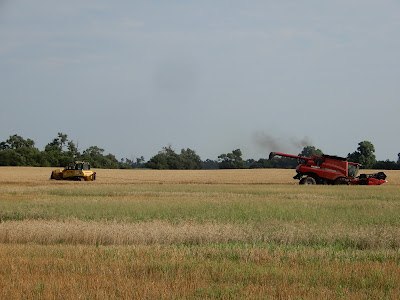
We still have wheat to cut, but it's on ground really impacted by underflow. So we'll give it some more time this week when we have four days of projected 100 degree days. Oh, and did I mention it's county fair week? That's pretty much a guarantee for hot weather. 

Thursday, July 11, 2019

Grinning from Ear to Ear: A Corn Update

The corn is making my wheat farmer grin from ear to ear ... corn pun intended.

While we slog our way through the soggy ground and poor wheat crop toward the end of wheat harvest, Randy can't help but be excited about our dryland corn crop. He has to let his eternal optimist outlook shine somehow!
July 4, 2019
It's not the norm to have a tunnel of corn lining both sides of the road on the trip from our house to the Zenith Road. Corn still is not our primary crop, but prevent planting on wheat acres last fall meant a boost in the corn acres planted this spring.
 
We planted 600 acres of corn last April. That's not much when compared to other farmers, especially those with irrigated acres, but it's significant for us. We also planted 95 acres of milo and 30 acres of silage, doubling our normal row crop acreage.
Because of spring rains, we have our share of mudholes in the corn fields.
But now that the corn is taller, there's the illusion of a mile-long avenue of corn on one side of the road south of our house.

The 1.5 to 2 inches of rain that fell Friday into Saturday arrived at an inopportune time for wheat harvest. But it was an ideal time for corn pollination.
The tassel is the male flower of corn. Each tassel is comprised of a central tassel stalk and lateral branches. As the corn plant tassels, it opens its packets of pollen.
 
At the same time, silky strands become exposed on the lower portion of the plant. The pollen from the top of the plant must reach the silk. In the fields, this is done solely by wind and luck. Once the silk is covered in pollen, each strand will become a kernel of corn, and an ear of corn will start to form.

Corn is monoecious, which means that male and female reproductive structures are present on each plant. However, male and female flowers are in separate locations on the plant. Given the separation of the ear and tassel and considering the vast amounts of pollen transported within a field, it is understandable why corn is primarily cross-pollinated. Less than 5 percent of kernels may be fertilized by pollen from the same plant.
The ear is the female flower of corn. (Randy is pointing an undeveloped ear of corn in the photo above.)
 
Silks develop and elongate from the surface of each ovary on the ear. The silk functions as the stigma and style of the female flower providing a pathway for the male reproductive cells to reach the ovule. Silks begin growing from ovaries at the base of the ear, then progress toward the tip.
Normally, pollination is a continuous process with fertilization occurring gradually along the ear as silks emerge. A mass of long, green silks indicates that pollination has not occurred. Anything that interferes with pollination may reduce fertilization and kernel set.
Successful fertilization does not always result in a harvestable kernel. Even though the corn looks good right now, there's a lot of time until harvest. For several weeks following fertilization, grain quality and quantity can be reduced when photosynthesis is interrupted by cloudy conditions, moisture stress, heat stress and other factors.
But even with those caveats, the crop's current prospects have my farmer happy for the moment.
July 8, 2019
It's good to have something to dream about when it's taking forever to fill a truck with a poor wheat crop and you're backing out of endless mud to avoid getting stuck. 

Tuesday, July 9, 2019

A Sloooooow Slog to the End: Wheat Harvest 2019

It's going to be a sloooooow slog to the end of Wheat Harvest 2019. Same song, 15th verse or so? At this juncture, waking up to the sound of rain on the roof at around 5 this morning is just another day when we say, "Well, I guess we aren't getting any wheat cut today either."
The wheat is kind of a lost cause at this point. The majority of the wheat hasn't been that good and what we have left is even worse. So we might as well be thankful for the rain on our dryland corn, which is tasseling and pollinating. (More on the corn crop on another day.) For the record, it was just another 0.15 to 0.20 of an inch this morning.
 
Monday started with hiring a bulldozer to come and pull out the combine and the 4-wheel-drive tractor that were stuck in a wheat field last Friday night. The oilfield service had initially planned to come and pull it out Saturday morning. Then we got another 1.5 to 2 inches of rain overnight Friday into Saturday. We knew there'd be no cutting with that additional rain, so Monday was soon enough and gave the ground a little more time to dry. 
The field where we had two pieces of equipment buried was one of the fields I featured in a blog post last fall, when we had 14 inches of rain in October (after 8 inches or so in August). At the time, I put together a collage of photos and called it "Quivira South" because of its location on the road which takes visitors to the Quivira National Wildlife Refuge just a mile away. We had plenty of migrating waterfowl taking a break at our "lake" this fall and spring.
 
A wet fall and wet spring have kept that ground soggy, so Randy had initially bypassed it and cut other fields. As he was cutting last Friday, he was already going around mudholes, but the combine just dropped into a soft spot left behind by mudholes and underflow. He'd been able to back out of mud himself other times. And we'd already used the 4-wheel-drive tractor to successfully pull the combine out one other time in the same field.
 
However, this time, the tractor was mired in mud, too.
I was along for the combine ride on my nightly "date" with my farmer after delivering suppers to the field, so I, too, got to hike back to the pickup. I was glad I'd worn my ratty tennis shoes.
I'm always a "Nervous Nellie" when using big ropes and big equipment to pull things out. I just don't want anyone - or anything - to get hurt. However, the dozer pulled both combine and tractor out of the muck. The tractor and combine weren't left with any damage. The field, on the other hand, has deep gouges left behind by grinding tractor and combine tires and dozer tracks.
 
 
I didn't get the video started soon enough, but here's the end of the combine being pulled out.

If we needed any confirmation about the power of a small town "news network," both Randy and I got it yesterday. I was in charge of the Circles meal served at our church last evening. The first question I got asked was, "Did you get your combine pulled out?" Randy said his stops at the co-op, the grocery store, the body shop, the parts store and points in between had several people querying about our stuck combine and tractor. Yes, Stafford and the surrounding metropolitan - or not so metropolitan - area: We got everything pulled out!

I realized I do have some photos of prettier harvest times that I haven't shared yet. On the evening of the 4th of July, I was riding with Randy at sunset and had nature's fireworks in the night sky.
Even in that pretty sunset photo, you can see the remnants of fall and spring rains. Near the sun in the photo, you can see a large green space - a mudhole that stretches from the wheat field into the corn field. I took a few photos of those mudholes in the corn along the mile-long field earlier in the evening.
 
I watched the 4th of July sunset through the front windshield and then in the rearview mirror as we slowly chugged back to the east.
I chose the rearview mirror photo above to feature because I didn't like the weeds in the shot below. And then I realized that having the weeds growing up in the mudholes and in the wheat itself is a more accurate portrayal of Wheat Harvest 2019.
In truth, we'd be happy to see all of wheat harvest in our rearview mirror, but we have several soggy locations left.

Later, as the sun went down and the humidity went up and we we quit harvesting for the evening, we watched fireworks light up the sky over Stafford.

Let's hope the remainder of the wheat cutting doesn't include any fireworks.


Tuesday, July 2, 2019

Who'll Make the Coffee ... and the Cookies?

"Who'll make the coffee?"

It sounds like such a small thing. But for those of us who arrive at church early to run off Sunday School materials or who enjoy partaking in a cup of joe and some conversation before the worship service begins, it becomes a little detail that makes a big difference.

One of the guys who "made the coffee" at our church died last week. Yes, Marion made the coffee for a lot of years - before Sunday School, at the bazaar, for funeral dinners, for the men's pancake feed and more.

But it wasn't just that. He quietly did a whole lot more. He and his wife stirred up "Methodist meatloaf" for some 100 funeral dinners. His family had been putting together Christmas candy bags for the church's children since 1929. 
When another member of the church was no longer able to organize the apple pie days and apple butter making for the fall bazaar, he and his wife were the driving forces behind those efforts. He was Sunday School clerk, keeping track of attendance for 60 years. I'm sure there was more that I - and others - didn't know he did. But we will likely discover those things in the coming days.

He still was doing some of those things a month ago. Once his cancer was discovered, his remaining time here on earth went quickly.

Randy and I visited the family and took some food to their home before the funeral. I took BBQ beef for a reason. That was my mother-in-law Marie's "go-to" offering to take to grieving families. And she was one of those quietly-get-things-done people at church, too. Even though she's been gone 23 years, I felt that connection of church and family ties as I shredded the beef to take to town.
I also took some cookies. I'd been wanting to try a recipe I'd seen online for Cafe Coffee Cookies. And when I thought of Marion and all the pots of coffee he made, I couldn't think of a better time to try them. (There's also an inside joke among those of us who were around Marion after church dinners or when everyone had had their fill of coffee on a Sunday morning. No one was supposed to dump out the coffee. In fact, if he knew you'd "wasted it," he let you know he didn't approve. If there was leftover coffee, he'd haul it a block home and warm it up to use there. He was the very definition of a Depression-era-raised American.)

Besides singing for the service, I helped with the funeral dinner, as did many others. When Randy came downstairs after completing his pall bearer duties at the cemetery, he told me,  "It sure smells good down here. Actually, it smells good in the whole church."

And I thought again - as I so often do at funeral dinners - about how we are to be the "fragrance" or the "aroma" of Christ.

“For we are to God the pleasing aroma of Christ”  
2 Corinthians 2:15 

Homemade French bread was something else Marion made for funeral dinners. The fragrance of homemade bread as it bakes always permeates a room. It's like doing the little things: It permeates our life and the lives of others. We become the hands and feet and heart of Christ when we do those little, sometimes "invisible," things.


Therefore be imitators of God, as beloved children; and walk in love,
 just as Christ also loved you and gave Himself up for us,
 an offering and a sacrifice to God as a fragrant aroma.
Ephesians 5: 1-2 

 
Randy's comment brought me back to the message Pastor Nate preached during the funeral, when he asked "Who will take up the mantle? Who will fill the sacks for the children at Christmas? Who will do the other things that need to be done?"

It will likely take more than one of us to "make the coffee" and take on some of the tasks that Marion and other pillars of the church have done for so many years. And maybe some of those tasks will evolve. It's OK to purchase French bread from the bakery aisle instead of making every loaf from scratch. But it still takes someone to plan for it and actually do it.
Whether we take up the mantle "as is" or get it done in a different way, it's OK. One of my favorite Bible passages -- I Corinthians 12 -- talks about all the parts of the body being important and working together. It takes all of us, using our God-given gifts to do the work of the church or the community - whether that's school music, sports, 4-H, Scouts, Chamber of Commerce, the county fair, food bank ... the examples are endless.

And if you're into "making the coffee" - either in reality or metaphorically - you might like the flavor (and aroma) of these cookies:
Cafe Coffee Cookies
Adapted from a recipe found online
1 cup sugar
1 cup brown sugar
1/2 cup shortening
1/2 cup butter
2 large eggs
2 tsp. vanilla extract
3 cups all-purpose flour
2 tbsp. instant espresso powder
2 tsp. baking soda
1/2 tsp. salt
1 cup chopped pecans (plus extra for sprinkling on top)
1 pkg. (12 oz.) semi-sweet chocolate chips

Coffee Drizzle
2 tbsp. butter, melted
1 teaspoon instant espresso powder
1 1/2 - 2 cups cups powdered sugar (approx.)
A splash of milk may be needed

Preheat oven to 350 degrees.

In a large mixing bowl with paddle attachment, beat together the shortening, butter and sugars until light and creamy. Add eggs and vanilla and mix in well.

Combine flour, espresso powder, baking soda and salt. Add to creamed mixture on low speed, beating just until well combined. Stir in the chopped pecans and chocolate chips.

Using a cookie scoop, drop dough onto prepared baking sheets. Bake for 9 to 10 minutes or until edges are set. Cool on pan for 2 to 4 minutes, then remove to cool completely.

For the glaze: Dissolve espresso powder in the warm melted butter. Add powdered sugar and stir until smooth and until it's a "drizzle" consistency. In honesty, I didn't measure the glaze ingredients that well because I adapted it to include butter. I believe in flavor in any frosting or glaze. So add additional powdered sugar or a splash of milk to make it a glaze consistency. I used a decorator tube to create a more uniform drizzle over the cookies. While the glaze is still wet, sprinkle with additional chopped pecans or mini chocolate chips. (I was out of mini chocolate chips, so I didn't try that this time.) Let the drizzle dry until set.

To store, place cookies in an airtight container, putting layers of waxed paper or parchment between the layers. Makes approximately 4 dozen cookies.