Showing posts with label Kansas agriculture. Show all posts

Tuesday, March 22, 2022

Then & Now: A Reality Check


Even before Kansas was a state, the sun has been rising and setting on the Kansas plains. Back in the 1880s, our ancestors  saw that same expansive sky stretching across the horizon as the new days dawned on a new state in the Union.

While the view may be similar, it's amazing to consider the changes in agriculture during my lifetime, and even more so during my parents' lifetimes.
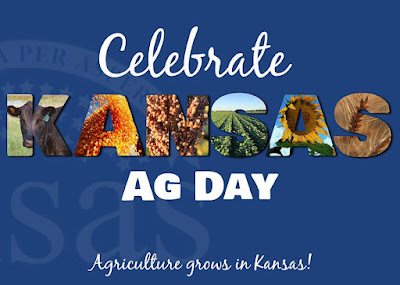
Today is Kansas (and national) Ag Day.  It's a day set aside to celebrate agriculture's role in American life.  
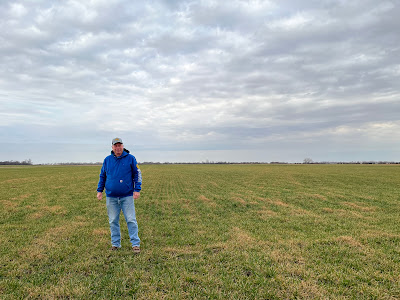
Yesterday was the 21st of the month, and this year, that means a photo update as we march toward summer 2022 and our final wheat crop as active farmers. Just like those sunrises, farmers have been scouting fields to watch the condition of their crops since farmers first began tilling the soil.
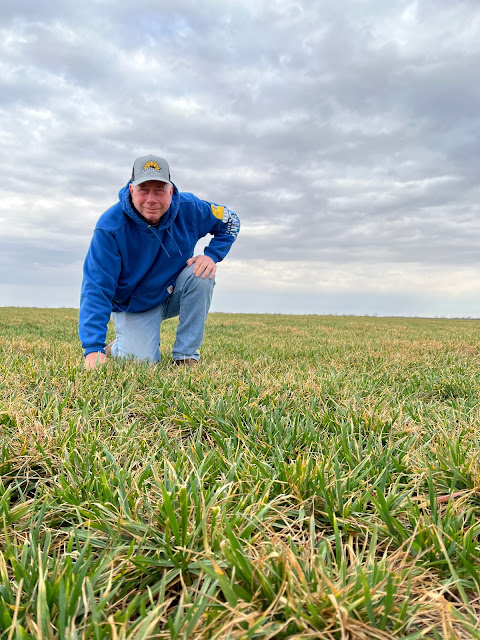
The yellow tinge on the wheat is freeze damage on the ends of the leaves and lack of moisture. However, there is green growing underneath. And, as we took the photos yesterday morning, we were hoping the cloudy skies would yield some rain.

We are fortunate: Yesterday and overnight, we got 1.5 inches of rain. Earlier, in this time since my February wheat update, we'd gotten some moisture from a couple of snowfalls, probably totaling 0.75 inches of moisture. 
 
The rain is good news on this Kansas Ag Day 2022. For 12+ years, many of my blog posts have told about our efforts on The County Line to provide food, fuel and fiber for American families and consumers throughout the world. But we're also glad to talk about farming in person, and we got that opportunity a few weeks ago when we spoke with second graders at Stafford Elementary School. I've done this a few times before at the request of second grade teacher Kylie Meyer. But it was great to be back in person, rather than on Zoom, this year.

As with any quality teacher, Mrs. Meyer gave us an assignment. She wanted us to compare the "then and now" of farming. The second graders are learning about comparison and contrast. Mrs. Meyer helps to illustrate the concept by inviting community members with different backgrounds to talk about their professions or interests and compare them, then and now. 
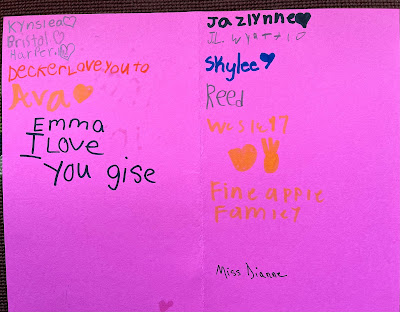
We may not be as interesting as Elroy's Pizza, but we were glad to do it.

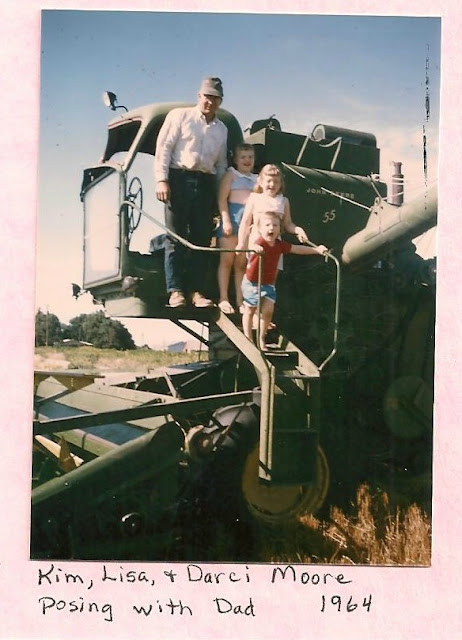
Several years ago, my mom compiled a family scrapbook for each of my kids, as well as her other grandchildren. Both my mom and dad wrote down memories, which were included in the books. In addition, she made copies of photographs. Some of those photos were of family. Others were of farm machinery.
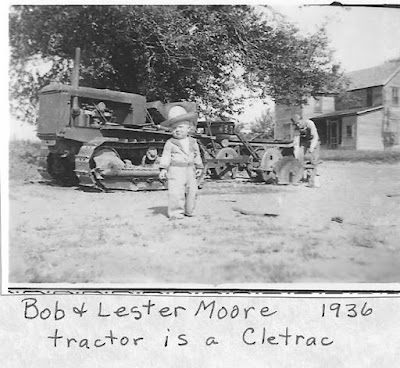

She even included a photo of my dad as a 2-year-old in front of the family's Cletrac tractor.

My mom did a great job through the years of taking photos of equipment as they added it to their farm in Pratt County. 


She had photos of some of the first equipment they purchased after coming back to the farm together in 1956 after their college days at Kansas State University. My parents also kept meticulous records of how much some of that machinery cost. 


The photo below shows that first tractor compared the size of the equipment these days. In 2021, they experienced their 65th harvest of their farming career together. (Thanks to my brother for the photo.)

My family's farming legacy goes back even further.  My dad's great grandfather came to Kansas and started farming in 1877. In 1898, my mom's grandfather came to Kansas and began working for a farmer. After he and his wife married, they began farming on their own early in the 1900s.

During my lifetime, my parents added irrigation to their farm. I also showed the second graders photos related to rural electrification, a cause championed by my maternal grandfather, Shelby Neelly. We talked about the decrease in rural population and what that meant for our rural community.

I have thousands of photos I've taken during our nearly 41 years of marriage and farming. But those old photos and the accompanying history gave me a great head start in preparing the PowerPoint presentation for the second graders, using the "then and now" theme. 
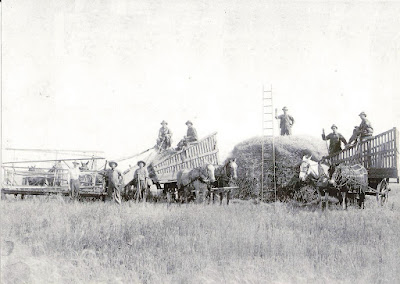
 

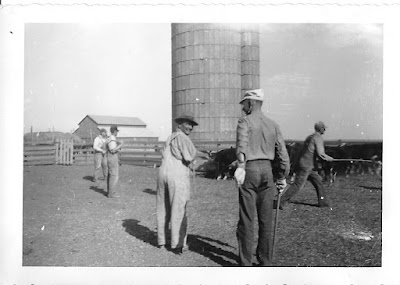
I have a few historic photos of Randy's family farm, but nothing nearly as complete as my Mom compiled. (I know how fortunate I am.) The photo above was in photos from Randy's family, but there was no information about the date it was taken or the people. 

We also showed a video, showing a similar team threshing wheat. Even though it obviously wasn't filmed in Kansas, it still showed a much different picture of harvest then and now.  

Randy's family has a similar history of farming in Kansas. This pasture on the Rattlesnake Creek has been in his family since 1900. 

I did share a few photos from their farm history in the slide show.

Randy's Grandpa Melvin

Randy's family on a cattle sorting day

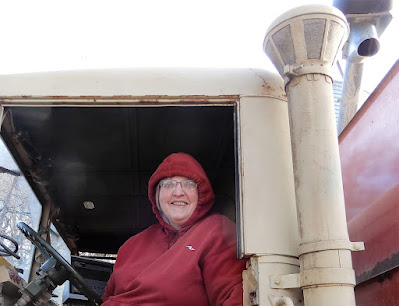
I also pointed out the differences in farm wives today, compared to yesteryear. 
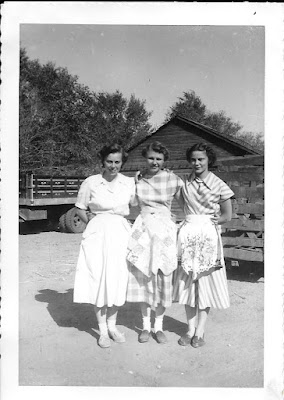


 Of course, we believe agriculture is important. We wouldn't be the fifth generation of farmers in our respective families if we didn't believe in agriculture.
As our society moves away from its agrarian roots, fewer people seem to recognize the value. As organizers of Ag Day say:
We know that food and fiber doesn't just arrive at the grocery or clothing store or magically appear on the dinner table or in our closet. There's an entire industry dedicated to providing plentiful and safe food for consumption.
  • Each American farmer feeds about 165 people. Agriculture is America's No. 1 export.
  • New technology means farmers are more environmentally friendly than ever before. 
Even that tally for feeding has changed: In the 1950s, when my parents were beginning to farm on their own, the American farmer fed 27 people. That's increased 138 people in about 65 years. Pretty amazing, right?

So Happy Agriculture Day - today and every day!

More about the Moore family farming legacy can be found HERE:

 More about the Neelly farming journey can be found HERE.

More about the Fritzemeier farming tradition can be found HERE.

Tuesday, March 23, 2021

4.2.58. Kansas Ag Day 2021

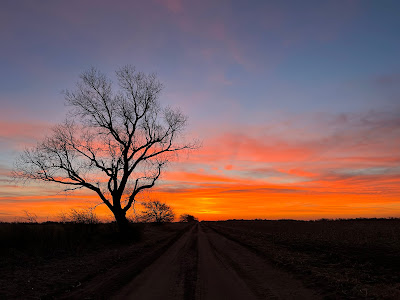
Sunrise tree, March 16, 2021
 
4. 2. 58.
  • Today's U.S. consumer is 4 generations removed from the farm.
  • Farmers and ranchers make up just 2 percent of the U.S. population.
  • The average age of U.S. farmers/ranchers is 58.

Anyone who knows me realizes that numbers aren't my thing:

Give me words.
Give me photos.
Don't make me do math!

But on this Kansas Agriculture Day, it's a reality check to think about the numbers.

The governor of Colorado just asked people to NOT eat meat on March 20. Thankfully, there were some well-organized efforts that countered that message with the verve of the lady in the old Wendy's commercials. Beef producers were happy to answer the question, "Where's the beef" and encourage it to be on the family's dinner table - on March 20 and any other day.
The Rattlesnake Pasture, August 2020 - Randy and his ancestors have been caring for cattle in this pasture for more than 125 years. 

Bill Gates was on "60 Minutes" this month, touting lab-grown meat as a solution to climate change. He and his wife, Melinda, are now the largest land owners in the U.S. His influence should be a concern for farmers and ranchers.

May be an image of 2 people, including Kim Moore Fritzemeier, tree and text that says 'SUPPORT LOCAL FARMERS & RANCH ERS #meatin theFence Post'

Like many others, I changed my Facebook profile photo to promote beef consumption, and, as usual, we did our part in consuming the product that we raise.

But back to those numbers: 4.2.58.

Several years ago, a friend shared an article about them from a farm publications. What better day to think about them than Kansas Ag Day 2021.

Those numbers mean the U.S. ag population is aging, shrinking and losing more and more influence with shoppers making food decisions for themselves and their families, according to Deanna Karmazin, an independent ag literacy and curriculum consultant from Lincoln, Nebraska. In her view, the numbers also mean farmers and ranchers need to make better connections with consumers who may not know much about where their food comes from but won’t let that lack of knowledge get in the way of forming strong opinions. 

Same goes for ad agencies, who repeatedly paint an inaccurate picture about agriculture's environmental impact or somehow believe farmers/ranchers don't care about their animals.

According to a survey conducted by the U.S. Farm and Ranch Coalition, 72 percent of today’s consumers know nothing or very little about farming or ranching. That makes sense, when you consider the "2" in the equation. Just 2 percent of the U.S. population has any direct connection to the farm. Still, 69 percent think about food production at least somewhat often, and 70 percent say their purchase decisions are affected by how food is raised.

Those consumers are concerned about their families’ health, the well-being of the environment, and the humane treatment of animals, Karmazin said. And they should be concerned about those things.

However, Karmazin characterizes many of those groups' messages as "anti-agriculture."

“The thing is, they have money,” she said, referring to groups like the Humane Society of the United States, PETA and others that raise millions of dollars to support their lobbying and public relations efforts.  

Of course those very same concerns are central to farm and ranch families, too. The environment and the animals we care for provide our very livelihood.

However, we go back to the equation and realize that consumers aren't necessarily receiving that message. They are 4 generations removed from any connection to a farm or ranch.

The influence of such groups and their messages can be seen much closer to home than one might imagine, Karmazin said. She told about picking up a copy of an elementary school newspaper in Lincoln and finding an article encouraging readers to eliminate all red meat from their diets. She also told about sponsoring a poster contest for children inviting them to imagine the problems for a world without farmers, only to receive entries indicating the world would be a better off without agriculture and its carbon footprint.

If such examples come as a shock in farm and ranch country, Karmazin said, then that’s why they need to be shared. 


She urges farmers and ranchers to put themselves out in front of people, whether physically or through social media, to let them know farmers are real people with families of their own who are not in business to poison the planet or put anyone’s health in jeopardy.

“Talk English, not farmer,” she said. 


I've tried to carry that mission into my blog posts.  

I was a farm daughter first. 


And I've been a farm partner for 40 years. On March 28, we'll celebrate our 40th wedding anniversary. Both of us have been living and working on a family farm our entire lives. (And, just FYI, we both help raise the average farmer's age of 58 in the equation.) 

March 28, 1981

And even though I'm a fifth-generation farmer and a long-time farm partner, I have found that writing about what we're doing has made me pay attention and understand why we do what we do in a new way. 

It's part of why I started a blog in 2010 - and have kept at it since that time. 


It's our story - not the story of a humane society ... or a restaurant wanting to sell burritos ... or an ad agency in a downtown office. 

Kansas Ag Day is not a holiday on the farm or ranch. Today our veterinarian, Dr. Bruce, will be here to test our herd's bulls. On Wednesday and Thursday, we plan to work and vaccinate two groups of baby calves.


 It will be a working "holiday."


Happy Ag Day! If you have a question for this farm family, please ask. You can comment via this blog, interact with me on Facebook through Kim Moore Fritzemeier or email me at rkjbfarms@gmail.com.