Showing posts with label moon. Show all posts

Tuesday, May 17, 2022

The Weeknd: Sky, Land & Water


They may not be the Justin Bieber of the bird world, but we'll take the "B-level" performers in our little part of the world, too. (Using Justin Bieber as a "star" probably shows how clueless I really am, which is no surprise at all. Actually, my curiosity won and I Googled biggest male singer of 2022. It's The Weeknd - just in case you wanted to know.)

"The Weeknd" visitors weren't the celebrity-level whooping cranes. They do travel through our area in the fall and spring. Their scarcity makes them bigger news and subjects for any paparazzi. 

But the Great Egrets at Quivira National Wildlife Refuge still warranted some camera clicks and watching through the binoculars. We had taken a sightseeing jaunt to the Big Pasture (Rattlesnake Creek pasture), and we took the long way home. I'll call it "sightseeing" because we aren't the ones responsible for day-to-day care of the cattle anymore.
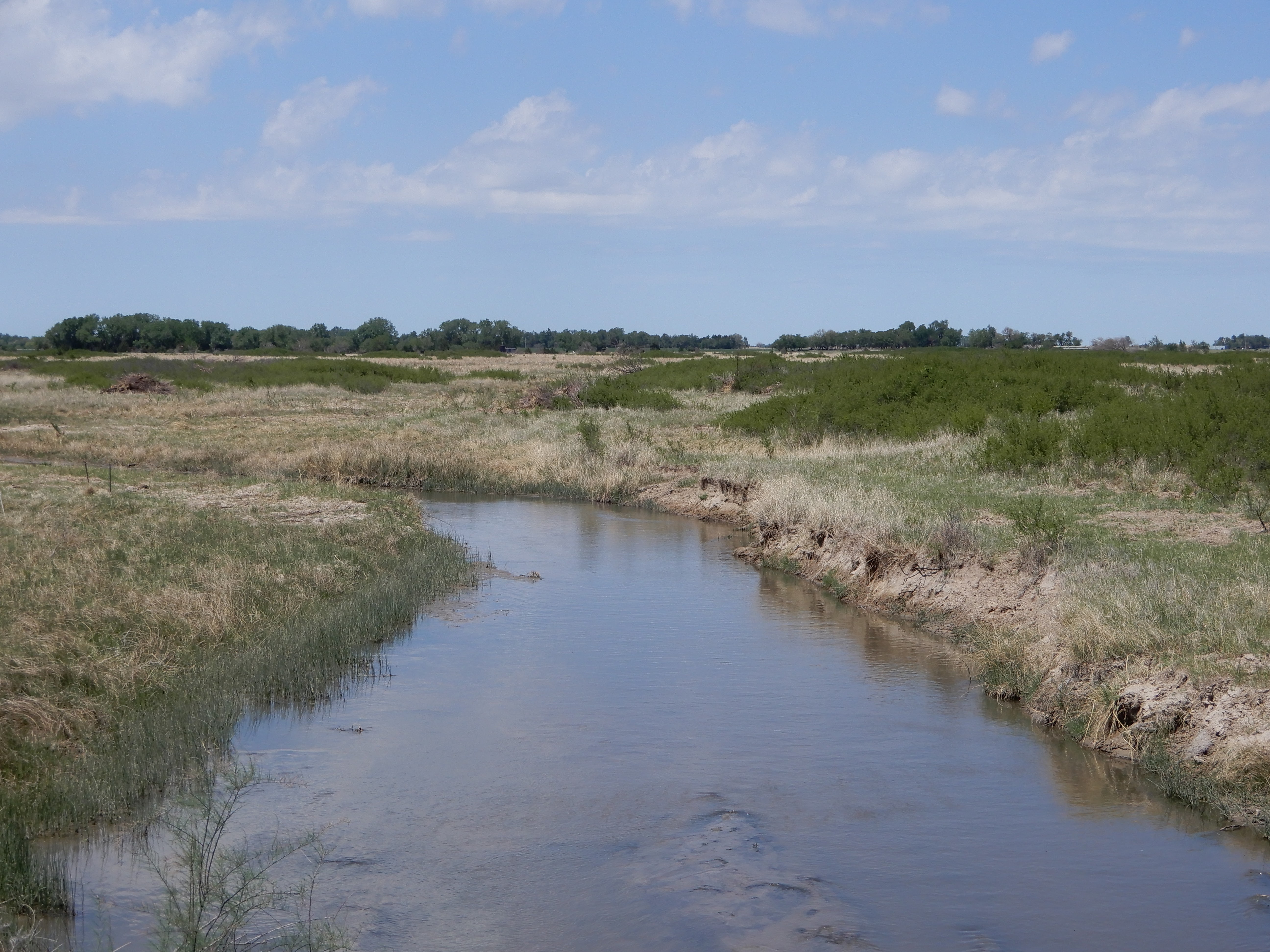
But we still looked the cows and calves over - the ones that weren't hiding in the plum thickets anyway - and we checked the solar battery to make sure it was still charging.
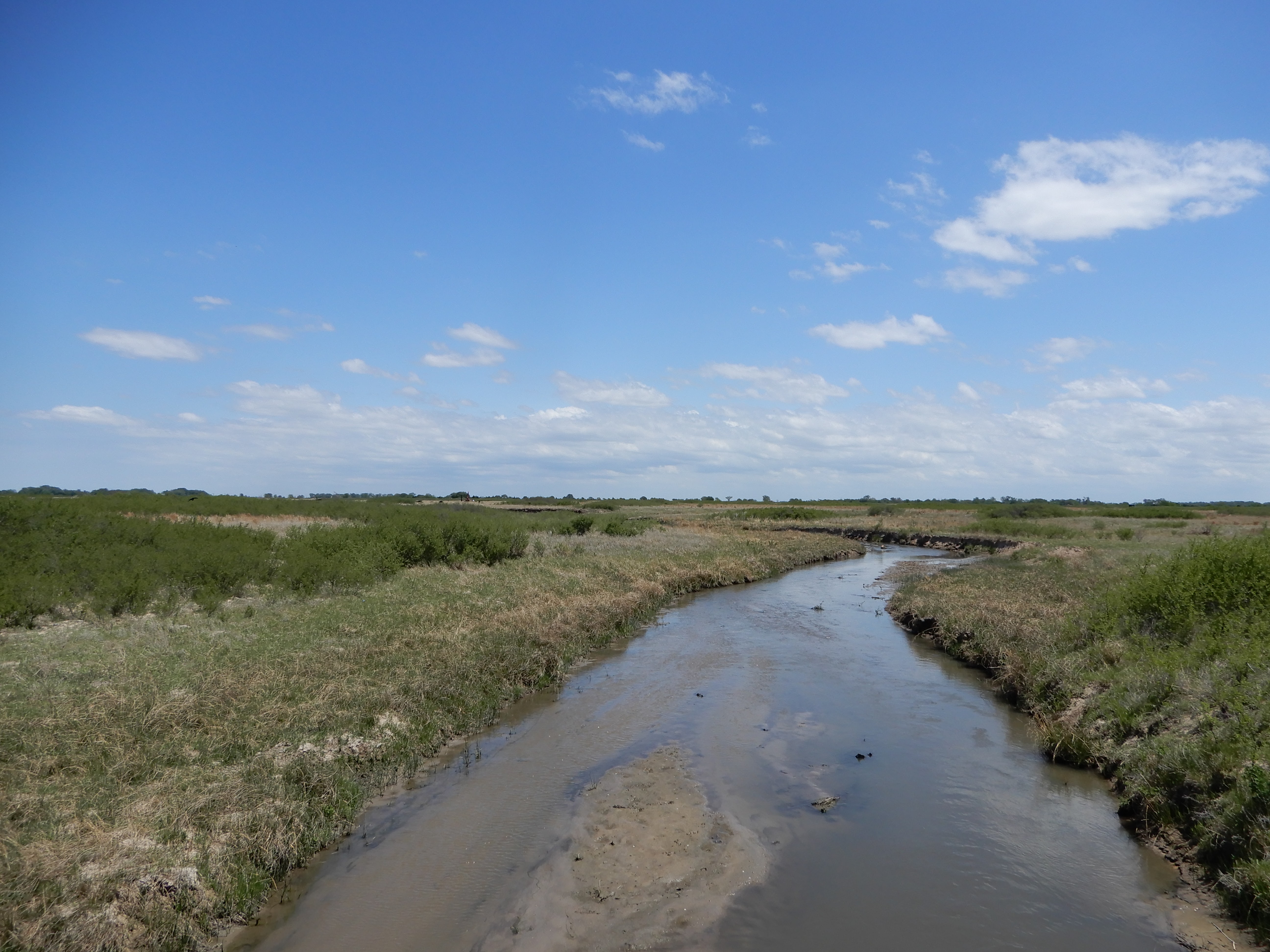
And we stopped for the obligatory snapshot of the Rattlesnake Creek on the bridge. The water level is down some because we've had a dry winter and spring thus far. But there's more in the stream than there was back in 2012 during another drought. 

Our "long way home" took us on a drive through the Quivira National Wildlife Refuge. On the Little Salt Marsh, we saw a number of Great Egrets.  We also saw their smaller "cousins" - what we typically call cattle egrets, too. We see cattle egrets all the time. 


In the map from Cornell University below, the purple is where the Great Egrets live year-round. The yellow shows the migration route for those that migrate. The peach is breeding and the blue is non-breeding. 
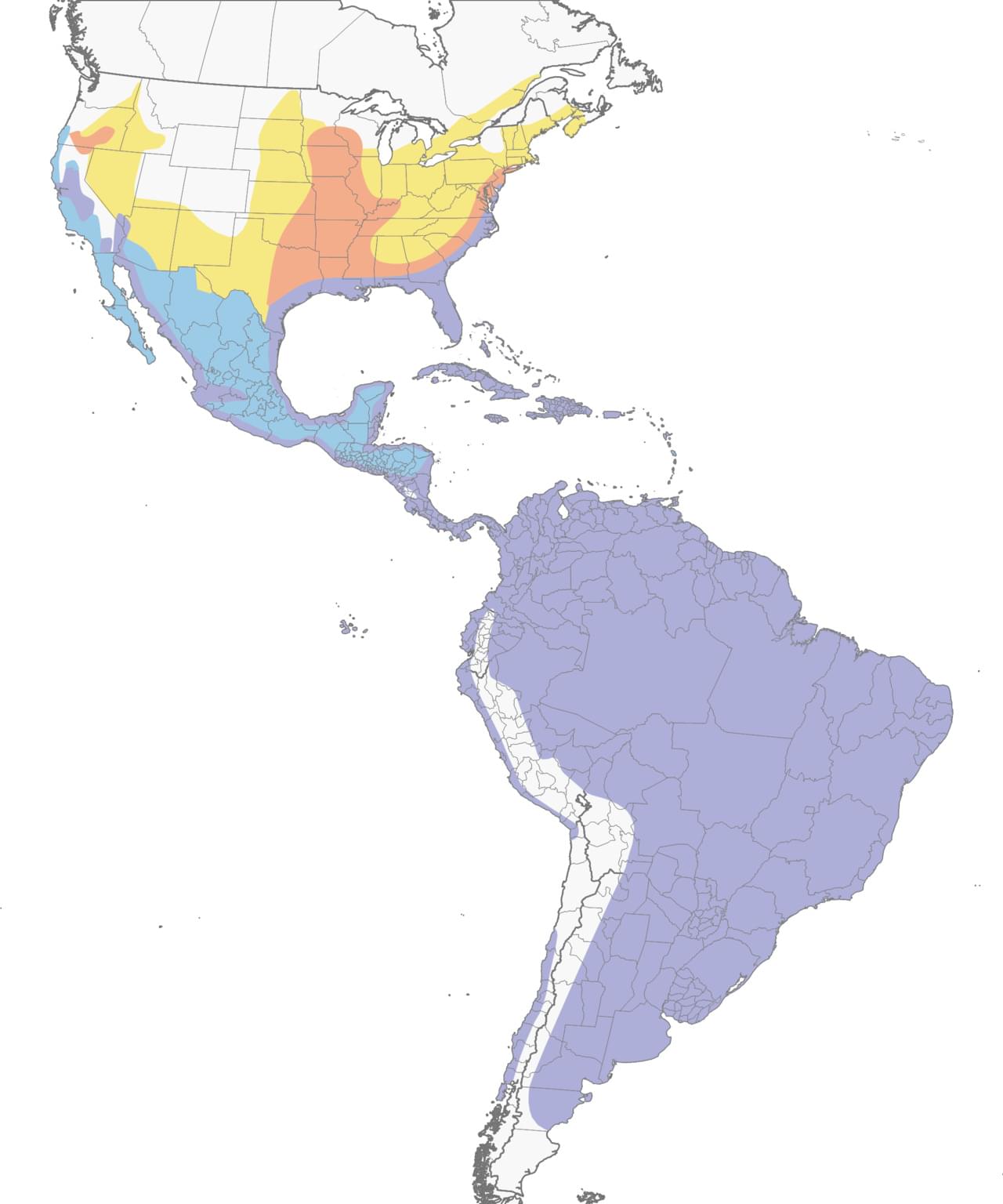
 

Range Map for Great Egret

Map from All About Birds: Resident to medium-distance migrant. Most Great Egrets move south for winter, traveling as far as the West Indies or southern Central America. They migrate by day in small flocks. During mild years, Great Egrets may stay as far north as Massachusetts. Individuals from the southern U.S. may not migrate at all. In late summer and fall, Great Egrets range widely over the continent. Map data are provided by NatureServe in collaboration with Robert Ridgely, James Zook, The Nature Conservancy - Migratory Bird Program, Conservation International - CABS, World Wildlife Fund - US, and Environment Canada - WILDSPACE.

The Great Egrets migrate through our area, including the wetlands of the refuge.


According to All About Birds, they are slightly smaller and more svelte than a Great Blue Heron, but they are still large birds with impressive wingspans. Great Blue Herons usually don't hang around when humans are in the area. The Great Egrets didn't seem to mind much.

From All About Birds website

They hunt in classic heron fashion, standing immobile or wading through wetlands to capture fish with a jab of their yellow bill. Great Egrets were hunted nearly to extinction for their plumes in the late19th century, sparking conservation movements and some of the first laws to protect birds. They are no longer endangered. 

The Great Egret eats mainly small fish but also eats amphibians, reptiles, birds, small mammals and invertebrates such as crayfish, prawns, isopods, dragonflies and damselflies, whirligig beetles, giant water bugs, and grasshoppers. They hunt in belly-deep or shallower water in marine, brackish, and freshwater wetlands, alone or in groups. It wades as it searches for prey, or simply stands still to wait for prey to approach.

The Great Egrets aren't the only avian visitors to our area. The Baltimore orioles have returned to our backyard another year.

I've not been too successful yet in capturing them on camera, but I did get one, who was preoccupied by the grape jelly Randy provides. 

Besides the birds, we encountered wildlife of another variety later in the evening on our trip to the Stafford County Country Club. (As I've said before, it sounds fancier than it is.) But the recent rains have helped green up the scenery. 


 And the clouds were pretty spectacular, too. 


 Randy even gave me credit for his better-than-usual putting game.  

The clouds cleared out for the final viewing of the weekend. We had perfect sky conditions for a little star gazing ... or, more accurately, the lunar eclipse. There are a lot of wonderful images of the lunar eclipse on the internet. These aren't among them. (I haven't figured out how to take moon pictures.)

Whether I got good photos or not, we still enjoyed a beautiful night under the stars. (Well, we made it for the first half of the eclipse. We didn't watch as it reemerged.)


Wednesday, September 21, 2016

Our Daily Bread: Kansas Skies

Sunset on my way to a meeting in Stafford last evening, September 20, 2016

They say that a picture is worth a thousand words. As a writer, I never seem to lack words and that quote has always stuck in my craw a bit, if truth is told. However, my former editors would likely say that I could be a little less effuse as they tried to pare down my words to fit under a headline.

However, while I don't often lack words, I sometimes lack time. Today, I'm sharing more pictures than words. I am blessed to witness many a sunrise and sunset from the County Line. I sometimes take the photos and don't end up sharing it via a blog or Facebook post.

I think Ralph Waldo Emerson had it right:

The sky is the daily bread of the eyes.
 ~Ralph Waldo Emerson

If the sky is daily bread, it's a never-ending banquet filled with variety. So here are some recent sky favorites, along with some quotes from other people. 
When we look up, it widens our horizons. 
We see what a little speck we are in the universe, 
so insignificant, 
and we all take ourselves so seriously, 
but in the sky, 
there are no boundaries. 
No differences of caste or religion or race. 
~Julia Gregson

 
The sky is that beautiful old parchment 
in which the sun and the moon keep their diary. 
~Alfred Kreymborg

[Haze:]
Sun-dust. —Thoreau
  [Twilight:]
Reach of primrose sky
With heaven's pale candles stored. —Jean Ingelow
[Dawn:]
Light a little trembling in the gray,
Above the folded hills. —Mrs. Browning
[The Morning Moon:]
The stars burned out in the pale blue air,
And the thin, white moon lay withering there. —Shelley

 [Sunset:]
The level sun, like ruddy ore,
Lay sinking in the barren skies. —Jean Ingelow
[Evening:]
White moonlight comes
And takes the inert landscape by surprise. —Unknown
~Hannah R. Hudson, "Word-Painting," Poems, 1874 

We can only appreciate the miracle of a sunrise 
if we have waited in the darkness.
 ~Author Unknown

I thank you God for this most amazing day, 
for the leaping greenly spirits of trees, 
and for the blue dream of sky 
and for everything which is natural,
 which is infinite, which is yes. 
~e.e. cummings 
There are no rules of architecture 
for a castle in the clouds.
- G.K. Chesterton


God writes the Gospel not in the Bible alone, 
but also on trees, and in the flowers and clouds and stars. 
~Author unknown, commonly attributed to Martin Luther
To see the summer sky
Is poetry, though never in a book it lie.
True poems flee.
Emily Dickinson, c.1879

Tuesday, October 14, 2014

Total Eclipse of the Heart

The alarm went off at 5 o'clock. It was only 30 minutes earlier than normal, but I hit the snooze button. I shifted under the covers again and waged an internal battle. "Is it worth crawling out of bed to see if I can see the blood moon all the meteorologists were talking about?" I wondered. "You never get good moon photos. Why waste your time? You've been going 90 miles an hour since the weekend, so maybe sleeping for those 30 extra minutes is the right choice."

But ... I did it anyway. I live on the road less traveled. So, I pulled on tennis shoes, but left the house in my PJs, grabbing my camera and my phone and avoiding the snoozing cats as I charged out the back door. I drove down the road a half mile, made a wide circle at the intersection and headed back north so I could open my window and steady the camera on its open ledge.

The moon brightened the western sky and the bugs serenaded me as I tried shot after shot, hitting the delete button after most of them. "Grrrrrrrr," I lamented. "Just what I figured. These are no good at all."

But, then, as  I sat there in the car with a chorus of birds and bugs accompanying the tunes on K-LOVE, I decided it was me who needed an eclipse - an eclipse of the heart. No, my photos weren't like the ones I'd admire later as I scanned Facebook and Googled  "blood moon photos." 

But it didn't matter. The beauty was there, just outside my rolled-down car window, right there for the taking. It didn't matter whether I got the "perfect" shot of the blood moon on October 8, 2014. I was experiencing it in person.
Psalm 19 (NIV)
1 The heavens declare the glory of God;
    the skies proclaim the work of his hands.
2 Day after day they pour forth speech;
    night after night they reveal knowledge.
3 They have no speech, they use no words;
    no sound is heard from them.
4 Yet their voice goes out into all the earth,
    their words to the ends of the world.
Yes, the glory of God was spectacularly in view on a county line road in South Central Kansas, if only I wiped the sleep from my eyes and opened my heart.

I sat there for a long time, facing west, as the moon made its transition from blood red back to pale yellow. As I shifted the car into drive to head back home, I caught a glimpse of the eastern sky.

And instead of heading home and making that pot of coffee I so craved, I drove toward my favorite "sunrise" tree, just a little east of our south intersection. It has witnessed many sunrises with me - and many more before I ever arrived on this earth.
Just like the moon had shape-shifted through the eclipse, the eastern sky changed minute by minute, practically breath by breath. I pointed the car's headlights down the road to illuminate it, too.
Psalm 16: 11 
You make known to me the path of life;
    you will fill me with joy in your presence,
    with eternal pleasures at your right hand.
I used the tree's branches as a frame as the sky lightened even more. And I drove another mile and a half to a windmill I often use as a silhouette for sunrises, watching the sky change as I went.
The sky didn't backlight the windmill this time, and the couple of photos I snapped were out of focus. But my disappointment faded when I turned the car around and again saw the moon setting through the span of our neighbor's irrigation system.
By the time I turned back west, the moon was soon to be only a memory, except for the snapshots from a Kansas farm wife's point-and-shoot camera and the images written on my heart.
And I drove back home to a busy day, changed for the better.

Psalm 8 (NIV)

1 Lord, our Lord,
    how majestic is your name in all the earth!
You have set your glory
    in the heavens.
2 Through the praise of children and infants
    you have established a stronghold against your enemies,
    to silence the foe and the avenger.
3 When I consider your heavens,
    the work of your fingers,
the moon and the stars,
    which you have set in place,
4 what is mankind that you are mindful of them,
    human beings that you care for them?

5 You have made them a little lower than the angels
    and crowned them with glory and honor.
6 You made them rulers over the works of your hands;
    you put everything under their feet:
7 all flocks and herds,
    and the animals of the wild,
8 the birds in the sky,
    and the fish in the sea,
    all that swim the paths of the seas.
9 Lord, our Lord,
    how majestic is your name in all the earth!

***
I'm linked today to Jennifer Dukes Lee's Tell His Story. Click on the link for more stories of faith.

Tuesday, June 25, 2013

Moon Over Matter

Saturday, June 22, 2013, around 10 PM
I was super excited about the Super Moon ... until I was super disappointed in my photos.

I'd seen gorgeous photos of the Statue of Liberty in the rosy blush of the rising moon. (Other photos are at this link.) A jet plane looked like it was cruising right onto the moon itself. A runner looked like he had the moon nipping at his heels like a faithful dog.
(AP Photo/Julio Cortez)
Here on the County Line, sunset Saturday night was obscured in clouds, so I thought we might not see the moon at all. It finally did appear, but then it played hide-and-seek in clouds.

My grandiose ideas to capture the moon and the combine resulted in little more than eyes full of chewed up wheat straw and chaff as I stood downwind to get the "perfect" photo.

However, when I consider that the moon was still 225,623 miles away, I guess I might as well be happy with my little beacons of light in a Kansas wheat field. (Much of the time, the moon orbits at 238,855 miles away from Earth. Is it any wonder that being 14 percent bigger and 30 percent brighter didn't get the job done on my little point and shoot camera?)
My efforts paled in comparison to professionals and amateur shutterbugs alike. As Randy often tells me:

"It's good digital 'film' is cheap!"
Ah well! It's fun to try. 

Tuesday, September 4, 2012

Once in a Blue Moon

Blue moon setting, morning of September 1, 2012
A blue moon arrived on the same day that Neil Armstrong, the first man to walk on the moon, was laid to rest. 

When there is a second full moon within one calendar month, it's said to be a blue moon. This relatively rare event won't happen again until July 2015. The last time a blue moon occurred was December 2009. The moon remains its usual color, but the astronomical event is associated with the phrase "once in a blue moon."
Moon setting - August 31, 2012
In announcing his death, Armstrong's family requested that when people "see the moon smiling down at you, think of Neil Armstrong and give him a wink."

I remember staying up late to watch Neil Armstrong walk on the moon, July 20, 1969. I would just have turned 12 years old.  

I went by the Zenith branch of the co-op to fill my car with gas and thought this looked like the grain spout was dropping the moon into the night sky. 


I also watched it as it seemed to climb the "ladder" of the elevator.

I think the moon was a little bit purple on the night of K-State's season opener vs. Missouri State.
It was September 1, but the moon still looked full to me. It was the first Wildcat football game for Kinley, a fifth generation Wildcat. (More on that later.)
I think of thee, alma mater.

Friday, June 8, 2012

Harvest Moon

Shine on, shine on harvest moon
Up in the sky ...

OK. If you want to get technical about it, our June 4th moon wasn't a harvest moon - at least if you take Wikipedia's word for it. A harvest moon is the full moon closest to the autumnal equinox.

But, since our June moon happened during Wheat Harvest 2012, it was a Harvest Moon in my book. You can't complain about a workday that goes into night when the sky has such beautiful adornments.

While it didn't happen in October, it did fit the definition in other ways. According to Wikipedia, "the Harvest Moon seems to be bigger or brighter or more colorful than other full moons. The warm color of the Moon shortly after it rises is caused by light from the Moon passing through a greater amount of atmospheric particles than when the moon is overhead."

Wheat harvest causes plenty of extra "atmospheric particles" in the form of wheat chaff and dust. And that night, our neighbors had two combines and a grain cart in the field south of us along with our own combine and trucks, so we were stirring up a good amount of "atmospheric particles."

The atmosphere scatters the bluish component of moonlight which is really reflected white light from the sun, but allows the reddish component of the light to travel a straighter path to one's eyes.

It appears larger in size because the brain perceives a low-hanging moon to be larger than one that's high in the sky. This is known as a moon illusion, which is probably why my magic-loving husband called me out to take a look. He does love illusions.

The moon looked like an extra running light for the combine as the machine worked its way to the east. Pretty as a picture, don't you think?
Moonrise over harvest field, June 4, 2012
Check out another version (better than mine) that our neighbor Julie McNickle took.

And the harvest continues. Our neighbor's combine arrived like the cavalry last night, right after supper. They are done with their harvest and came to help us finish. Today, I'll set two more places at the dinner table for an extra combine driver and truck driver.

Sunset, June 7, 2012
So the sun will set on Harvest 2012 sooner than expected - maybe even later today!